Product Vision :
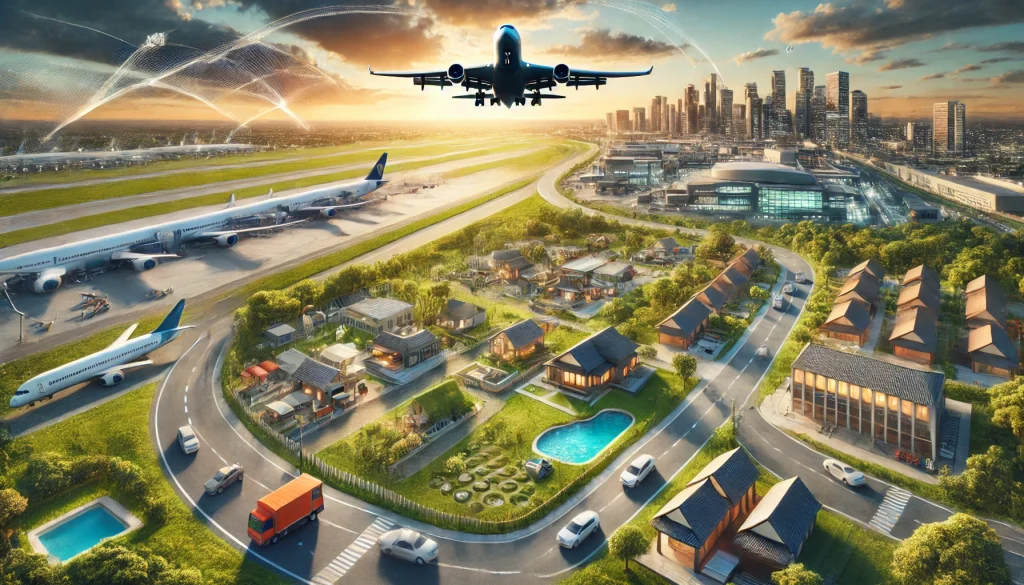
Our vision is to create a comprehensive solution that mitigates the airline industry’s negative impacts on local communities while enhancing its positive contributions. This multi-faceted platform will address environmental, economic, and social challenges through innovative technologies and community-driven initiatives. We will implement advanced noise and air pollution control technologies, such as soundproofing homes near airports, real-time air quality monitoring, and promoting sustainable aviation fuels and electric aircraft. To counteract economic displacement, our platform will support local businesses with grants and low-interest loans, and work with local governments to manage property values and rents. We aim to foster community cohesion through cultural exchange programs and health and wellness initiatives. Leveraging advanced analytics and IoT, we will provide real-time data on noise and air quality via a user-friendly app. Our robust community engagement platform will allow residents to voice concerns, participate in decision-making, and access resources. By integrating these elements, we aim to create a balanced and sustainable ecosystem where the airline industry and local communities can coexist harmoniously.
What are the biggest pain points they experience when trying to achieve their goals?
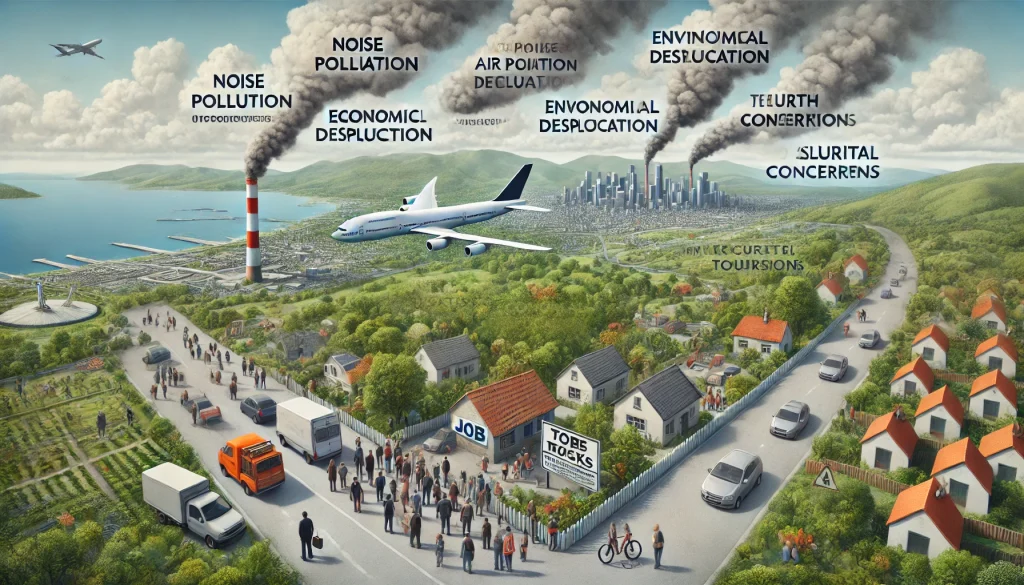
- Noise Pollution: Residents suffer from constant noise due to aircraft operations, affecting their quality of life and health.
- Air Pollution: Emissions from airplanes and airport traffic contribute to poor air quality, leading to respiratory issues.
- Economic Displacement: Rising property values and rents can push out long-time residents and local businesses.
- Traffic Congestion: Increased airport traffic causes congestion, affecting daily commutes and local infrastructure.
- Environmental Degradation: Loss of green spaces and increased pollution negatively impact local ecosystems.
- Health Risks: Higher levels of stress, sleep disturbances, and respiratory problems among residents due to airport operations.
- Cultural Displacement: Rapid changes in community demographics and culture due to tourism and transient populations.
- Over-reliance on Tourism: Local economies becoming too dependent on tourism, making them vulnerable to industry fluctuations.
- Security Concerns: Increased crime and security issues related to the influx of tourists and transient populations.
- Job Insecurity: Jobs created by the airline industry may be low-wage and seasonal, leading to economic instability.
Innovations that Helps to Solve this Problem:
- Green Travel: Adoption of SAFs and electric aircraft to reduce environmental impact.
- Autonomous Flights: AI-driven autonomous aircraft for improved safety and efficiency.
- 3D Printing: Used for manufacturing aircraft components, reducing weight and improving fuel efficiency.
- Personalization: Enhanced customer experiences through data-driven personalized services.
- Blockchain Security: Improving security across the airline industry, from booking to check-out.
- IoT Connectivity: Enhancing operational efficiency and passenger experience through connected devices.
- Immersive Simulation: Training and operational simulations to improve safety and efficiency.
- Location Intelligence: Optimizing routes and improving fuel efficiency with precise tracking.
- Biometrics: Streamlining security and boarding processes with biometric verification.
- Hybrid-Electric Propulsion: Combining traditional and electric propulsion systems to reduce emissions.
Top 10 Startups Who already Working for this Issue :
- Aviation H2: Developing hydrogen planes and retrofitting existing aircraft for carbon-free travel (StartUs Insights).
- FLYORO TECHNOLOGIES: Offering last-mile sustainable aviation fuel blending and distribution solutions (StartUs Insights).
- AHYRES: Providing autonomous UAS inspection solutions for remote infrastructure (BCG Global).
- Pentaxi: Manufacturing autonomous eVTOL aircraft for passenger and cargo transport (BCG Global).
- Apex Aeroprecision: Specializing in 3D-printed aircraft interiors for efficiency and customization (BCG Global).
- Jet Engines Australia: Creating turbojet propulsion engines using metal additive manufacturing (StartUs Insights).
- SkyNRG: A pioneer in the sustainable aviation fuel market, working with major airlines globally.
- ZeroAvia: Innovating hydrogen-electric powertrains for aviation.
- Volocopter: Developing urban air mobility solutions with electric air taxis.
- Wright Electric: Focused on creating electric commercial aircraft.
Conclusion :
Our goal is to develop a comprehensive platform that addresses the negative impacts of the airline industry on local communities while leveraging its positive contributions. This product will tackle environmental, economic, and social challenges through innovative technology and community-driven initiatives. We will implement noise and air pollution control technologies, such as soundproofing homes near airports and real-time air quality monitoring, and promote sustainable aviation fuels and electric aircraft to reduce emissions. Economic support will include grants and low-interest loans for local businesses and collaboration with governments to manage property values and rents. Social integration efforts will foster community cohesion through cultural programs and health and wellness initiatives. Advanced analytics and IoT will provide real-time data via a user-friendly app for monitoring noise and air quality.
A robust community engagement platform will allow residents to voice concerns, participate in decision-making, and access resources. Top use cases include noise reduction, air quality monitoring, economic support, property value management, health programs, cultural exchanges, sustainable aviation promotion, community engagement, green space restoration, and job training. The optimistic launch date is Q1 2025, with phased implementation starting with noise and air pollution mitigation. Expected revenue from partnerships and subscriptions is projected to reach $25 million by year five. This vision aims to create a balanced and sustainable ecosystem where the airline industry and local communities can coexist harmoniously.