Problem Statement
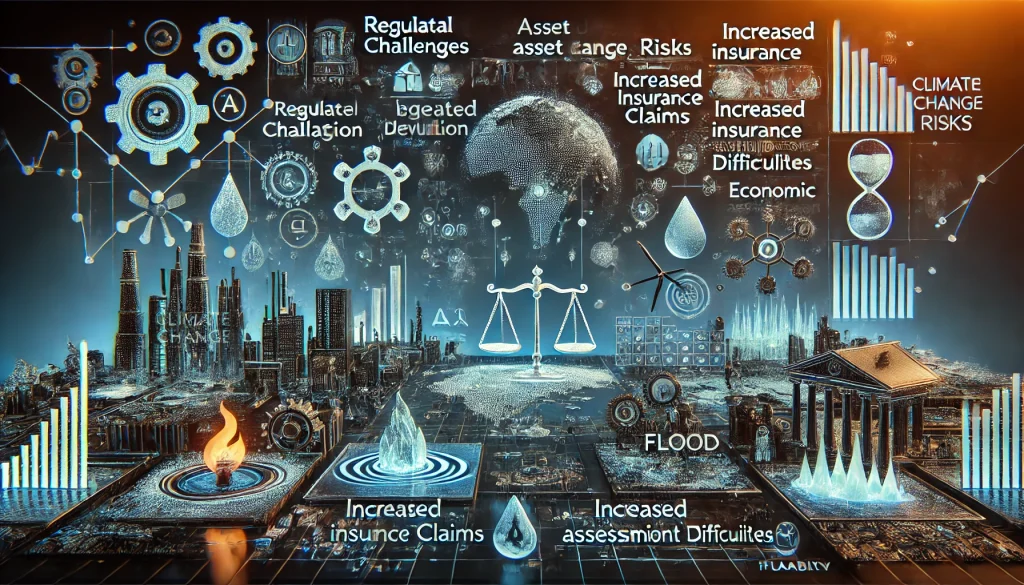
Climate change poses profound risks to the financial sector, threatening long-term stability and sustainability. The increasing frequency and severity of extreme weather events can lead to substantial asset devaluation, affecting investments, properties, and infrastructure. Financial institutions face rising insurance claims due to natural disasters, challenging their ability to manage risk effectively. Additionally, economic disruptions caused by climate change can result in higher default rates, reduced profitability, and increased volatility in financial markets. The financial sector must adapt by integrating climate risk into decision-making processes, enhancing risk management practices, and investing in sustainable initiatives to ensure resilience and stability.
Pain Points
- Asset Devaluation: Climate change impacts can significantly reduce the value of investments and properties.
- Insurance Claims: Increased frequency of natural disasters leads to higher insurance claims and premiums.
- Economic Disruptions: Climate-induced disruptions affect economic stability and financial markets.
- Regulatory Pressure: Growing regulatory requirements for climate risk disclosure and management.
- Risk Assessment: Difficulty in accurately assessing and predicting climate-related risks.
- Operational Costs: Increased costs for implementing climate risk mitigation and adaptation strategies.
- Market Volatility: Greater volatility in financial markets due to climate change impacts.
- Reputation Risk: Financial institutions face reputational damage if perceived as not addressing climate risks.
- Investment Shifts: Need to transition investments towards sustainable and climate-resilient assets.
- Resource Allocation: Allocating resources effectively to manage and mitigate climate risks.

Future Vision
The future vision for the financial sector in addressing climate change involves creating a resilient and sustainable financial system. This vision includes integrating climate risk into financial decision-making, enhancing risk management practices, and fostering investments in sustainable initiatives. Financial institutions will adopt advanced technologies like AI and blockchain to improve climate risk assessment and transparency. Collaboration with regulators, policymakers, and other stakeholders will be crucial in developing comprehensive frameworks for climate risk management. By prioritizing sustainability and resilience, the financial sector can mitigate the impacts of climate change and contribute to a more sustainable economy.
Use Cases
- AI-Driven Climate Risk Assessment: Using AI to predict and assess climate-related risks accurately.
- Blockchain for Transparency: Implementing blockchain to enhance transparency in climate risk disclosure.
- Sustainable Investment Portfolios: Developing investment portfolios focused on sustainable and climate-resilient assets.
- Climate Risk Stress Testing: Conducting stress tests to evaluate the impact of climate change on financial stability.
- Green Bonds and Loans: Offering financial products that support environmentally sustainable projects.
- Climate-Resilient Insurance Products: Creating insurance products designed to cover climate-related risks.
- Regulatory Compliance Tools: Tools to help financial institutions comply with climate risk regulations.
- Public-Private Partnerships: Collaborating with governments and organizations to address climate risks.
- Renewable Energy Investments: Investing in renewable energy projects to reduce carbon footprint.
- Community Resilience Programs: Funding initiatives that enhance community resilience to climate change.
Target Users and Stakeholders
- User: Financial regulators
- Age group: 30-60 years
- Gender: M/F
- Usage Pattern: Continuous monitoring and regulation of climate risk management in financial entities.
- Benefit: Improved regulatory oversight and financial stability.
- User: Financial institutions
- Age group: 25-60 years
- Gender: M/F
- Usage Pattern: Implementation of climate risk assessment and management tools.
- Benefit: Enhanced resilience and reduced risk of climate-related financial impacts.
- User: Investors
- Age group: 18-65 years
- Gender: M/F
- Usage Pattern: Investing in sustainable and climate-resilient assets.
- Benefit: Long-term investment security and contribution to sustainability.
- User: General public
- Age group: 18-65 years
- Gender: M/F
- Usage Pattern: Interactions with financial institutions for various services.
- Benefit: Increased access to sustainable financial products and services.
Key Competition
- Competitors: Major financial regulatory bodies (e.g., SEC, FCA), established financial institutions, and fintech companies.
- Description: These entities are actively involved in regulating, monitoring, and offering innovative solutions to manage climate risks in the financial sector. They focus on enhancing transparency, improving risk management practices, and ensuring compliance with regulatory standards.
Products/Services
- Regulatory Technology (RegTech): Solutions for automated compliance and regulatory reporting related to climate risks.
- AI-Based Climate Risk Assessment: Advanced analytics for predicting and assessing climate-related risks.
- Blockchain Solutions: Platforms for enhancing transparency and traceability in climate risk disclosure.
- Green Bonds and Loans: Financial products supporting environmentally sustainable projects.
- Climate-Resilient Insurance Products: Insurance solutions designed to cover climate-related risks.
- Sustainable Investment Portfolios: Investment portfolios focused on sustainable and climate-resilient assets.
- Risk Management Systems: Tools for real-time climate risk assessment and management.
- Public-Private Partnerships: Collaborations between financial institutions and governments to address climate risks.
- Renewable Energy Investments: Investing in renewable energy projects to reduce carbon footprint.
- Community Resilience Programs: Funding initiatives that enhance community resilience to climate change.
Active Startups
- ClimateAI: Provides AI-driven solutions for climate risk assessment and management.
- Evercity: Offers blockchain solutions for sustainable finance and impact measurement.
- Cervest: Uses AI to deliver climate intelligence for businesses and governments.
- Watershed: Provides tools for measuring and managing carbon footprint.
- Jupiter Intelligence: Specializes in climate risk analytics and predictive intelligence.
- Menlo Micro: Develops climate-resilient electronic products.
- ZestFinance: Uses machine learning for climate risk assessment in lending.
- Pachama: Utilizes AI and remote sensing for forest carbon credit verification.
- ClimateTrade: Facilitates carbon offset transactions using blockchain technology.
- FloodFlash: Provides rapid-payout flood insurance using IoT and parametric triggers.
Ongoing Work in Related Areas
- Task Force on Climate-related Financial Disclosures (TCFD): Developing frameworks for climate risk disclosure.
- Network for Greening the Financial System (NGFS): Central banks and supervisors promoting green finance.
- European Central Bank (ECB): Research and guidelines on climate risk management.
- United Nations Environment Programm Finance Initiative (UNEP FI): Partnership between the UN and the financial sector for sustainable finance.
- World Bank Group: Initiatives to integrate climate risk into financial decision-making.
Recent Investment
- Climate AI: Raised $12 million in Series A funding in June 2021 to expand its climate risk assessment platform.
- Cervest: Secured $30 million in Series B funding in May 2021 for its climate intelligence platform.
- Watershed: Received $70 million in Series B funding in April 2021 to develop its carbon management tools.
- Jupiter Intelligence: Raised $54 million in Series C funding in March 2021 for its climate risk analytics platform.
- FloodFlash: Secured $15 million in Series A funding in January 2021 for its rapid-payout flood insurance.
Market Maturity
The market for addressing climate change risks in the financial sector is maturing, with increasing regulatory scrutiny and the adoption of advanced technologies for risk assessment and management. The rise of RegTech and AI-driven solutions has significantly improved the ability to monitor, predict, and manage climate-related risks in real-time. Investments in green bonds, sustainable finance, and climate-resilient products are growing, reflecting a shift towards sustainability in the financial sector. However, achieving a fully mature market will require continuous innovation, investment, and collaboration among regulatory bodies, financial institutions, and technology providers. The maturity of the market is demonstrated by the significant investments, the rise of climate-focused startups, and the ongoing work by international organizations to integrate climate risk into financial decision-making.
Summary
Climate change poses significant risks to the financial sector, including asset devaluation, increased insurance claims, and economic disruptions. These risks challenge the long-term stability and sustainability of financial institutions. To address these challenges, the financial sector must integrate climate risk into decision-making processes, enhance risk management practices, and invest in sustainable initiatives. Key pain points include asset devaluation, rising insurance claims, economic disruptions, and regulatory pressure. The future vision involves creating a resilient financial system that leverages advanced technologies like AI and blockchain, fosters collaboration with regulators and stakeholders, and prioritizes sustainability. Use cases such as AI-driven climate risk assessment, blockchain for transparency, and green bonds highlight the potential for innovation in managing climate risks. Target users include financial regulators, institutions, investors, and the general public. The competitive landscape features major regulatory bodies, established financial institutions, and innovative startups offering solutions in RegTech, AI-based climate risk assessment, and sustainable finance. The market is maturing with significant investments and ongoing efforts to enhance international cooperation and standardize climate risk frameworks. The ultimate goal is to ensure a resilient, sustainable, and stable financial sector capable of adapting to the impacts of climate change.