Problem Statement:
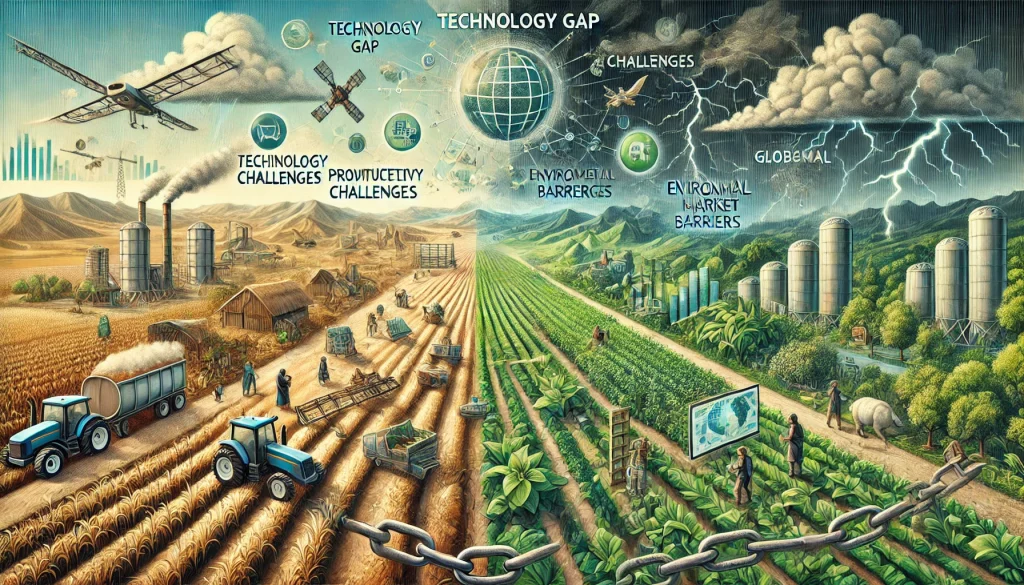
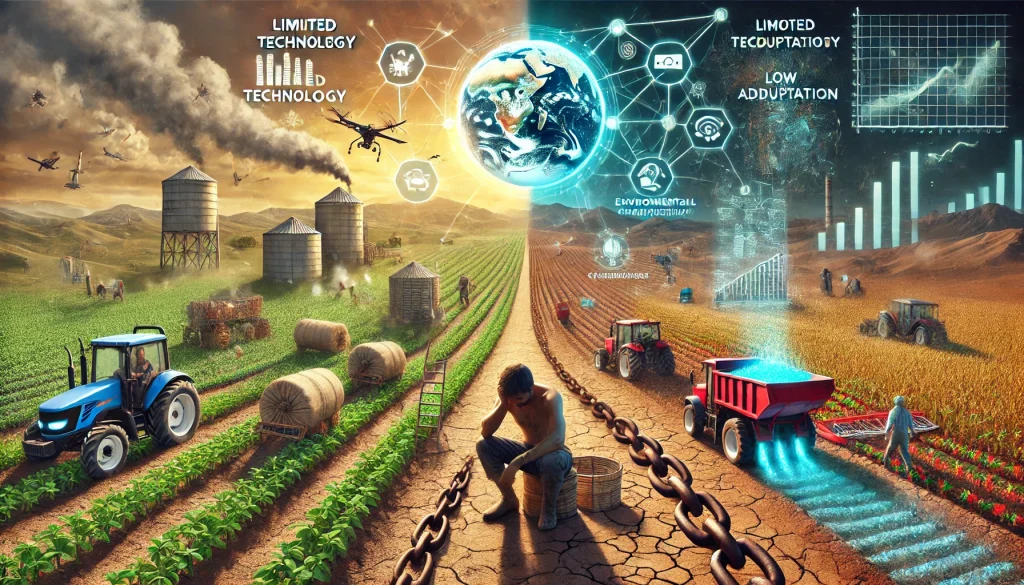
In many developing countries, farmers face significant challenges due to a lack of access to modern agricultural technologies. These technologies, which range from advanced farming equipment to digital platforms for weather forecasting and market access, are essential for increasing productivity, enhancing income, and ensuring food security. The absence of these tools puts smallholder farmers at a distinct disadvantage in the global market, where they struggle to compete with more technologically advanced agricultural systems. Additionally, the inability to adapt to rapidly changing environmental conditions, such as unpredictable weather patterns and soil degradation, further exacerbates their vulnerability. This technological gap is not only a barrier to economic growth but also a critical issue that impacts the livelihoods of millions of rural families. Addressing this gap is crucial to fostering sustainable agricultural practices, improving the resilience of farming communities, and ensuring that food systems can meet the demands of a growing global population. By creating a platform that provides farmers with access to the latest agricultural innovations, we can empower them to overcome these challenges, improve their productivity, and secure a better future for themselves and their communities.
Pain Points:
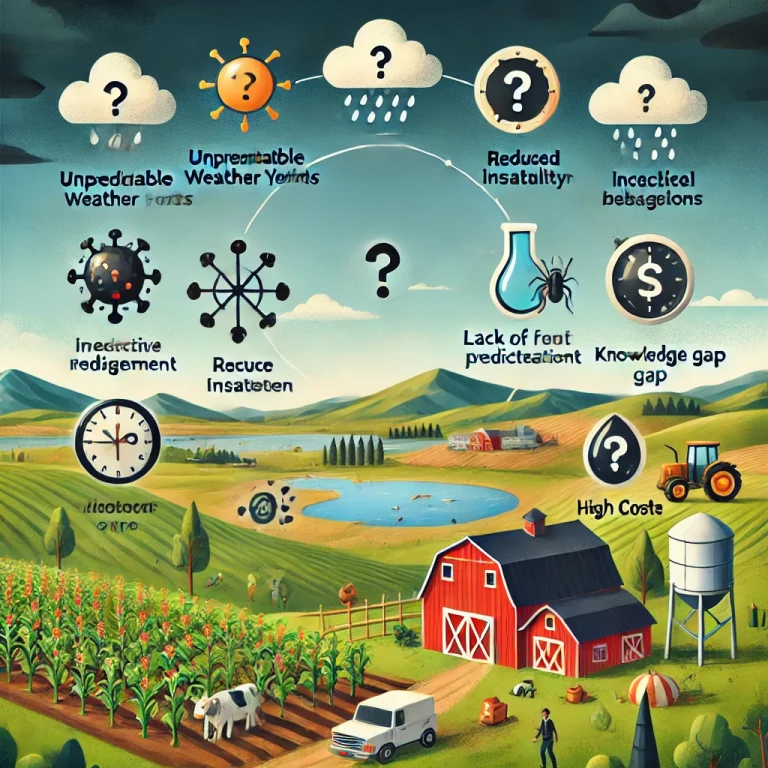
- Lack of Access to Modern Equipment: Farmers often cannot afford or access advanced machinery, leading to lower yields and inefficiency.
- Limited Knowledge of Best Practices: Without access to updated agricultural practices, farmers rely on outdated methods that reduce productivity.
- Inadequate Market Access: Farmers struggle to find reliable markets for their products, leading to lower income and food waste.
- Poor Infrastructure: Insufficient infrastructure, such as transportation and storage facilities, leads to post-harvest losses.
- Unpredictable Weather Patterns: Changing climate conditions make it difficult for farmers to plan their activities, affecting crop yields.
- Soil Degradation: Lack of knowledge about sustainable practices leads to soil erosion and decreased fertility over time.
- Limited Access to Credit: Without proper financing options, farmers are unable to invest in necessary technologies or inputs.
- High Input Costs: The high cost of seeds, fertilizers, and pesticides limits the ability of farmers to improve their productivity.
- Insufficient Extension Services: Farmers lack access to extension services that could provide guidance on improving their practices.
- Digital Divide: Limited access to digital tools and platforms prevents farmers from benefiting from innovations in precision agriculture.
Future Vision:
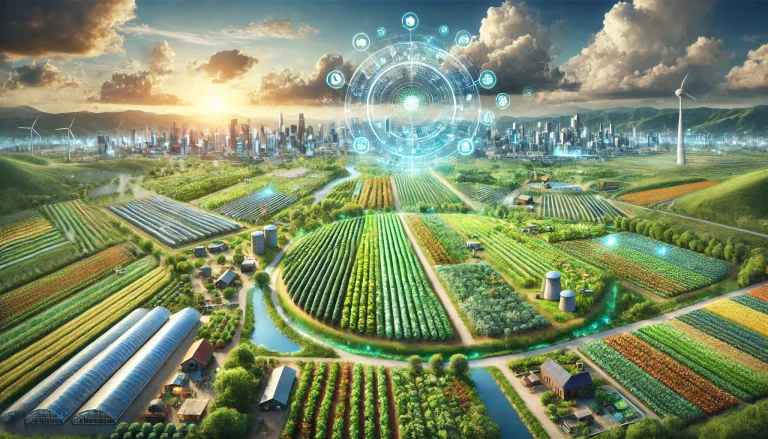
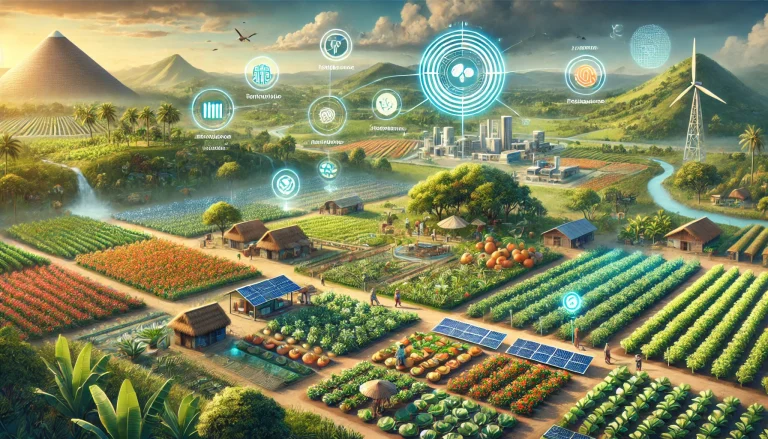
The future of agriculture in developing countries lies in creating a comprehensive platform that democratizes access to modern agricultural technologies. This platform will serve as a one-stop solution for farmers, providing them with tools and resources to improve productivity, sustainability, and income. Imagine a world where farmers can access advanced machinery through affordable rental services, receive real-time advice on best farming practices, and connect directly with buyers in both local and global markets. This platform will leverage artificial intelligence to provide personalized recommendations based on soil conditions, weather forecasts, and crop types. By integrating with mobile technology, even farmers in remote areas will be able to access vital information and services. The platform will also offer financial services tailored to the needs of smallholder farmers, enabling them to invest in necessary inputs and technologies. Over time, this will lead to a transformation in rural economies, where farmers are no longer merely subsistence producers but key players in the global agricultural value chain. Through this platform, we can build a resilient, sustainable, and inclusive agricultural sector that empowers farmers to thrive in the face of future challenges.
Use Cases:
- Precision Farming: Farmers use the platform to monitor soil health, optimize water usage, and manage crops more effectively.
- Market Access: Farmers connect directly with buyers, reducing middlemen and securing better prices for their produce.
- Weather Forecasting: The platform provides real-time weather updates and recommendations for planting and harvesting.
- Equipment Rental: Smallholder farmers rent advanced machinery through the platform, improving productivity without high upfront costs.
- Sustainable Practices: Access to resources on sustainable farming techniques helps farmers maintain soil health and reduce environmental impact.
- Financial Services: Farmers access microloans and insurance products tailored to their needs, helping them invest in technology and safeguard against risks.
- Extension Services: The platform connects farmers with agricultural experts for guidance on best practices and problem-solving.
- Peer Networking: Farmers share experiences and knowledge with each other through the platform, fostering a community of learning and support.
- Supply Chain Management: The platform helps farmers track and manage their supply chains, reducing post-harvest losses.
- Digital Literacy: The platform provides training on digital tools, helping farmers integrate technology into their daily practices.
Target Users and Stakeholders:
- Target Users:
- User: Smallholder farmers
- Age group: 25-60 years
- Gender: M/F
- Usage Pattern: Daily; farmers will use the platform for information, market access, and financial services.
- Benefit: Farmers will gain access to essential tools and information, improving productivity, income, and resilience.
- Stakeholders:
- Farmers: Primary beneficiaries, will use the platform to enhance their agricultural practices.
- Agricultural Extension Workers: Provide expertise and guidance through the platform.
- Local Governments: Support infrastructure and policies that facilitate the platform’s implementation.
- NGOs: Partner with the platform to reach marginalized farming communities.
- Financial Institutions: Offer tailored financial products through the platform.
- Agribusinesses: Engage with farmers as suppliers or buyers on the platform.
- Technology Providers: Develop and maintain the platform’s technological infrastructure.
Key Competition:
The key competition includes established agricultural technology platforms and services that provide similar solutions. Companies like FarmCrowdy, Hello Tractor, and Twiga Foods are making strides in this area by offering digital platforms that connect farmers with markets, financing, and equipment. Additionally, global giants like John Deere and Syngenta offer advanced farming equipment and services, though often at a scale that smallholder farmers cannot afford.
Products/Services:
- FarmCrowdy: Digital platform connecting farmers with investors, providing access to capital.
- Hello Tractor: A mobile platform that allows farmers to rent tractors on demand.
- Twiga Foods: Facilitates the distribution of agricultural produce from farmers to vendors through a digital marketplace.
- John Deere: Provides advanced farming equipment and technology solutions.
- Syngenta: Offers crop protection products and seeds tailored to various farming environments.
Active Startups:
- AgroCenta: Focuses on improving market access and supply chain efficiency for smallholder farmers.
- Apollo Agriculture: Provides financing and insurance products tailored to the needs of farmers.
- Tulaa: Offers mobile-based financial and market access services to farmers.
- Farmerline: Provides agricultural information, inputs, and financial services via mobile platforms.
- Aerobotics: Uses drone technology to help farmers monitor crop health and optimize yields.
- Pula: Specializes in agricultural insurance solutions for smallholder farmers.
- WeFarm: A peer-to-peer knowledge-sharing platform for farmers.
- FarmDrive: Uses data analytics to provide credit scoring and financial access for farmers.
- iProcure: Streamlines the supply chain by connecting farmers with agricultural input suppliers.
- Agrosmart: Provides digital solutions for monitoring and improving agricultural practices.
Ongoing Work in Related Areas:
There are various ongoing projects and initiatives aimed at improving access to agricultural technology in developing countries. These include collaborations between governments, NGOs, and the private sector to enhance digital literacy among farmers, provide affordable access to modern equipment, and develop platforms for market access. Organizations like the World Bank, FAO, and USAID are actively involved in funding and supporting these initiatives, focusing on sustainability and scalability.
Recent Investment:
Recent investments in agricultural technology have shown significant growth, particularly in regions like Sub-Saharan Africa and Southeast Asia. For example, in 2023, Apollo Agriculture raised $40 million in a Series B funding round to expand its digital platform for farmers. Similarly, Hello Tractor secured $12 million in funding to grow its tractor-sharing service across Africa. These investments are indicative of the growing recognition of the importance of agricultural technology in addressing global food security challenges.
Market Maturity:
The market for agricultural technology in developing countries is still in its nascent stage but is rapidly maturing. As more farmers gain access to digital tools and platforms, the demand for these services is expected to increase significantly. Governments and international organizations are also playing a crucial role in accelerating market growth by providing subsidies, training, and infrastructure development. However, challenges such as digital literacy, affordability, and connectivity remain significant barriers to full market maturity. Over the next decade, we can expect to see a significant transformation in the agricultural sector as these barriers are gradually overcome and more farmers integrate technology into their practices.
Summary:
Agriculture in developing countries faces a critical challenge due to the lack of access to modern technologies, which hampers productivity and limits the ability of farmers to compete globally. Addressing this issue through a comprehensive digital platform could revolutionize the agricultural sector by providing farmers with access to essential tools, resources, and markets. Such a platform would empower farmers to adopt sustainable practices, improve yields, and secure better incomes. While competition exists in the form of existing platforms and services, the market is still ripe for innovation, especially in areas such as precision farming, equipment rental, and financial services. Active startups and ongoing initiatives show promise in bridging the technological gap, supported by recent investments that underscore the potential for growth in this sector. As the market matures, we can
expect significant advancements in the agricultural landscape of developing countries, leading to improved food security and economic stability.