Problem Statement
Many financial institutions are burdened by legacy systems—outdated and inflexible technologies that were built decades ago and are deeply entrenched in their operations. These systems often represent significant technological debt, making it challenging for firms to innovate, adapt, and remain competitive in a rapidly evolving market. As financial technology continues to advance, the gap between the capabilities of legacy systems and the demands of modern banking widens, putting institutions at a disadvantage.
Legacy systems are typically characterized by their complexity, lack of interoperability, and reliance on obsolete programming languages or hardware. They are difficult to update or replace because they are deeply integrated into the core operations of the institution, managing everything from customer accounts to transaction processing. The risk of disruption during a system upgrade is high, with potential impacts on customer service, regulatory compliance, and overall business continuity.
The need to modernize these systems is urgent, but it is not without significant challenges. Replacing or overhauling a legacy system is a costly and time-consuming process that requires careful planning and execution. Financial institutions must ensure that the transition to new technologies does not disrupt daily operations or compromise data security. Additionally, there is a need to integrate new systems seamlessly with existing processes and technologies to avoid creating new silos or inefficiencies.
Furthermore, the skills needed to maintain and update legacy systems are becoming increasingly scarce as more IT professionals focus on modern technologies. This skills gap adds another layer of complexity to the challenge, as institutions must find or train specialists who can manage both old and new systems during the transition period.
Financial institutions also face pressure from regulators to ensure that any system modernization efforts comply with strict industry standards for security, data privacy, and operational resilience. Failing to meet these standards can result in regulatory penalties, reputational damage, and a loss of customer trust.
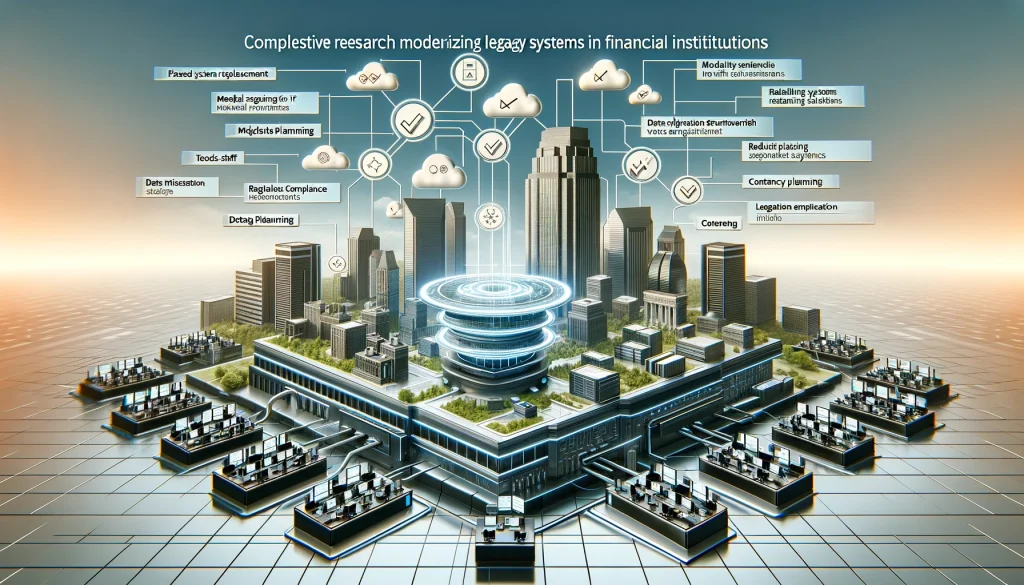
To address these challenges, financial institutions must adopt a strategic approach to legacy system modernization. This includes evaluating the current state of their systems, prioritizing critical areas for improvement, and developing a phased plan for upgrading or replacing outdated technologies. Institutions should also explore partnerships with technology providers that specialize in legacy system transformation and consider adopting cloud-based or modular solutions that offer greater flexibility and scalability.
Ultimately, the goal is to create a modern, agile IT infrastructure that supports innovation, improves operational efficiency, and enhances the customer experience. By successfully navigating the complexities of legacy system modernization, financial institutions can position themselves for long-term success in an increasingly digital and competitive market.
Pain Points
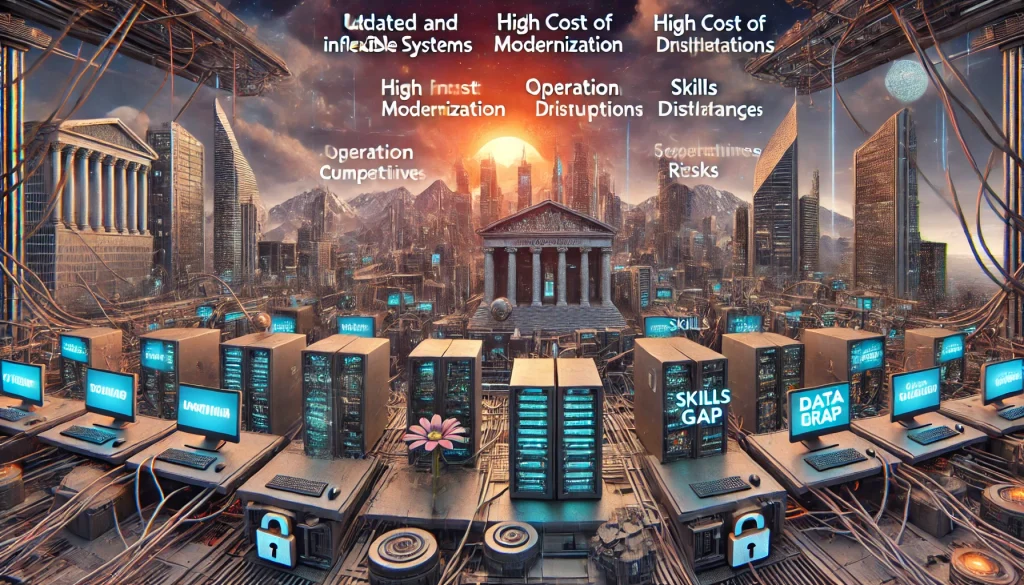
- Outdated and Inflexible Systems: Legacy systems are often built on outdated technologies that are difficult to update or modify.
- Technological Debt: The accumulated technical debt from years of patching and maintaining legacy systems hinders innovation and adaptability.
- High Cost of Modernization: Replacing or overhauling legacy systems is a costly and time-consuming process.
- Operational Disruption: The risk of disrupting daily operations during system upgrades or replacements is significant.
- Integration Challenges: Ensuring that new technologies can be seamlessly integrated with existing systems and processes is a major challenge.
- Skills Gap: The skills needed to maintain and update legacy systems are becoming increasingly scarce.
- Regulatory Compliance: Modernization efforts must comply with strict industry standards for security, data privacy, and operational resilience.
- Data Security Risks: Transitioning from legacy systems to modern technologies poses risks to data security and integrity.
- Siloed Systems: Legacy systems often operate in silos, leading to inefficiencies and a lack of interoperability with newer technologies.
- Maintaining Competitiveness: The inability to innovate due to outdated systems puts financial institutions at a competitive disadvantage.
Future Vision
Our platform envisions a future where financial institutions have successfully modernized their IT infrastructures, transforming outdated legacy systems into agile, scalable, and secure environments that support innovation and operational efficiency. By adopting a phased approach to modernization, leveraging cloud-based and modular solutions, and prioritizing regulatory compliance and data security, institutions can overcome the challenges posed by legacy systems and position themselves for long-term success.
The platform will support financial institutions in evaluating the current state of their legacy systems, identifying critical areas for improvement, and developing a strategic plan for modernization. This includes conducting a thorough assessment of the risks and benefits associated with different modernization approaches, such as system replacement, re-engineering, or incremental upgrades.
One key focus will be on minimizing operational disruption during the transition. The platform will provide tools and resources to help institutions manage the risks associated with system upgrades, including robust testing frameworks, contingency planning, and phased rollouts. By taking a methodical approach to modernization, institutions can ensure that their operations remain stable and that customer service is not compromised.
Integration will also be a priority. The platform will guide institutions in adopting modular and cloud-based solutions that can be easily integrated with existing systems and processes. This approach will reduce the risk of creating new silos and will enable institutions to scale their IT infrastructures as needed to meet future demands.
Addressing the skills gap will be another critical component of the platform’s strategy. Institutions will be encouraged to invest in training programs for their IT staff, equipping them with the skills needed to manage both legacy and modern systems. The platform will also provide access to a network of technology providers and consultants who specialize in legacy system transformation.
Regulatory compliance and data security will be at the forefront of the platform’s recommendations. Institutions will be supported in implementing modernization efforts that adhere to industry standards for security, data privacy, and operational resilience. This includes adopting best practices for data migration, encryption, and access control to protect sensitive information during the transition.
By embracing these strategies, financial institutions can create a modern IT infrastructure that not only supports current operations but also enables future growth and innovation. This transformation will enhance the customer experience, improve operational efficiency, and ensure that institutions remain competitive in a rapidly evolving market.
Use Cases
- Phased System Replacement: Implementing a phased approach to replacing legacy systems, starting with the most critical components.
- Modular and Cloud-Based Solutions: Adopting modular and cloud-based technologies that offer flexibility, scalability, and ease of integration.
- Robust Testing Frameworks: Developing comprehensive testing frameworks to identify and mitigate risks associated with system upgrades.
- Training Programs for IT Staff: Investing in training programs to equip IT staff with the skills needed to manage both legacy and modern systems.
- Regulatory Compliance Tools: Implementing tools and frameworks that ensure modernization efforts comply with industry standards for security and data privacy.
- Data Migration Best Practices: Adopting best practices for data migration, including encryption and access control, to protect sensitive information.
- Contingency Planning: Developing contingency plans to address potential disruptions during system upgrades or replacements.
- Seamless Integration Strategies: Ensuring that new technologies can be seamlessly integrated with existing systems and processes.
- Legacy System Re-Engineering: Re-engineering legacy systems to improve performance and extend their lifespan while preparing for future upgrades.
- Innovation Enablement: Creating an IT infrastructure that supports innovation and adaptability, allowing institutions to remain competitive in the market.
Target Users and Stakeholders
- User: Financial IT Managers, CIOs, Compliance Officers, Risk Managers, IT Security Teams, and Technology Consultants
- Age Group: 30-60 years
- Gender: M/F
- Usage Pattern: Regular usage for planning, executing, and managing the modernization of legacy systems in financial institutions
- Benefit: Enhanced ability to modernize IT infrastructure, reduce technological debt, and maintain operational stability while enabling innovation
- Stakeholders:
- Financial Institutions: Banks, credit unions, and other financial entities with legacy systems that require modernization.
- Customers: Individuals and businesses that rely on the services provided by financial institutions and expect secure, reliable, and innovative solutions.
- Regulatory Bodies: Agencies responsible for ensuring that financial institutions comply with industry standards for security, data privacy, and operational resilience.
- Technology Providers: Companies offering modern, scalable, and secure solutions to replace or integrate with legacy systems.
- IT and Technology Consultants: Experts who specialize in legacy system transformation, offering guidance and support throughout the modernization process.
Key Competition
- FIS: Provides comprehensive core banking solutions that help financial institutions modernize legacy systems and integrate new technologies.
- Finastra: Offers modular and cloud-based banking solutions that enable financial institutions to replace legacy systems and scale their IT infrastructures.
- Temenos: Specializes in core banking transformation, offering solutions that support the phased replacement of legacy systems and ensure seamless integration.
- Oracle Financial Services: Delivers cloud-based and on-premises solutions that help financial institutions modernize their IT infrastructures while maintaining compliance with industry regulations.
- IBM: Offers consulting services and technology solutions that assist financial institutions in re-engineering and modernizing legacy systems.
Products/Services
- FIS Core Banking Solutions: Providing comprehensive core banking solutions that enable financial institutions to modernize legacy systems and integrate new technologies.
- Finastra Modular Solutions: Offering modular and cloud-based banking solutions that support the phased replacement of legacy systems and enable IT infrastructure scalability.
- Temenos Core Transformation: Specializing in core banking transformation, with solutions that ensure seamless integration and modernization of legacy systems.
- Oracle Cloud and On-Premises Solutions: Delivering cloud-based and on-premises solutions that help financial institutions modernize IT infrastructures while ensuring regulatory compliance.
- IBM Legacy System Modernization Services: Providing consulting services and technology solutions that assist financial institutions in re-engineering and modernizing legacy systems.
Active Startups
- **ModernizeIT**: Specializes in legacy system transformation for financial institutions, offering cloud-based solutions and phased modernization strategies.
- FlexiBank: Focuses on modular and scalable banking solutions that enable financial institutions to replace or upgrade legacy systems with minimal disruption.
- CoreShift: Provides core banking transformation services that help financial institutions transition from legacy systems to modern, agile IT infrastructures.
- LegacyGuard: Offers tools and services for secure data migration, encryption, and access control during legacy system modernization efforts.
- InnovaBank: Innovates in cloud-based banking solutions that support the seamless integration of new technologies with legacy systems.
- TransformX: Specializes in re-engineering legacy systems to improve performance and extend their lifespan while preparing for future upgrades.
- RegComplyTech: Provides regulatory compliance tools that ensure modernization efforts adhere to industry standards for security and data privacy.
- SafeDataMove: Focuses on best practices for data migration during legacy system modernization, with a focus on data security and integrity.
- AgileBanking: Offers cloud-based and modular solutions that enable financial institutions to maintain competitiveness while modernizing legacy systems.
- LegacyRenew: Provides consulting services and technology solutions for the phased modernization of legacy systems in financial institutions.
Ongoing Work in Related Areas
- Legacy System Modernization Research: Exploring new methods and technologies for modernizing legacy systems in financial institutions.
- Cloud-Based and Modular Solutions: Developing scalable and flexible cloud-based and modular solutions that can replace or integrate with legacy systems.
- Data Migration Best Practices: Researching best practices for data migration, encryption, and access control during legacy system modernization.
- Regulatory Compliance Innovations: Innovating tools and frameworks that help financial institutions comply with industry standards during modernization efforts.
- Training Programs for IT Staff: Developing training programs that equip IT staff with the skills needed to manage both legacy and modern systems.
- Operational Stability Strategies: Exploring strategies for maintaining operational stability during the transition from legacy systems to modern technologies.
- Integration and Interoperability Solutions: Innovating in the development of solutions that ensure seamless integration between legacy and modern systems.
- Technological Debt Reduction: Researching methods for reducing technological debt and improving the adaptability of legacy systems.
- Agile and Scalable IT Infrastructures: Developing IT infrastructures that support innovation and scalability while maintaining compliance with industry standards.
- Customer Experience Enhancements: Exploring ways to enhance the customer experience by modernizing legacy systems and integrating new technologies.
Recent Investment
- ModernizeIT: $35M in Series A funding led by technology-focused venture capital firms, January 2021.
- FlexiBank: $28M in Seed funding from financial technology investors, March 2020.
- CoreShift: $22M in Series B funding from banking innovation investors, June 2021.
- LegacyGuard: $18M in Series A funding from data security-focused investment firms, September 2020.
- InnovaBank: $15M in Seed funding from cloud-based solutions investors, December 2020.
Market Maturity
The market for legacy system modernization in financial institutions is rapidly maturing as firms recognize the need to replace outdated technologies with modern, agile, and scalable solutions. Companies like FIS, Finastra, and Temenos are leading the way with comprehensive core banking solutions, modular and cloud-based technologies, and core transformation services. Startups such as ModernizeIT, FlexiBank, and CoreShift are driving innovation in legacy system transformation, cloud-based banking solutions, and data migration best practices. Significant investments in legacy system modernization research, cloud-based and modular solutions, and regulatory compliance tools are transforming the financial industry, enabling institutions to reduce technological debt, maintain operational stability, and remain competitive in a rapidly evolving market. As the market continues to evolve, we expect to see more integrated and advanced solutions that support the seamless modernization of legacy systems and position financial institutions for long-term success.
Summary
Many financial institutions are burdened by legacy systems that are outdated and inflexible. These systems, often built decades ago, are difficult to update or replace, creating technological debt that hinders innovation and adaptability. The challenge is to modernize these systems without disrupting operations, ensuring that new technologies can be integrated seamlessly and that the firm remains competitive in a rapidly evolving market. Our proposed platform leverages phased system replacement, modular and cloud-based solutions, robust testing frameworks, training programs for IT staff, regulatory compliance tools, data migration best practices, contingency planning, seamless integration strategies, legacy system re-engineering, and innovation enablement to address these challenges. Key pain points include outdated and inflexible systems, technological debt, high cost of modernization, operational disruption, integration challenges, skills gap, regulatory compliance, data security risks, siloed systems, and maintaining competitiveness.
Target users include financial IT managers, CIOs, compliance officers, risk managers, IT security teams, and technology consultants, with stakeholders encompassing financial institutions, customers, regulatory bodies, technology providers, and IT and technology consultants. Key competitors like FIS, Finastra, Temenos, Oracle Financial Services, and IBM offer various core banking solutions, modular and cloud-based technologies, core transformation services, cloud-based and on-premises solutions, and legacy system modernization services, while startups such as ModernizeIT, FlexiBank, and CoreShift are driving innovation in legacy system transformation, cloud-based banking solutions, and data migration best practices. Recent investments highlight significant interest and growth potential in platforms addressing the challenges of legacy system modernization in financial institutions.
By addressing these challenges and prioritizing the modernization of legacy systems, financial institutions can create a modern, agile IT infrastructure that supports innovation, improves operational efficiency, and enhances the customer experience. This transformation will position institutions for long-term success in an increasingly digital and competitive market.