Problem Statement
Supply chains are highly complex networks that rely on a seamless flow of raw materials, components, and finished goods. However, unpredictable global events such as pandemics, natural disasters, or geopolitical conflicts can cause major disruptions, leading to:
- Raw Material Shortages: Suppliers may be unable to source essential materials due to factory shutdowns, trade restrictions, or infrastructure damage.
- Logistics Bottlenecks: Transportation delays due to port congestion, border restrictions, or fuel shortages make it difficult to move goods efficiently.
- Demand-Supply Imbalance: Companies struggle to predict demand shifts during crises, causing either overstocking or stockouts.
- Increased Costs: Price volatility in materials and logistics drives up procurement and operational expenses.
- Supplier Reliability Issues: Companies relying on a limited number of suppliers are vulnerable when disruptions affect key partners.
Pain Points
- Raw Material Shortages: Key inputs become scarce due to supplier shutdowns or trade restrictions.
- Shipping Delays: Port congestion, customs issues, or geopolitical barriers slow down transportation.
- Rising Costs: Increased logistics, fuel, and material costs lead to higher operational expenses.
- Supplier Dependence: Relying on a small number of suppliers makes businesses vulnerable to disruptions.
- Lack of Real-Time Visibility: Businesses struggle to track shipments and predict disruptions.
- Inventory Management Challenges: Over-ordering leads to high storage costs, while under-ordering results in stockouts.
- Regulatory Uncertainty: Sudden changes in trade policies, tariffs, or sanctions disrupt supply chain planning.
- Workforce Shortages: Pandemics or labor strikes can reduce available staff for production and logistics.
- Cybersecurity Risks: Increased reliance on digital supply chains exposes companies to cyberattacks.
- Environmental & ESG Compliance: Companies must balance sustainability with supply chain resilience, especially in times of crisis.
Key Competitors & Their Offerings
Several companies are actively working to make supply chains more resilient. Below are the top players:
- SAP (Germany) – SAP Integrated Business Planning (IBP)
- Offers AI-driven demand forecasting, supplier risk management, and real-time analytics.
- Helps companies optimize their supply chain responsiveness.
- Oracle (USA) – Oracle Supply Chain Management (SCM)
- Provides cloud-based supply chain visibility, predictive analytics, and logistics tracking.
- Helps businesses adapt to disruptions with automated workflows.
- IBM (USA) – IBM Sterling Supply Chain Suite
- Uses AI and blockchain to enhance supply chain transparency and security.
- Offers real-time tracking and proactive risk assessment.
- Microsoft (USA) – Dynamics 365 Supply Chain Management
- Leverages IoT and AI for predictive maintenance, demand forecasting, and supplier monitoring.
- Provides integration with other enterprise applications.
- Coupa (USA) – Coupa Supply Chain Design & Planning
- Focuses on procurement and supplier risk management with AI-driven recommendations.
- Helps businesses identify alternative suppliers during crises.
Top Startups Innovating in This Space
Several emerging companies are introducing new technologies to solve supply chain issues:
- Project44 (USA) – Provides real-time supply chain visibility for logistics and shipping.
- FourKites (USA) – AI-powered shipment tracking and predictive ETA solutions.
- Shipwell (USA) – Cloud-based freight management platform optimizing logistics operations.
- Resilinc (USA) – Uses AI to monitor global supply chain risks and suggest alternative sourcing.
- Elementum (USA) – Supply chain incident response platform to mitigate disruptions.
- Everstream Analytics (USA) – Uses AI to predict and prevent supply chain disruptions.
- Locus (India) – AI-driven logistics optimization for route planning and last-mile delivery.
- Tive (USA) – Real-time shipment tracking and analytics for supply chain visibility.
- Overhaul (USA) – Cargo security and risk management platform.
- ClearMetal (USA – Acquired by Project44) – Predictive supply chain analytics.
Market Gaps & Opportunities
Despite existing solutions, several challenges remain:
- Lack of real-time, end-to-end visibility: Most solutions focus on either logistics or procurement but lack full integration.
- Limited predictive analytics: Current AI tools often react to disruptions rather than proactively preventing them.
- Poor supplier diversification insights: Businesses struggle to quickly identify alternative suppliers when disruptions occur.
- High implementation costs: Many solutions are expensive and complex, limiting adoption among small and medium enterprises (SMEs).
- Regulatory uncertainty handling: Few platforms offer compliance tracking for changing trade policies and ESG regulations.
Product Vision
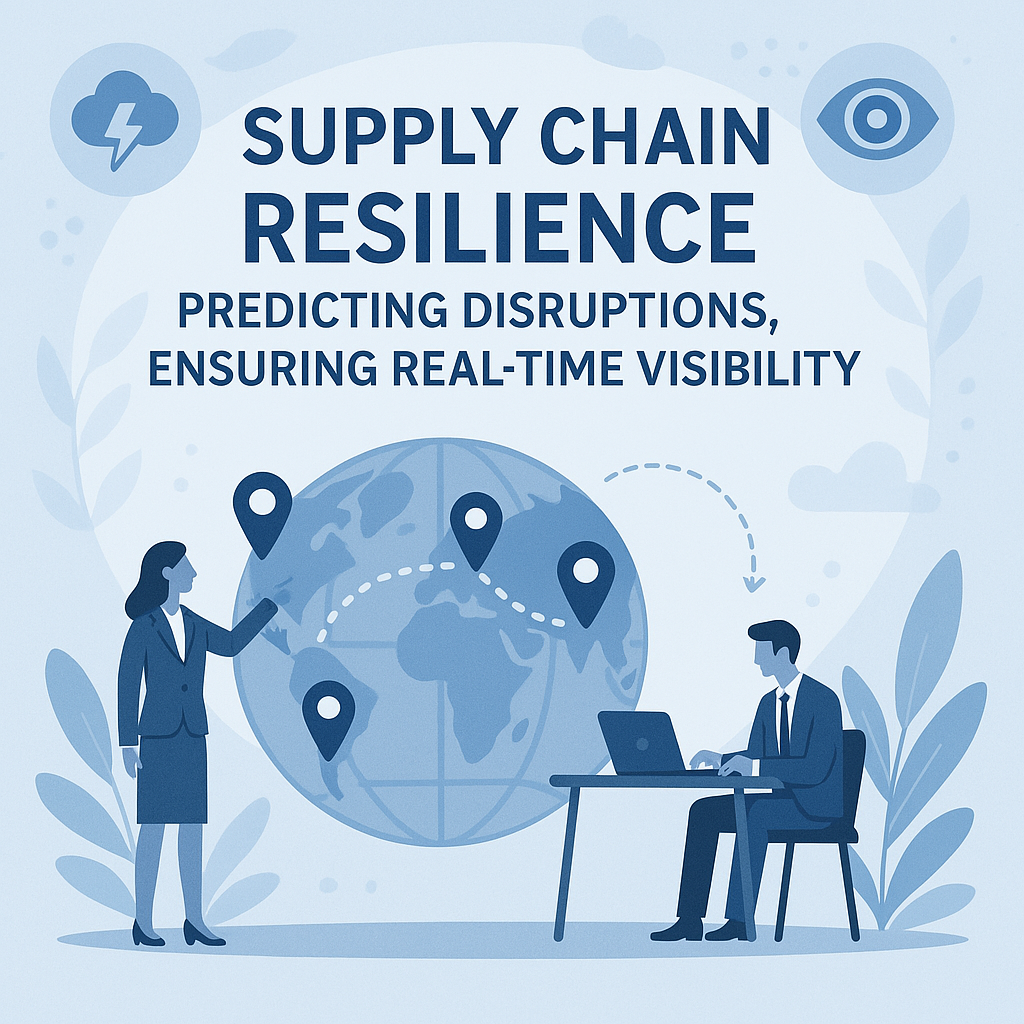
AI-powered supply chain resilience platform that provides real-time visibility, predictive risk management, and automated supplier diversification. Unlike existing solutions that focus on specific aspects (logistics, procurement, or risk management), our platform will offer end-to-end supply chain intelligence—helping businesses proactively prevent disruptions, rather than just react to them.
Core Capabilities:
- AI-Driven Risk Prediction: Analyzes geopolitical events, climate changes, and market trends to forecast supply chain disruptions before they happen.
- End-to-End Visibility: Tracks goods from suppliers to final delivery in real-time using IoT, blockchain, and digital twins.
- Automated Supplier Diversification: Uses AI to recommend alternative suppliers instantly when a disruption occurs.
- Dynamic Demand-Supply Matching: Predicts demand fluctuations and suggests optimal procurement strategies.
- Regulatory Compliance Engine: Monitors trade regulations and ESG requirements to ensure businesses stay compliant.
Use Cases
- Pandemic or Natural Disaster Prediction: AI forecasts the impact of upcoming crises and suggests alternate sourcing locations.
- Real-Time Shipment Tracking: Businesses can monitor delays, reroute shipments, and manage inventory accordingly.
- Automated Supplier Switching: If a primary supplier fails, the system recommends vetted alternatives instantly.
- Customs & Regulatory Monitoring: Businesses receive automatic alerts on policy changes affecting their supply chain.
- Dynamic Demand Forecasting: AI analyzes market trends to optimize inventory and prevent overstocking or shortages.
- Cybersecurity Risk Mitigation: Detects potential cyber threats in the digital supply chain and suggests preventive measures.
- Carbon Footprint & ESG Compliance: Helps companies track and optimize sustainability efforts in supply chain operations.
- Port Congestion & Logistics Optimization: Provides alternative shipping routes when congestion is detected.
- Workforce Availability Prediction: AI predicts labor shortages and suggests operational adjustments.
- Automated Resilience Scoring: Evaluates suppliers based on risk factors and suggests diversification strategies.
Summary
Global supply chains face increasing disruptions due to pandemics, natural disasters, and geopolitical tensions. These events create raw material shortages, logistics bottlenecks, rising costs, and unpredictable demand shifts. Traditional supply chain management solutions often focus on reactive measures, leaving businesses vulnerable to prolonged disruptions.
Our proposed solution is an AI-powered supply chain resilience platform that proactively predicts disruptions, ensures real-time shipment tracking, and automates supplier diversification. Unlike existing tools that focus on isolated aspects like procurement or logistics, our platform offers an end-to-end, integrated solution using AI, IoT, and blockchain technologies.
Key capabilities include:
- AI-driven risk prediction for forecasting disruptions before they happen.
- End-to-end supply chain visibility for real-time tracking and bottleneck detection.
- Automated supplier diversification to mitigate dependency risks.
- Dynamic demand forecasting for optimizing inventory levels.
- Regulatory compliance monitoring to manage trade restrictions and ESG standards.