
problem statement
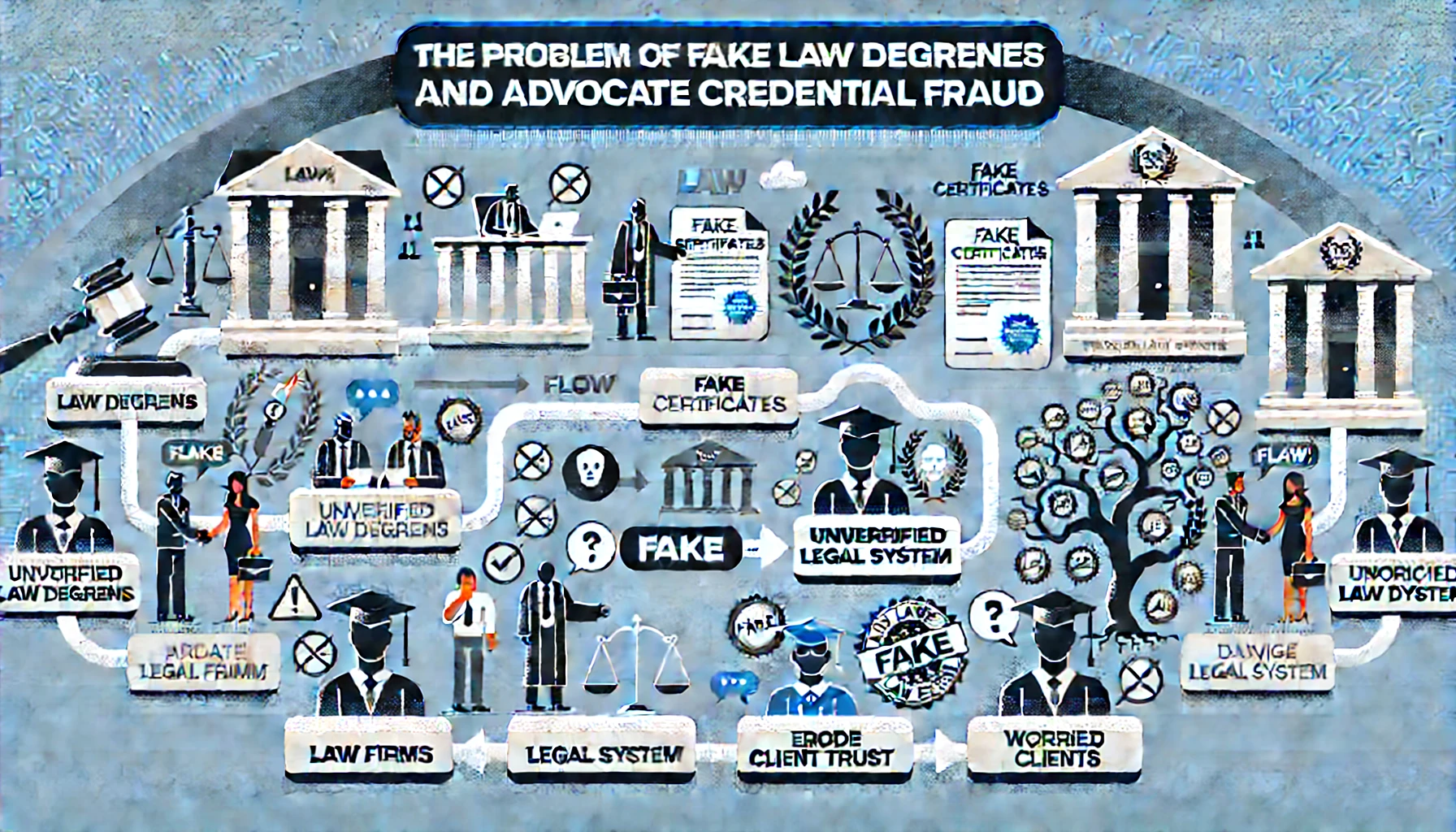
The legal profession is built on trust, expertise, and ethical practice. However, the increasing presence of individuals with fake law degrees or fraudulent enrollments poses a severe threat to this foundation. These imposters not only undermine the public’s trust in the justice system but also potentially lead to flawed legal outcomes for unsuspecting clients. The Bar Council of India (BCI) has recognized this crisis and initiated a nationwide verification exercise to weed out fake advocates.
Despite the necessity, this process faces critical hurdles: the sheer scale of data validation across countless universities and institutions, the manual and time-consuming nature of traditional verification, resistance from various state bar councils, and the lack of a unified digital system. Most existing verification exercises are fragmented, often localized, and prone to delays and manipulation. Stakeholders — including courts, law firms, and clients — remain exposed to risks until an efficient, transparent, and secure solution is implemented.
This creates an urgent need for an intelligent, centralized, and automated verification platform that can authenticate advocate credentials swiftly, reduce manual efforts, enhance legal integrity, and allow real-time access to verified profiles for courts, firms, and clients alike.
Pain Points
- Fragmented Records: Law degrees and enrollment data are scattered across multiple state councils and universities, lacking a unified database.
- Manual Verification Delays: Verification today often involves paperwork, manual cross-checking, and in-person visits, which slow the process.
- Fake Credential Proliferation: Fake degrees and unauthorized enrollments remain undetected for long periods.
- Resistance from Stakeholders: State Bar Councils and some practitioners resist verification drives, fearing exposure or disruption.
- No Real-time Access: Courts and clients cannot instantly verify an advocate’s credentials before engagement.
- Data Privacy Risks: Insecure handling of sensitive personal and professional data during manual verification.
- Lack of Transparency: No open or standardized method for credential verification, creating loopholes for fraud.
- Reputational Damage: Law firms and clients suffer if found to have employed or engaged with unqualified advocates.
- High Resource Consumption: Nationwide verification drives are expensive, slow, and difficult to scale.
- Legal System Trust Erosion: Fake advocates damage the credibility of the entire judicial ecosystem.
Key Competitors
- Vakilsearch: A leading LegalTech platform in India, Vakilsearch offers a range of services including company registration, trademark filing, and legal documentation. While not exclusively focused on advocate credential verification, their comprehensive legal services platform positions them as a significant player in the LegalTech space.
- SpotDraft: Specializing in contract automation and legal workflow management, SpotDraft provides tools that could be adapted for credential verification processes. Their focus on streamlining legal operations makes them a noteworthy competitor.
- LegalTech India: Aims to revolutionize legal services delivery through technology, offering accessible and affordable legal solutions. Their vision aligns with the need for efficient credential verification systems.
- Quant LegalTech: Based in Bengaluru, Quant LegalTech specializes in developing legal compliance solutions and has experience in digitizing legal services, which could extend to advocate credential verification.
- Clawlaw: Part of the F6S community, Clawlaw is among the LegalTech companies in India focusing on innovative legal solutions.
Market Maturity
The LegalTech market in India is evolving, with increasing adoption of digital solutions for legal processes. While traditional methods still dominate, there’s a clear shift towards embracing technology for efficiency and transparency. The market is moderately mature, with ample opportunities for innovative solutions in advocate credential verification.
Product Vision
VeriLex envisions a future where the credibility of every practicing advocate is beyond doubt, where law firms, courts, and clients can instantly verify the authenticity of an advocate’s qualifications and enrollment status with absolute confidence. Our platform will serve as a centralized, AI-powered verification engine that connects directly to educational institutions, the Bar Council of India (BCI), State Bar Councils, and other authoritative data sources.
By leveraging blockchain-backed credential storage and AI-based anomaly detection, VeriLex will ensure that once an advocate’s credentials are verified, the information is securely recorded and always accessible to authorized parties in real-time. This will prevent fraudulent advocates from entering the profession and protect the integrity of the legal system.
Additionally, VeriLex will offer a user-friendly interface for advocates to manage their credentials, and for firms and clients to validate profiles effortlessly before hiring or assigning cases. This reduces compliance risks, speeds up hiring and case assignments, and enhances public trust in the legal profession. Over time, VeriLex aims to become the definitive source of truth for legal professional identity in India and abroad.
1. Use Case: Advocate Credential Verification for Law Firms
- Short Info: Law firms authenticate an advocate’s academic and enrollment credentials before onboarding.
- Reference: Pain Points (3, 5), Product Vision (1, 4).
- Stakeholders: Law Firms, Advocates, VeriLex System.
- Elaboration: Law firms require verified, licensed professionals to represent clients and maintain ethical standards. VeriLex will allow HR and legal operations teams to input an advocate’s enrollment ID or Aadhaar-linked identity, triggering automated cross-checks with Bar Council databases and university records. This removes dependency on manual document submission and ensures fraud-proof hiring.
- Requirements:
- Advocate identity input field.
- Integration with BCI and State Bar databases.
- Verification result dashboard.
- Notification system for pending verifications.
- Data encryption and privacy compliance.
- Automated rejection of unverifiable entries.
- Downloadable verification reports.
- Bulk verification feature.
- Historical verification logs.
- Integration API for law firm HR systems.
2. Use Case: Real-time Validation During Court Proceedings
- Short Info: Courts verify the standing of advocates before allowing participation in hearings.
- Reference: Pain Points (5, 7), Product Vision (2, 4).
- Stakeholders: Courts, Judges, Advocates, VeriLex System.
- Elaboration: Judges or clerks will use VeriLex to confirm an advocate’s active enrollment status before hearings. A court-side terminal could pull the advocate’s BCI status using an enrollment ID or QR code. Instant feedback on eligibility helps prevent unauthorized practice and enhances case integrity.
- Requirements:
- Courtside verification terminal.
- Real-time status check.
- Enrollment status API integration.
- Court-specific secure access.
- QR code scanner for quick lookup.
- Advocate profile history view.
- Automated alerts for suspended or fake records.
- Role-based access control.
- Data logging and audit trail.
- Printable verification certificate.
3. Use Case: Client-side Advocate Background Checks
- Short Info: Clients verify the legitimacy of their lawyer before engaging.
- Reference: Pain Points (1, 5, 8), Product Vision (3).
- Stakeholders: Clients, Advocates, VeriLex System.
- Elaboration: Clients hiring a legal professional can input an advocate’s enrollment ID on VeriLex’s public portal to confirm their standing and academic background. This shields clients from fake professionals and increases trust.
- Requirements:
- Public verification portal.
- Advocate profile search.
- Result visibility limited to verification status.
- Profile authenticity certificate.
- Auto-expiry for verification records.
- User-friendly interface.
- Digital watermarking for certificates.
- Privacy-compliant data handling.
- CAPTCHA to prevent abuse.
- Feedback form for unlisted or fake entries.
4. Use Case: Bar Council Automated Enrollment Check
- Short Info: Automating the verification of new applicants’ law degrees.
- Reference: Pain Points (2, 4), Product Vision (4, 7).
- Stakeholders: Bar Councils, Universities, Advocates.
- Elaboration: State Bar Councils use VeriLex to cross-verify new applicant degrees directly from universities’ digital credential databases. Automation reduces clerical errors, speeds up enrollment, and eliminates forged submissions.
- Requirements:
- University API integration.
- Degree authenticity scoring.
- Enrollment application workflow.
- Document upload and parsing.
- Automated eligibility flagging.
- Secure admin review dashboard.
- Application rejection notifications.
- Bulk verification capability.
- Audit logs.
- Enrollment completion certificate.
5. Use Case: Ongoing Compliance Audits for Firms
- Short Info: Regular automated checks on law firm advocate records.
- Reference: Pain Points (1, 8), Product Vision (5).
- Stakeholders: Law Firms, VeriLex System.
- Elaboration: Law firms enroll their entire roster into VeriLex’s system for recurring audits. The platform auto-verifies each advocate at specified intervals and flags anomalies or expirations, ensuring constant compliance and reducing internal audit overhead.
- Requirements:
- Roster upload.
- Recurring verification scheduler.
- Non-compliance alerting.
- Auto-reverification process.
- Visual compliance dashboard.
- Regulatory reporting export.
- Data retention policies.
- Secure role-based access.
- Historical data comparison.
- Anomaly detection algorithms.
6. Use Case: Whistleblower Reporting and Alerting
- Short Info: Enables users to report suspected fake advocates anonymously.
- Reference: Pain Points (3, 4, 9), Product Vision (6).
- Stakeholders: Clients, Advocates, Bar Councils, VeriLex Admin.
- Elaboration: Any individual — client, peer, or employer — can anonymously report suspicious advocate identities via VeriLex. Once reported, VeriLex flags the profile for immediate re-verification, involving the Bar Council and sending an automated inquiry to the respective university for degree confirmation. This empowers the community to maintain legal integrity collaboratively.
- Requirements:
- Anonymous reporting form.
- Automated verification trigger.
- Notification system for stakeholders.
- Report status tracker.
- Bar Council escalation workflow.
- Identity obfuscation for reporters.
- Legal notice integration if fraud confirmed.
- Secure reporting database.
- Automated fraud incident logs.
- Role-based access to reports.
7. Use Case: University-to-BCI Credential Push
- Short Info: Universities push verified graduate lists to BCI directly.
- Reference: Pain Points (1, 6), Product Vision (7).
- Stakeholders: Universities, BCI, VeriLex System.
- Elaboration: VeriLex integrates with university systems to allow verified graduate lists to be securely transmitted to the Bar Council of India via APIs or blockchain. This reduces fraudulent self-declared qualifications and streamlines Bar Council enrollments.
- Requirements:
- University system integration.
- Data encryption during transfer.
- Graduate list validation.
- Blockchain ledger record.
- BCI import dashboard.
- Automated discrepancy flagging.
- Completion acknowledgment notifications.
- Role-based access for university officials.
- Historical record archiving.
- Compliance with national data standards.
8. Use Case: Blockchain-secured Advocate Profile Vault
- Short Info: Immutable, tamper-proof storage of verified advocate credentials.
- Reference: Pain Points (7, 6), Product Vision (8).
- Stakeholders: Advocates, Bar Councils, VeriLex System.
- Elaboration: Once an advocate’s credentials are verified, their information is hashed and stored on a blockchain. This guarantees long-term authenticity, prevents tampering, and allows any verification request to reference a secure, decentralized record.
- Requirements:
- Blockchain ledger setup.
- Hash generation for credential data.
- Credential update workflow.
- Distributed node validation.
- Proof-of-authenticity certificates.
- Revocation protocol for invalid credentials.
- Open-access verification lookup.
- Integration with courts and firms.
- GDPR and data localization compliance.
- Smart contract logic for status updates.
9. Use Case: Integration with LegalTech Hiring Platforms
- Short Info: LegalTech hiring platforms integrate VeriLex for automated checks.
- Reference: Pain Points (1, 8), Product Vision (9).
- Stakeholders: LegalTech Companies, Law Firms, Advocates.
- Elaboration: Hiring platforms like Vakilsearch and SpotDraft integrate VeriLex to automate verification during onboarding. This ensures the listing of only verified advocates and prevents reputational damage due to fraudulent hires.
- Requirements:
- Open API for integration.
- Webhooks for status updates.
- Partner dashboard.
- Branding options for certification.
- Role-based permissions for HR teams.
- Instant verification feedback loop.
- Bulk validation API.
- Daily sync for status updates.
- Secure token-based access.
- Usage analytics reporting.
10. Use Case: Government Agency Verification Support
- Short Info: Government bodies validate legal advisors before contracts.
- Reference: Pain Points (3, 8), Product Vision (10).
- Stakeholders: Government Agencies, Advocates, VeriLex System.
- Elaboration: Government departments engaging legal counsel for tenders, advisory panels, or contracts will use VeriLex to ensure that only valid, qualified advocates are hired. Agencies can pull real-time verification reports and receive alerts if a credential is flagged or invalidated later.
- Requirements:
- Government-specific access interface.
- Multi-factor authentication for agencies.
- Verification audit trails.
- Contract pre-check workflow.
- Post-engagement compliance monitoring.
- Notification for credential revocation.
- Secure document storage.
- Role-based access controls.
- Legal compliance checklist integration.
- Reporting for legal audits.
11. Use Case: Periodic Advocate Re-verification Program
- Short Info: Scheduled re-verification of advocate credentials to maintain active status.
- Reference: Pain Points (5, 9), Product Vision (1, 5).
- Stakeholders: Advocates, Bar Councils, VeriLex System.
- Elaboration: Advocates are required to undergo periodic re-verification through VeriLex, ensuring their professional status remains active and credentials remain valid over time. The system can auto-notify advocates of re-verification windows and flag non-compliance to Bar Councils, reducing the risk of long-term dormant or fraudulent enrollments.
- Requirements:
- Advocate profile lifecycle management.
- Automated re-verification reminders.
- Deadline-based status update.
- Bar Council reporting integration.
- Expiration-based status suspension.
- Secure document re-submission.
- Compliance certificate generation.
- Discrepancy resolution workflow.
- Multi-language notification support.
- Integration with advocate mobile app.
12. Use Case: Advocate Digital Identity Card Generation
- Short Info: Issuance of a verified digital ID card for advocates.
- Reference: Pain Points (5, 7), Product Vision (8).
- Stakeholders: Advocates, Courts, Clients.
- Elaboration: Once an advocate is verified via VeriLex, the platform generates a tamper-proof digital identity card embedded with a QR code. The card can be scanned by courts, firms, or clients to instantly validate their credentials, offering both convenience and authenticity in professional environments.
- Requirements:
- Digital ID card template design.
- Embedded QR verification code.
- PDF and mobile wallet support.
- Expiry and renewal mechanism.
- Verification lookup interface.
- Secure ID issuance workflow.
- Revocation and reissue features.
- Print-ready high-resolution output.
- Advocate profile linking.
- Legal certification statement.
13. Use Case: Legal Internship Verification Tool
- Short Info: Verify law students’ eligibility for internships.
- Reference: Pain Points (1, 3), Product Vision (4, 7).
- Stakeholders: Law Firms, Universities, Students.
- Elaboration: Before hiring interns, law firms can verify if a student is enrolled in an accredited law program through VeriLex. Universities sync their student records, ensuring firms only engage with verified future advocates. This helps eliminate fraudulent internship claims and standardizes recruitment.
- Requirements:
- University-student record sync.
- Internship eligibility flag.
- Verification status export.
- Bulk check for internship applicants.
- Firm-side dashboard for HR.
- Alert for unlisted or invalid students.
- Consent management for students.
- Document verification APIs.
- Historical internship audit trail.
- Reporting tools for HR.
14. Use Case: Legal Ethics Violation Flagging
- Short Info: Advocate profiles flagged for ethics violations.
- Reference: Pain Points (3, 7), Product Vision (10).
- Stakeholders: Bar Councils, Courts, Clients, Law Firms.
- Elaboration: When an advocate is found guilty of misconduct or disbarred, VeriLex immediately updates their profile status across its network. Firms and courts are automatically notified if the advocate is involved in an ongoing or upcoming case. This ensures proactive risk management.
- Requirements:
- Violation flagging mechanism.
- Automated notifications to stakeholders.
- Audit logs of updates.
- Integration with Bar Council disciplinary records.
- Public status display.
- Timeline of violations.
- Historical profile freeze.
- Bulk communication for law firms.
- Role-based alert customization.
- GDPR-compliant data handling.
Summary
The legal ecosystem thrives on trust, credibility, and professional integrity. Yet, the surge of fake law degrees and fraudulent enrollments is eroding the very foundation of this system. Our research uncovers the magnitude of this challenge, which the Bar Council of India has attempted to combat via nationwide verification — a task so massive that it faces both technical and operational resistance.
The proposed solution, VeriLex, envisions an AI-powered, blockchain-secured verification platform designed to automate the advocate credential lifecycle from graduation to practice. This digital shift aims to protect clients, law firms, and courts from engaging with imposters while simplifying compliance for regulatory bodies.
The research analyzed target users, identified ten pressing pain points — including data fragmentation, slow manual checks, and lack of real-time validation — and reviewed market competitors like Vakilsearch and SpotDraft. Our product vision offers a robust architecture with real-time credential verification, immutable profile storage, and seamless integration with courts, firms, and government bodies.
VeriLex, once launched, will strengthen the judiciary’s credibility, ensure professional trust, and redefine credential verification as a proactive digital safeguard rather than a reactive audit. With ethical law practice at stake, the time for this technological leap is now.