Problem Statement
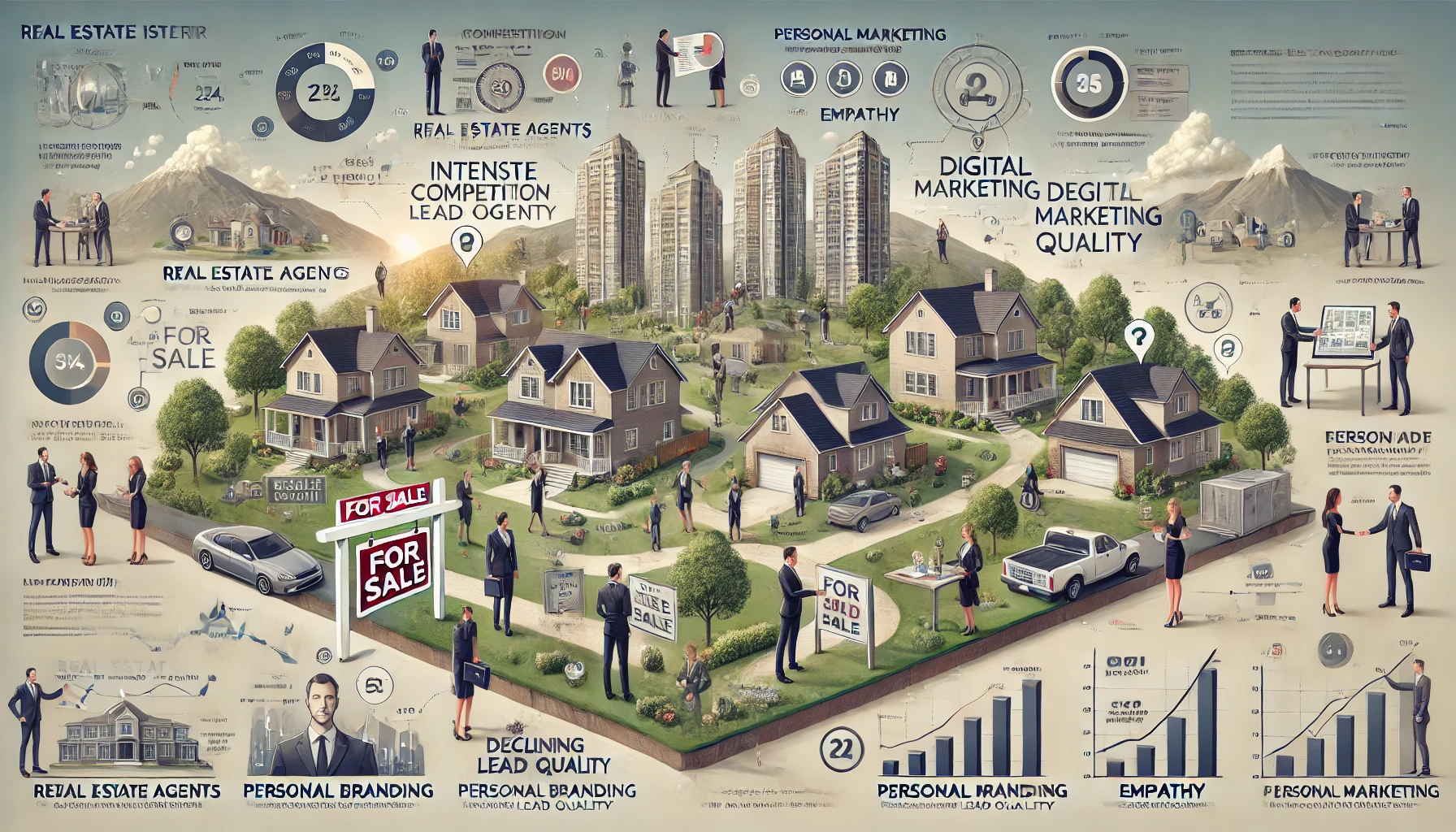
The real estate industry is marked by fierce competition, with countless agents contending for the same properties and potential clients. This saturation results in significant stress for professionals, pushing many to extend their working hours in a bid to secure leads and close deals. Traditional methods—cold calling, open houses, and local advertising—are increasingly less effective in differentiating agents in this crowded space. Moreover, the challenge isn’t just about getting clients, but also about retaining them through personalized, timely, and trust-building engagement.
This challenge is especially pressing for women agents, who statistically represent a majority in residential real estate yet often face subtle biases and systemic barriers in higher-stakes commercial deals. However, women also possess unique strengths—empathy, active listening, and attention to detail—that can significantly improve client satisfaction and loyalty if harnessed correctly.
Emerging from Stephanie Jones-Benton’s TED Talk is a call to action: real estate agents, particularly women, should lean into their natural strengths and seek smarter digital tools to amplify their presence, automate outreach, and showcase their personal brand more effectively to stay ahead in the game.
Stakeholders and Their Roles
- Real Estate Agents – The primary users facing competitive pressure, trying to gain visibility and close deals.
- Brokerage Firms – Manage multiple agents and are responsible for training, tools, and brand presence.
- Home Buyers/Sellers – Indirect stakeholders whose trust and satisfaction are essential for agent success.
- Real Estate Trainers/Coaches – Help agents develop soft skills and sales techniques.
- Marketing Solution Providers – Offer services to enhance online visibility and lead generation.
- Tech Solution Vendors – Develop platforms and apps for CRM, virtual tours, and client engagement.
- Regulators – Ensure ethical practices in real estate dealings and advertising.
- Mentorship Groups/Networks – Support women in real estate to grow their careers.
- Investors in PropTech – Interested in funding platforms that address gaps in agent productivity and lead generation.
- Property Developers – Rely on agent networks to market and sell properties.
Pain Points
- Oversaturation – Too many agents in the same geography creates overwhelming competition.
- Lead Generation – Difficulty in consistently finding qualified leads.
- Personal Branding – Challenges in differentiating oneself without large budgets or tech expertise.
- Client Retention – Trouble maintaining long-term relationships post-sale.
- Work-Life Balance – Long hours and burnout due to high pressure to close.
- Limited Digital Skills – Many agents lack the know-how for effective digital marketing.
- Bias in Commercial Real Estate – Women often face subtle discrimination in high-stakes deals.
- Inefficient Tools – Disconnected systems for CRM, listings, and communications.
- Lack of Mentorship – Women agents often lack strong support networks to help them grow.
- Changing Buyer Expectations – Buyers demand more personalized, tech-enabled experiences.
Innovations in the Industry
The real estate industry is undergoing a significant transformation, driven by technological advancements that enhance efficiency and client engagement. One notable innovation is the integration of Artificial Intelligence (AI) in property transactions.
AI-Powered Property Transactions
AI is streamlining various aspects of real estate, from property searches to closing deals. For instance, AI algorithms can analyze vast datasets to predict market trends, assess property values, and identify potential buyers or sellers. This predictive capability enables real estate professionals to make informed decisions and offer personalized recommendations to clients.
Companies like Zillow have implemented AI to enhance customer experiences by forecasting trends and providing precise listings. However, the adoption of AI also raises concerns about potential biases and the need for transparency in decision-making processes.
Furthermore, AI-powered chatbots and virtual assistants are becoming common, handling initial inquiries, scheduling viewings, and providing 24/7 customer support. This automation frees up agents’ time, allowing them to focus on more complex tasks and build stronger client relationships.
While AI offers numerous benefits, it’s essential for real estate professionals to balance technology with the human touch that clients value. Embracing AI can lead to more efficient operations and enhanced client satisfaction, positioning agents competitively in a rapidly evolving market.
Investment Landscape
The proptech sector has seen significant investment, indicating a robust and growing market:
- In 2024, venture capital investment in proptech reached an all-time high of $15.1 billion, marking a 32.5% year-over-year increase.
- Specifically, AI-powered proptech companies attracted $3.2 billion in venture capital funding in 2024, highlighting the emphasis on integrating advanced technologies into real estate solutions.
Market Maturity
The real estate technology market is maturing, with a plethora of tools available for agents. However, gaps remain in providing integrated solutions that address the unique challenges faced by women agents, such as personal branding, work-life balance, and overcoming biases in commercial real estate.
Product Vision
EmpowerProp envisions a transformative digital platform tailored specifically for real estate agents, with a special emphasis on empowering women to succeed in an intensely competitive landscape. Our solution bridges the critical gaps identified in the current proptech market by integrating personal branding, lead nurturing, and intelligent automation—wrapped in a user-friendly interface that requires minimal technical know-how.
At its core, EmpowerProp will serve as a personal marketing assistant, brand consultant, and productivity coach. The platform will provide tools to help agents build visually striking personal brands through AI-assisted design templates, social media scheduling, and custom landing pages. It will combine these with a powerful, yet intuitive, CRM to manage leads, automate client communications via personalized video and email campaigns, and even predict likely sellers using AI-driven analytics.
What truly differentiates EmpowerProp is its empathy-centered design—rooted in the principles discussed by Stephanie Jones-Benton. Features will include automated “personal touch” reminders, burnout monitoring with wellness suggestions, and mentorship matchmaking to connect emerging women agents with seasoned professionals.
By combining technology with emotional intelligence, EmpowerProp will allow agents to stand out not by working longer hours, but by working smarter, more authentically, and more meaningfully.
The most optimistic launch date for the MVP (Minimum Viable Product) would be December 2025, with alpha trials beginning in September.
Use Cases of EmpowerProp
- Personalized digital branding assistant for agents.
- Automated lead generation and nurturing sequences.
- Custom property pages with 360° virtual tours.
- AI-generated content for social media and newsletters.
- CRM with predictive analytics for identifying hot leads.
- “Burnout monitor” with wellness suggestions.
- One-click video introduction emails for leads.
- Client journey automation from discovery to post-sale.
- Mentorship match for women agents.
- Built-in performance dashboard with coaching tips.
Summary
The real estate industry faces mounting pressure as competition intensifies, particularly in urban and suburban areas where agents vie for the same clients and properties. EmpowerProp, a new-age digital platform, is positioned to address this challenge by empowering real estate professionals—especially women—to differentiate themselves through smarter, more empathetic engagement strategies.
This research began with identifying the key struggles: oversaturation, weak personal branding, difficulty generating quality leads, and a lack of integrated tools to manage the agent-client relationship. Additional hurdles include emotional burnout, limited digital marketing skills, and a significant mentorship gap, especially for women entering commercial real estate.
A detailed competitor and investment analysis revealed a robust and growing market with over $15 billion in recent proptech investment, yet few players adequately address the intersection of technology, emotional intelligence, and brand authenticity.
EmpowerProp’s vision is to transform how agents work—not by increasing hours, but by using AI to optimize workflows, personalize branding, and enhance the client experience. Key use cases such as mentorship matchmaking, wellness tracking, client journey automation, and performance dashboards are designed to offer sustainable growth pathways.
With a planned launch of the MVP in December 2025, EmpowerProp aims to stand out not just as a tool, but as a movement to redefine real estate professionalism through balance, empathy, and cutting-edge innovation.
Published by Tisu singh JSPM Pune