Problem Statement
Public housing is crucial for providing affordable and stable housing options to low-income families. However, many cities face a severe shortage of public housing due to limited funding, bureaucratic inefficiencies, and political resistance. This shortage results in increased homelessness, overcrowded living conditions, and long waiting lists for those in need. These challenges create a pressing need for innovative solutions to improve the availability and quality of public housing. Developing a comprehensive platform to address these issues can help ensure that vulnerable populations have access to safe and affordable housing.
Pain Points
- Limited Funding: Insufficient financial resources to build and maintain public housing.
- Bureaucratic Inefficiencies: Slow and complex administrative processes hinder housing development.
- Political Resistance: Opposition from political entities delaying or blocking public housing projects.
- Homelessness: Increased rates of homelessness due to inadequate public housing.
- Overcrowded Living Conditions: Families living in cramped and unsafe environments.
- Long Waiting Lists: Extended waiting periods for access to public housing.
- Maintenance Issues: Poor upkeep and deteriorating conditions of existing public housing units.
- Stigma: Negative perceptions and stigma associated with public housing residents.
- Land Availability: Limited availability of suitable land for new public housing projects.
- Regulatory Hurdles: Complicated zoning laws and regulations that impede development.

Future Vision
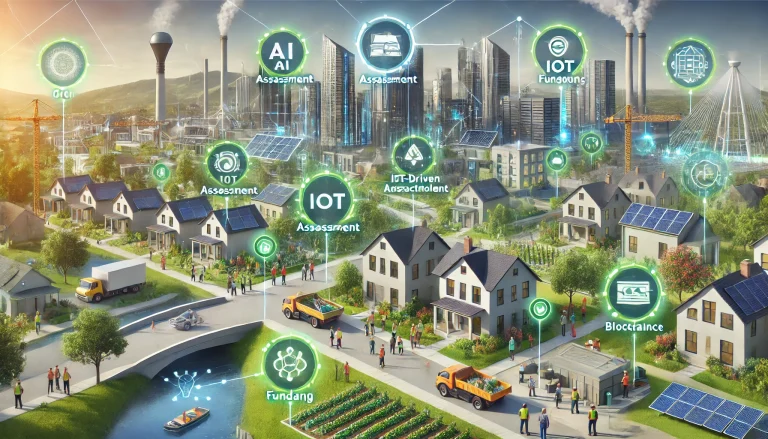
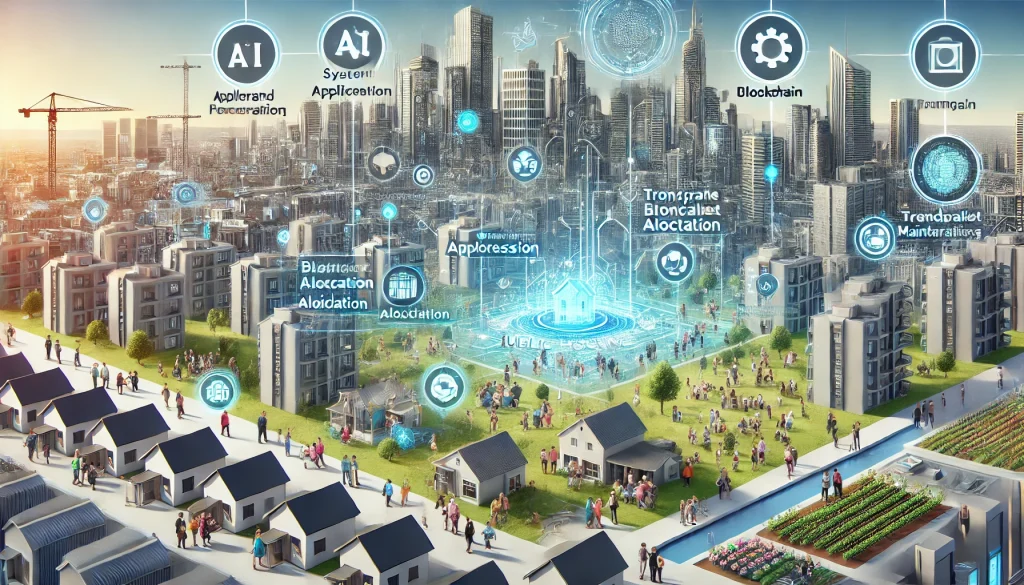
Our vision is to develop a dynamic digital platform that streamlines the development, management, and allocation of public housing. Leveraging advanced technologies like AI, blockchain, and IoT, the platform will enhance efficiency, transparency, and accessibility. The platform will simplify administrative processes, improve maintenance through real-time monitoring, and ensure fair and timely allocation of housing units. By fostering collaboration among stakeholders, securing funding, and addressing political challenges, we aim to significantly increase the availability and quality of public housing, ultimately reducing homelessness and improving living conditions for low-income families.
Use Cases
- Efficient Application Processing: AI-driven systems to streamline public housing applications.
- Transparent Allocation: Blockchain technology to ensure fair and transparent allocation of housing units.
- Real-Time Maintenance Monitoring: IoT sensors to monitor the condition of housing units and automate maintenance requests.
- Funding Platform: Crowdfunding and investment tools to raise funds for public housing projects.
- Community Engagement: Platforms for residents to provide feedback and engage with housing authorities.
- Political Advocacy: Tools to organize and advocate for supportive housing policies.
- Resource Management: AI tools to optimize resource allocation and management.
- Data Analytics: Big data analytics for informed decision-making and planning.
- Regulatory Compliance: Automated compliance tracking to navigate zoning laws and regulations.
- Emergency Response: Systems to provide immediate support and housing in crisis situations.
Target Users and Stakeholders
Target Users:
- Low-income families
- Homeless individuals
- Public housing authorities
- Nonprofit organizations
Stakeholders:
- Government agencies
- Real estate developers
- Community organizations
- Financial institutions
- Advocacy groups
Key Competition
- Zillow: Online real estate platform with property listings and data analytics.
- Redfin: Real estate brokerage offering efficient and transparent services.
- AffordableHousing.com: Platform focused on affordable housing listings and resources.
- Apartment List: Rental marketplace with tools for affordable housing seekers.
- Opendoor: Real estate platform facilitating easy home buying and selling.
Products/Services
- Application Processing Systems: AI-driven tools to streamline housing applications.
- Allocation Platforms: Blockchain-based systems ensuring transparent allocation.
- Maintenance Monitoring: IoT sensors for real-time monitoring and automated maintenance.
- Funding Solutions: Crowdfunding platforms for raising public housing funds.
- Community Feedback Tools: Platforms for resident engagement and feedback.
Active Startups
- PadSplit: Affordable housing solutions for low-income individuals.
- Common: Co-living spaces with a focus on affordability and community.
- HousingAnywhere: Platform for finding affordable housing rentals.
- Neighborly: Crowdfunding platform for community-based public infrastructure projects.
- Landis: Helping renters transition to homeownership through financial planning.
- Habi: Real estate platform focused on affordable housing in Latin America.
- CasaOne: Providing affordable furnishing solutions for housing units.
- Venn: Community-focused urban living spaces with affordable rent.
- Reali: Real estate platform simplifying buying and selling processes.
- NestEgg: Property management platform for affordable housing.
Ongoing Work in Related Areas
- AI Integration: AI-driven systems for efficient application processing and resource management.
- Blockchain for Transparency: Utilizing blockchain for fair and transparent housing allocation.
- IoT for Maintenance: Implementing IoT sensors for real-time monitoring of housing conditions.
- Crowdfunding for Funding: Platforms for raising funds for public housing projects.
- Community Engagement Tools: Digital platforms for resident feedback and community building.
- Regulatory Compliance Automation: Tools for navigating and complying with housing regulations.
- Big Data Analytics: Analyzing data for informed decision-making and planning.
- Political Advocacy Platforms: Tools to support advocacy for supportive housing policies.
- Emergency Housing Solutions: Systems to provide immediate support in crisis situations.
- Education and Training: Programs to educate stakeholders on best practices and compliance.
Recent Investment
- PadSplit: $20 million in Series B funding (2023) led by Core Innovation Capital.
- Common: $50 million in Series D funding (2023) from Norwest Venture Partners.
- HousingAnywhere: $24 million in Series C funding (2023) from VNV Global.
- Neighborly: $10 million in Series A funding (2023) from 8VC.
- Landis: $15 million in Series A funding (2023) from Sequoia Capital.
Market Maturity
The market for innovative public housing solutions is still evolving, with significant room for growth and development. While there are emerging technologies and startups focused on addressing the housing crisis, widespread adoption is limited by regulatory, financial, and political challenges. Continued investment, technological advancements, and stakeholder engagement are crucial for market maturity and success.
Summary
Public housing is essential for providing affordable and stable housing options for low-income families, but many cities face severe shortages due to limited funding, bureaucratic inefficiencies, and political resistance. These challenges lead to increased homelessness, overcrowded living conditions, and long waiting lists for those in need. Developing a comprehensive digital platform can address these issues by enhancing efficiency, transparency, and accessibility. Leveraging technologies like AI, blockchain, and IoT, the platform can streamline administrative processes, improve maintenance, and ensure fair allocation of housing units. Active startups and ongoing innovations are paving the way for solutions, but the market’s maturity depends on continued investment and regulatory support. The vision for the future is a significant increase in the availability and quality of public housing, reducing homelessness and improving living conditions for vulnerable populations.