
Problem Statement
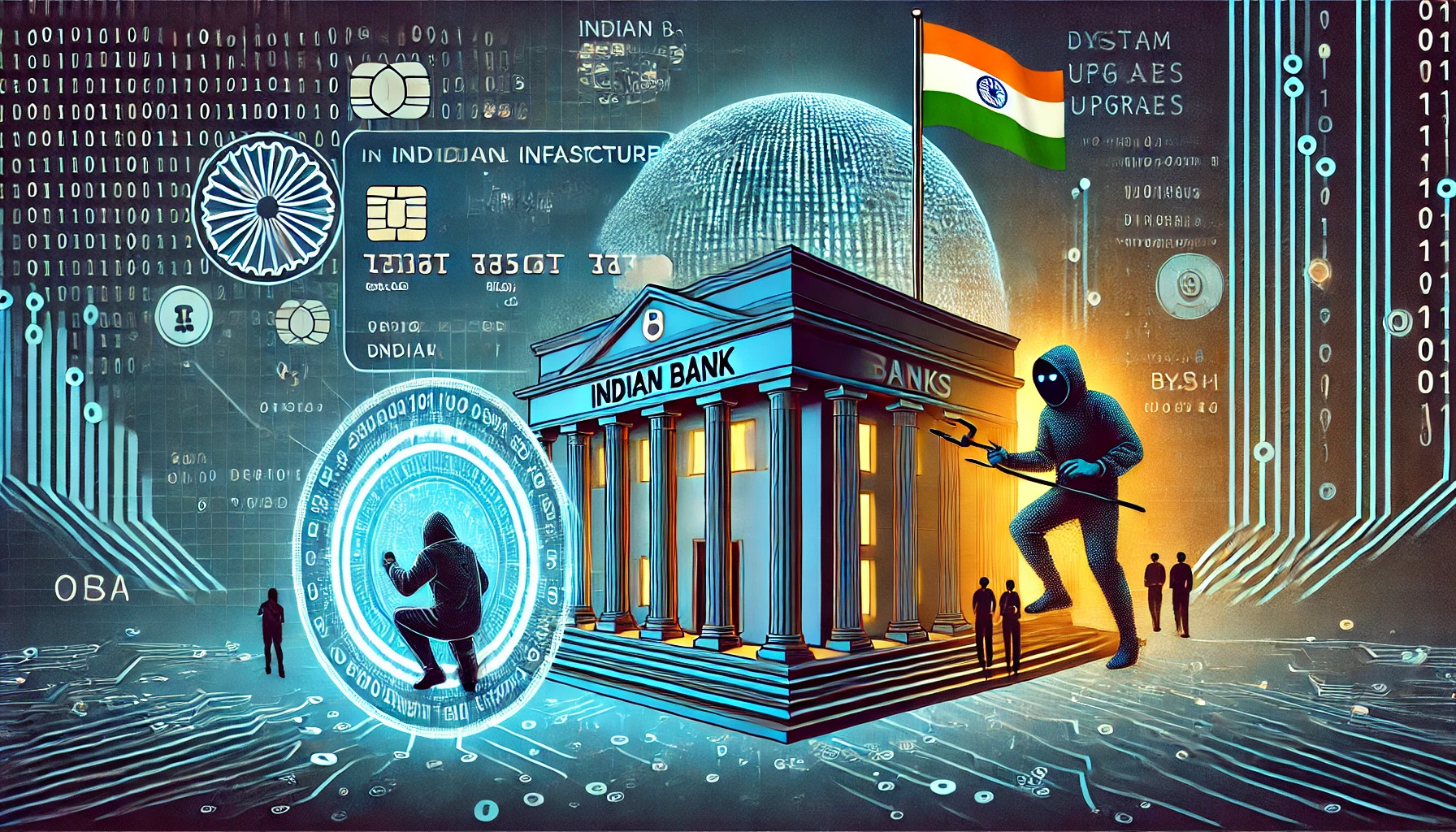
India’s banking sector is undergoing rapid digital transformation, with increased adoption of online banking, mobile apps, UPI, digital wallets, and cloud infrastructure. While this transformation enhances customer convenience and operational efficiency, it also opens doors to complex cybersecurity threats. Indian banks are increasingly becoming targets of sophisticated cyberattacks—ranging from phishing, ransomware, and DDoS attacks to insider threats and advanced persistent threats (APTs). These incidents not only result in financial losses but also compromise sensitive customer data, damage reputation, and erode customer trust.
The Reserve Bank of India (RBI) has issued several guidelines and advisories, but many banks, especially regional and cooperative banks, still lack robust cybersecurity frameworks, incident response strategies, and advanced threat detection mechanisms. Legacy systems, budget constraints, and skill gaps further worsen the situation.
The urgent need is to build a comprehensive, AI-driven cybersecurity solution tailored specifically for Indian banks that can proactively detect, prevent, and mitigate threats across digital channels, cloud systems, and core banking infrastructure.
Pain Points
- Lack of Real-Time Threat Detection – Most banks don’t have AI-driven threat intelligence to detect intrusions as they happen.
- Legacy IT Infrastructure – Outdated systems make it hard to deploy modern cybersecurity defenses or integrate new tools effectively.
- Insufficient Budget Allocation – Mid and small-sized banks struggle to allocate adequate funds to upgrade their cybersecurity frameworks.
- Shortage of Cybersecurity Talent – There’s a national shortage of skilled professionals trained in banking-specific cybersecurity.
- Weak Incident Response – Banks lack structured response strategies for cyberattacks, resulting in delayed mitigation and customer panic.
- Non-Compliance with RBI Norms – Many banks are unaware or lag behind in implementing updated RBI cybersecurity guidelines.
- Third-Party Vendor Risks – Vendors often have inadequate security practices, exposing banks to potential supply chain attacks.
- Lack of Customer Awareness – Customers fall prey to phishing or scams due to inadequate education from banks.
- Inadequate Cloud Security – With digitalization, cloud migration grows, but cloud security policies remain poorly defined and enforced.
- Ineffective Security Monitoring – Current systems can’t efficiently monitor multiple endpoints and network traffic for anomalies.
Key Competition
- FireEye (now Trellix) – Offers threat intelligence, malware detection, and response tools used by many financial institutions worldwide.
- Palo Alto Networks – Advanced firewall, AI threat detection, and cloud security services.
- CrowdStrike – Endpoint detection and response (EDR) with real-time monitoring.
- Check Point Software – Full-spectrum security across cloud, network, and mobile.
- Tata Communications (Cybersecurity Services) – India-specific services for BFSI, including SOC-as-a-Service and compliance-driven offerings.
Startups working on this problem
- Sequretek – Mumbai-based, full-stack cybersecurity for enterprises and BFSI.
- Cyfirma – Uses AI for threat visibility and prediction (backed by Goldman Sachs).
- TAC Security – Indian startup focusing on risk-based vulnerability management.
- Securden – Offers privileged access governance, used in BFSI.
- CloudSEK – AI-powered threat intelligence.
- WiJungle – Unified network security platform, popular among regional banks.
- FireCompass – Continuous automated red teaming.
- Kratikal Tech – Specializes in phishing simulation and awareness training.
- Lucideus (SAFE Security) – Risk quantification platform used by large banks like HDFC.
- Innefu Labs – Predictive AI-driven cyber defense suite.
Maturity of Market
The cybersecurity market in India’s banking sector is maturing but fragmented. While Tier-1 banks have advanced setups, many Tier-2/3 and cooperative banks are still vulnerable, underfunded, and lacking in basic cyber hygiene. Hence, market maturity is medium, with huge potential for growth.
Product Vision
In an era where cyber threats evolve faster than traditional defenses, Indian banks—especially mid-sized, regional, and cooperative institutions—require robust, affordable, and contextual cybersecurity solutions. Our product, SentinelStack, envisions becoming the go-to cybersecurity platform tailored specifically for India’s banking sector.
SentinelStack is an AI-driven, modular cybersecurity suite designed to offer real-time threat detection, compliance automation, risk analytics, and 24×7 monitoring, all while aligning with RBI mandates. Unlike global security products that are bulky, costly, and generic, SentinelStack focuses on the unique threat landscape of Indian banks—such as regional phishing, mobile fraud, and cloud security for hybrid infrastructure.
At its core, SentinelStack integrates an intelligent Security Operations Center (iSOC) that aggregates logs, analyzes anomalies, and auto-triggers responses. With built-in RBI compliance checks, banks are always audit-ready. Risk dashboards translate technical vulnerabilities into business risks for CXOs and board members. And our “Security-as-a-Service” model ensures expert support without banks needing to hire large in-house teams.
We believe cybersecurity shouldn’t be a luxury only big banks can afford. Sentinel Stack makes high-end protection accessible, contextual, and compliant—transforming cybersecurity from a cost center into a strategic asset.
Use Cases
- Real-time phishing detection in regional languages
- AI-based fraud detection for UPI and mobile banking
- Automated RBI compliance report generation
- Endpoint monitoring across branches and ATMs
- Insider threat detection
- Threat intelligence feed with Indian context
- Multi-channel alert system (SMS/WhatsApp/Email) for CISOs
- Vulnerability management with auto-patching
- Cloud security policy monitoring
- Cybersecurity awareness training modules for staff and customers
Summary
India’s banking industry is in the throes of rapid digital evolution, driven by UPI, mobile banking, and cloud migration. Yet with this transformation comes a dark side—sophisticated cyberattacks that challenge traditional IT defenses. While top-tier banks may have advanced systems, the vast majority of mid-sized, regional, and cooperative banks remain critically exposed due to outdated infrastructure, budget constraints, limited cybersecurity talent, and compliance confusion.
Sentinel Stack, our AI-powered cybersecurity platform, emerges as a contextual solution tailored specifically for Indian banks. It offers real-time threat detection, RBI compliance automation, risk quantification, and multi-channel alerting—all within a cost-sensitive, modular deployment. Our deep market research shows a fragmented cybersecurity market, with existing solutions being expensive, generic, or lacking Indian threat context.
Through strategic innovations like regional phishing detection, insider threat monitoring, and cloud policy enforcement, Sentinel Stack addresses gaps overlooked by global vendors. We forecast ₹100 Cr revenue potential in 5 years, serving 200+ banks.
This research and product vision prove one key insight: cybersecurity for Indian banks isn’t just a tech problem—it’s a trust problem. Sentinel Stack will restore that trust.
Researched by Bhagyashree Ingale JSPM, wagholi.