Problem Statement
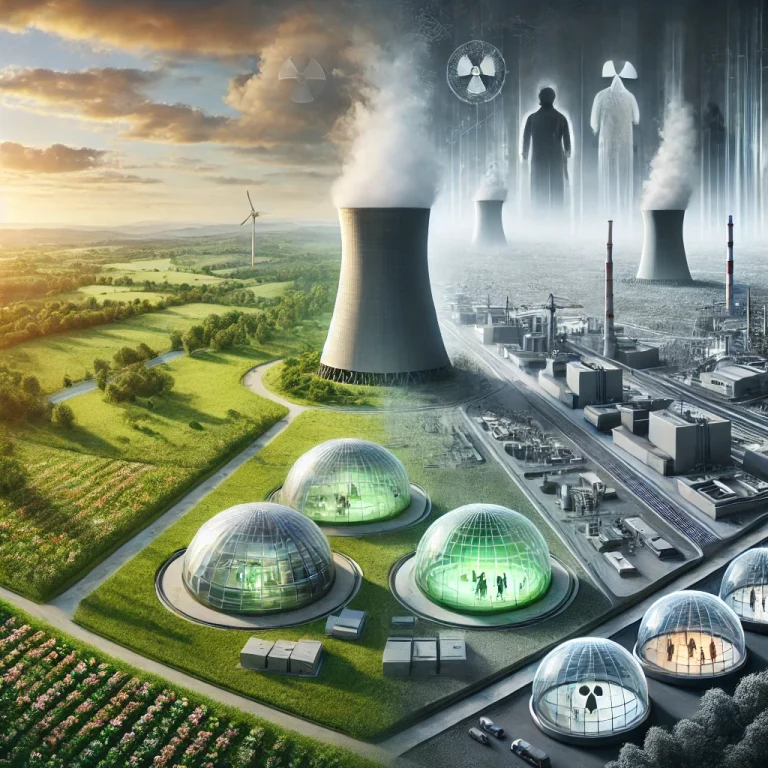
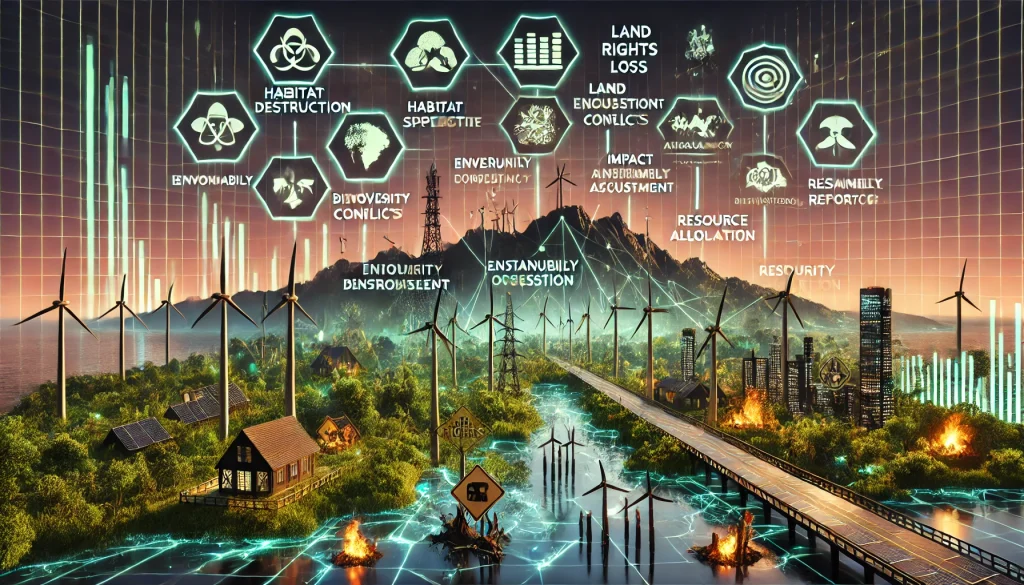
The development of energy infrastructure, both conventional and renewable, impacts land use and habitat conservation. Large-scale energy projects can lead to habitat destruction, biodiversity loss, and conflicts with local communities over land rights and usage. Addressing these challenges requires a platform that supports sustainable energy development while preserving natural habitats and respecting community land rights.
Pain Points
- Habitat Destruction: Energy projects causing significant loss of natural habitats.
- Biodiversity Loss: Adverse effects on local wildlife and plant species.
- Land Rights Conflicts: Disputes with local communities over land usage and ownership.
- Environmental Regulations: Navigating complex regulations to ensure compliance.
- Community Opposition: Resistance from local populations affected by energy projects.
- Land Use Efficiency: Challenges in optimizing land use for energy projects.
- Impact Assessment: Difficulty in assessing the environmental impact of energy projects.
- Sustainable Practices: Incorporating eco-friendly methods in energy development.
- Resource Allocation: Efficient allocation of resources to balance development and conservation.
- Monitoring and Reporting: Tracking environmental impacts and reporting to stakeholders.
Future Vision
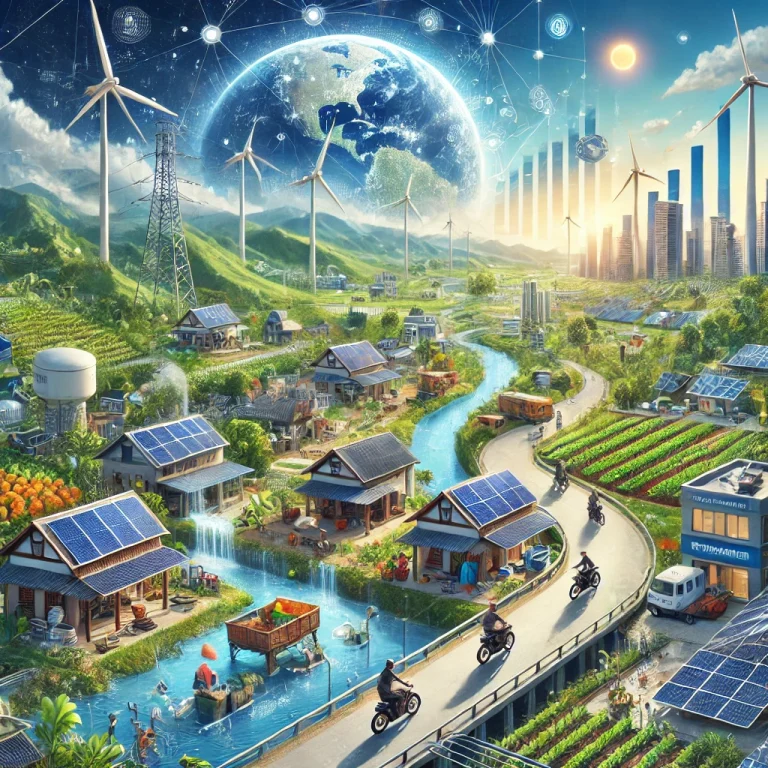
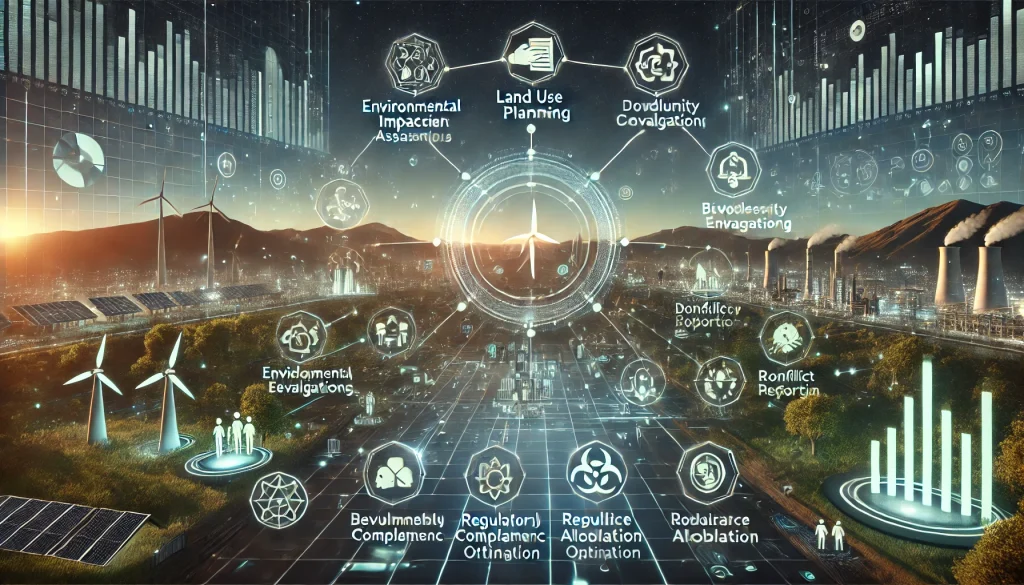
Our platform envisions a future where energy infrastructure development is harmonized with habitat conservation and community interests. By leveraging AI, GIS, and blockchain, the platform will offer tools for environmental impact assessments, land use planning, and community engagement. It will provide real-time data on biodiversity, habitat conditions, and regulatory compliance to support decision-making. Our vision is to create a sustainable energy development ecosystem that balances ecological preservation with the need for energy infrastructure.
Use Cases
- Environmental Impact Assessments: AI-driven tools for assessing the environmental impact of energy projects.
- Land Use Planning: GIS-based solutions for optimizing land use and minimizing habitat disruption.
- Community Engagement: Platforms for engaging with local communities and addressing their concerns.
- Biodiversity Monitoring: Real-time monitoring of biodiversity and habitat conditions.
- Regulatory Compliance Tracking: Automated tracking of compliance with environmental regulations.
- Sustainable Project Design: Tools for incorporating eco-friendly practices in energy projects.
- Conflict Resolution: Mechanisms for resolving land rights conflicts with local communities.
- Resource Allocation Optimization: Efficient allocation of resources for balanced development and conservation.
- Impact Reporting: Transparent reporting of environmental impacts to stakeholders.
- Collaborative Platforms: Facilitating collaboration among energy developers, conservationists, and communities.
Target Users and Stakeholders
- User: Environmental and Energy Project Managers
- Age Group: 30-60 years
- Gender: M/F
- Usage Pattern: Daily usage for planning, monitoring, and decision-making
- Benefit: Enhanced environmental compliance, community engagement, and sustainable development
- Stakeholders:
- Energy Companies: Businesses developing conventional and renewable energy projects
- Environmental Agencies: Organizations focused on habitat conservation and biodiversity
- Local Communities: Populations affected by energy infrastructure development
- Government Regulators: Agencies overseeing environmental and land use regulations
- Investors: Entities investing in sustainable energy projects
- Conservationists: Groups advocating for the protection of natural habitats
Key Competition
- Enviance: Provides environmental data management and compliance solutions.
- ERM (Environmental Resources Management): Offers environmental, health, safety, risk, and social consulting services.
- Ecology and Environment, Inc.: Specializes in environmental consulting and engineering services.
- GHD: Provides engineering, architecture, environmental, and construction services.
- Ramboll: Offers sustainable solutions in engineering, design, and consultancy.
Products/Services
- Enviance: Environmental data management and compliance platform.
- ERM (Environmental Resources Management): Comprehensive consulting services for environmental impact assessments.
- Ecology and Environment, Inc.: Environmental consulting and engineering services.
- GHD: Services in engineering, architecture, and environmental solutions.
- Ramboll: Sustainable engineering and consultancy services.
Active Startups
- Planet Labs: Provides satellite data for environmental monitoring and land use planning.
- Terramera: Develops technology for sustainable agriculture and environmental health.
- AeroFarms: Innovates in sustainable farming to reduce land use for agriculture.
- Conservation X Labs: Develops technology solutions for biodiversity conservation.
- NatureMetrics: Uses DNA-based monitoring for biodiversity and environmental health.
- BioCarbon Engineering: Focuses on reforestation and habitat restoration using drones.
- Ecopia.AI: Uses AI to create high-definition maps for land use and environmental planning.
- Gridium: Provides energy management solutions to optimize resource use.
- EarthDefine: Specializes in land cover mapping and environmental data analytics.
- OpenForests: Offers tools for forest management and conservation projects.
Ongoing Work in Related Areas
- AI and Machine Learning: Enhancing environmental impact assessments and biodiversity monitoring.
- GIS and Remote Sensing: Advanced tools for land use planning and habitat conservation.
- Blockchain: Ensuring transparency and traceability in environmental reporting.
- Community Engagement: Developing platforms for effective communication with local communities.
- Sustainable Technologies: Innovations in eco-friendly practices and materials for energy projects.
Recent Investment
- Planet Labs: $168M in Series D funding led by Google Ventures, December 2014.
- Terramera: $45M in Series B funding led by Ospraie Ag Science, September 2019.
- AeroFarms: $100M in Series E funding led by Ingka Group, March 2021.
- Conservation X Labs: $5M in seed funding led by Grantham Foundation, January 2020.
- NatureMetrics: $15M in Series A funding led by Acuity Investments, May 2021.
Market Maturity
The market for sustainable energy development and habitat conservation solutions is evolving, driven by the increasing need to balance energy infrastructure growth with environmental preservation. Significant investments in AI, GIS, and community engagement technologies are transforming the industry, with both established companies and innovative startups leading the way. As the market matures, more integrated and advanced platforms are expected to emerge, supporting sustainable energy development while preserving natural habitats and respecting community interests.
Summary
The development of energy infrastructure, both conventional and renewable, impacts land use and habitat conservation. Large-scale energy projects can lead to habitat destruction, biodiversity loss, and conflicts with local communities over land rights and usage. Our proposed platform leverages AI, GIS, and blockchain to provide tools for environmental impact assessments, land use planning, and community engagement. Key pain points include habitat destruction, biodiversity loss, land rights conflicts, environmental regulations, community opposition, land use efficiency, impact assessment, sustainable practices, resource allocation, and monitoring and reporting.
Target users include environmental and energy project managers, with stakeholders encompassing energy companies, environmental agencies, local communities, government regulators, investors, and conservationists. Key competitors like Enviance, ERM, Ecology and Environment, Inc., GHD, and Ramboll offer various environmental compliance and consulting services. Active startups such as Planet Labs, Terramera, AeroFarms, Conservation X Labs, and NatureMetrics are driving innovation in this space. Recent investments highlight significant interest and growth potential in sustainable energy development and habitat conservation technologies.
By addressing these challenges and leveraging advanced technologies, our platform aims to create a sustainable energy development ecosystem that balances ecological preservation with the need for energy infrastructure.