Problem Statement
The healthcare industry is undergoing a significant digital transformation, with the widespread adoption of technologies such as electronic health records (EHRs), telemedicine, and AI-driven diagnostics. These advancements promise to revolutionize patient care by improving efficiency, accuracy, and accessibility. However, the rapid digitization of healthcare also raises critical concerns about data privacy and security. As more sensitive patient information is stored and transmitted electronically, the risk of data breaches, cyberattacks, and misuse of personal health information (PHI) increases significantly.
Healthcare providers and technology companies are now tasked with the enormous responsibility of protecting this data from unauthorized access, ensuring compliance with stringent regulations such as the Health Insurance Portability and Accountability Act (HIPAA) in the United States and the General Data Protection Regulation (GDPR) in Europe. Failure to adequately safeguard patient data can result in severe consequences, including financial penalties, legal liabilities, loss of patient trust, and harm to patients’ well-being if their medical information is compromised.
Moreover, the complexity of healthcare data, which often includes a wide range of information such as medical history, genetic data, and even behavioral insights, makes it a prime target for cybercriminals. The interconnected nature of modern healthcare systems further complicates the issue, as vulnerabilities in one part of the system can potentially expose data across multiple platforms and institutions. Addressing these challenges requires a comprehensive approach that includes implementing robust cybersecurity measures, developing secure data-sharing protocols, educating healthcare professionals and patients about data protection, and fostering collaboration between healthcare providers, technology companies, and regulatory bodies.
Pain Points
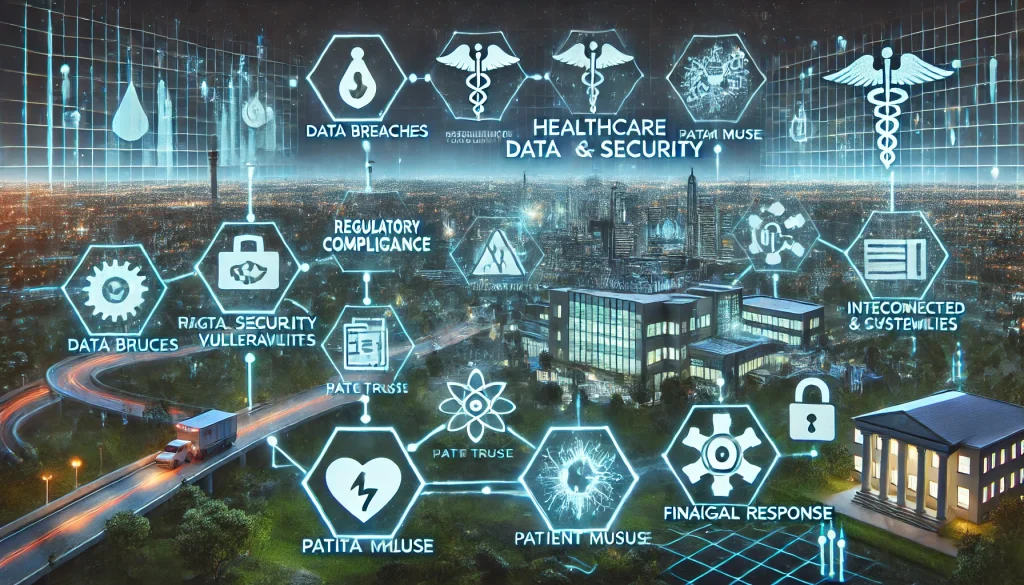
- Data Breaches: Increased risk of cyberattacks targeting sensitive patient information stored in digital systems.
- Regulatory Compliance: Navigating complex regulations like HIPAA and GDPR to ensure data privacy and security.
- Cybersecurity Vulnerabilities: Potential weaknesses in digital health systems that can be exploited by cybercriminals.
- Patient Trust: Maintaining patient trust in digital healthcare solutions by ensuring their data is secure.
- Interconnected Systems: The challenge of securing data across multiple platforms and institutions within healthcare networks.
- Data Misuse: Risks associated with unauthorized access or misuse of personal health information (PHI).
- Education and Awareness: Ensuring that healthcare professionals and patients understand the importance of data privacy.
- Technology Integration: Balancing innovation with security when integrating new digital health technologies.
- Incident Response: Developing effective protocols for responding to data breaches and cyberattacks.
- Financial and Legal Consequences: The potential for severe financial penalties and legal liabilities in the event of data breaches.
Future Vision
Our platform envisions a future where healthcare providers and technology companies can confidently leverage digital technologies to enhance patient care while ensuring the highest standards of data privacy and security. By integrating advanced cybersecurity measures such as encryption, multi-factor authentication, and AI-driven threat detection, the platform will provide a robust defense against data breaches and cyberattacks. Additionally, the platform will offer tools for seamless regulatory compliance, helping healthcare organizations navigate complex legal frameworks like HIPAA and GDPR without compromising operational efficiency.
The platform will also promote secure data-sharing protocols that allow for the safe exchange of patient information across healthcare networks, ensuring that data is accessible only to authorized personnel. Educational resources and training programs will be provided to healthcare professionals, emphasizing the importance of data privacy and equipping them with the knowledge to protect patient information effectively. Patients will also benefit from user-friendly tools that allow them to manage their privacy preferences and understand how their data is used.
Furthermore, the platform will support incident response planning, enabling healthcare organizations to respond quickly and effectively to any data breaches or cybersecurity threats. By fostering collaboration between healthcare providers, technology companies, and regulatory bodies, our platform will help create a secure and trusted digital healthcare ecosystem that protects patient data while driving innovation and improving health outcomes.
Use Cases
- AI-Driven Threat Detection: Implementing AI tools to identify and mitigate cybersecurity threats in real-time.
- Secure Data Sharing: Developing protocols for safe and compliant data exchange across healthcare networks.
- Encryption and Authentication: Utilizing encryption and multi-factor authentication to protect sensitive patient data.
- Regulatory Compliance Tools: Offering resources and tools to ensure compliance with HIPAA, GDPR, and other regulations.
- Patient Privacy Management: Providing patients with tools to manage their privacy settings and understand data usage.
- Education and Training Programs: Training healthcare professionals on data privacy and cybersecurity best practices.
- Incident Response Planning: Creating protocols for responding to data breaches and cyberattacks.
- Cybersecurity Audits: Conducting regular audits to identify and address potential vulnerabilities in healthcare systems.
- Secure Technology Integration: Ensuring that new digital health technologies are integrated securely within existing systems.
- Collaboration with Regulatory Bodies: Working with regulators to develop and implement effective data protection standards.
Target Users and Stakeholders
- User: Healthcare IT Managers, Data Protection Officers, and Cybersecurity Professionals
- Age Group: 30-60 years
- Gender: M/F
- Usage Pattern: Regular usage for managing data privacy, ensuring regulatory compliance, and protecting against cybersecurity threats
- Benefit: Enhanced data security, regulatory compliance, and patient trust in digital healthcare systems
- Stakeholders:
- Healthcare Providers: Hospitals, clinics, and healthcare networks responsible for patient care and data management
- Technology Companies: Developers of digital health solutions, including EHRs, telemedicine platforms, and AI diagnostics
- Regulatory Bodies: Organizations responsible for enforcing data protection regulations like HIPAA and GDPR
- Patients: Individuals whose personal health information must be protected within digital healthcare systems
- Insurance Companies: Entities that manage patient data and require secure, compliant data handling
Key Competition
- Epic Systems: Provides comprehensive EHR solutions with integrated data security features.
- Cerner Corporation: Offers healthcare IT solutions with a focus on secure data management.
- McKesson: Specializes in healthcare information systems with robust privacy and security measures.
- Philips Healthcare: Develops digital health solutions with a strong emphasis on data security and privacy.
- IBM Watson Health: Leverages AI for healthcare solutions, including secure data analytics and management.
Products/Services
- Epic EHR Solutions: Electronic health record systems with integrated data security features.
- Cerner Secure Data Management: Healthcare IT solutions focused on protecting patient information.
- McKesson Information Systems: Comprehensive healthcare information systems with privacy and security measures.
- Philips Digital Health Solutions: Health technology with a strong emphasis on secure data handling.
- IBM Watson Health Analytics: AI-driven healthcare solutions with a focus on secure data management and analytics.
Active Startups
- MedCrypt: Focuses on cybersecurity for medical devices and digital health systems.
- Protenus: Provides AI-driven solutions for protecting healthcare data and ensuring compliance.
- CyberMDX: Specializes in cybersecurity solutions for connected medical devices and IoT in healthcare.
- ClearDATA: Offers cloud-based healthcare solutions with a focus on data privacy and security.
- CynergisTek: Provides cybersecurity and privacy services specifically tailored for healthcare organizations.
- Virta Labs: Develops cybersecurity solutions for protecting healthcare networks and devices.
- QPrivacy: Offers privacy-focused software solutions for managing patient data in compliance with regulations.
- Medigate: Provides cybersecurity solutions for connected medical devices and healthcare networks.
- Sensato: Focuses on cybersecurity and threat detection for the healthcare industry.
- Censinet: Provides risk management solutions for healthcare cybersecurity and data privacy.
Ongoing Work in Related Areas
- AI and Machine Learning: Enhancing threat detection and response capabilities in healthcare cybersecurity.
- Blockchain Technology: Exploring the use of blockchain for secure and transparent data sharing in healthcare.
- Data Encryption: Advancing encryption technologies to protect sensitive patient information.
- Regulatory Compliance: Developing tools and frameworks to simplify compliance with HIPAA, GDPR, and other regulations.
- Cybersecurity Education: Creating programs to educate healthcare professionals and patients on data privacy and security.
Recent Investment
- MedCrypt: $5.3M in Series A funding led by Section 32, January 2019.
- Protenus: $11M in Series B funding led by F-Prime Capital, March 2018.
- CyberMDX: $20M in Series B funding led by Sham (Relyens Group), December 2019.
- ClearDATA: $26M in Series E funding led by Merck Global Health Innovation Fund, April 2020.
- Medigate: $30M in Series B funding led by Partech, March 2020.
Market Maturity
The market for healthcare data privacy and security solutions is rapidly maturing, driven by the growing adoption of digital technologies and the increasing frequency of cyberattacks targeting healthcare organizations. Established companies like Epic Systems, Cerner Corporation, and IBM Watson Health are leading the way with comprehensive EHR and digital health solutions that prioritize data security and privacy. At the same time, innovative startups like MedCrypt, Protenus, and CyberMDX are pushing the boundaries with specialized cybersecurity solutions tailored to the unique needs of the healthcare industry. Significant investments in AI-driven threat detection, blockchain technology, and cloud-based security solutions are transforming the healthcare landscape, enabling more secure and compliant data management practices. As the market continues to evolve, we expect to see more integrated and advanced platforms that protect patient data while supporting the ongoing digital transformation of healthcare.
Summary
The healthcare industry is rapidly adopting digital technologies, including electronic health records (EHRs), telemedicine, and AI-driven diagnostics. While these advancements have the potential to revolutionize patient care, they also raise significant concerns about data privacy and security. Protecting sensitive patient information from breaches and misuse is a critical challenge for healthcare providers and technology companies. Our proposed platform leverages AI-driven threat detection, secure data-sharing protocols, encryption, and multi-factor authentication to safeguard patient data and ensure regulatory compliance. Key pain points include data breaches, regulatory compliance, cybersecurity vulnerabilities, patient trust, interconnected systems, data misuse, education and awareness, technology integration, incident response, and financial and legal consequences.
Target users include healthcare IT managers, data protection officers, and cybersecurity professionals, with stakeholders encompassing healthcare providers, technology companies, regulatory bodies, patients, and insurance companies. Key competitors like Epic Systems, Cerner Corporation, McKesson, Philips Healthcare, and IBM Watson Health offer various solutions to protect patient data, while startups such as MedCrypt, Protenus, and CyberMDX are driving innovation in this space. Recent investments highlight significant interest and growth potential in platforms addressing healthcare data privacy and security.
By addressing these challenges and leveraging advanced technologies, our platform aims to create a secure and trusted digital healthcare ecosystem that protects patient data while supporting innovation and improving health outcomes.