
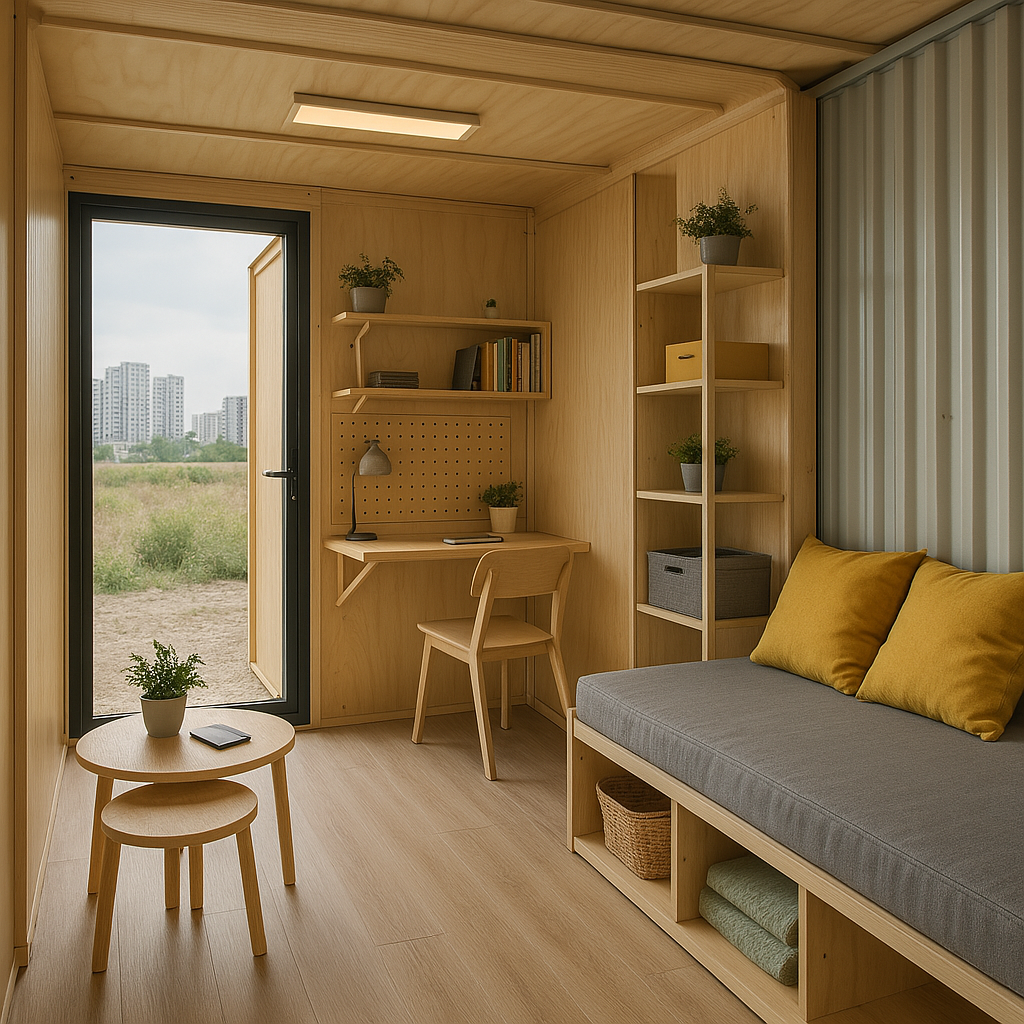
India is experiencing rapid urbanization, resulting in a surge of temporary structures such as co-living spaces, pop-up retail stores, portable offices, and modular housing solutions. These structures are commonly found in expanding metropolitan areas, catering to a transient population including migrant workers, students, professionals, and entrepreneurs. However, the dynamic nature of these spaces presents significant challenges for interior designers. They must create designs that are not only aesthetically appealing but also functional, flexible, and cost-effective.
Temporary structures often have constraints related to space, budget, durability, and sustainability. Unlike permanent buildings, they require modularity and easy assembly/disassembly without compromising on comfort and usability. Additionally, these spaces must support diverse user needs, including privacy, efficient storage, and multipurpose furniture, while maintaining affordability.
Interior designers also face the challenge of incorporating sustainable materials and energy-efficient solutions to reduce environmental impact. The rise of prefabricated components and smart technology offers new opportunities, but integrating these into temporary structures requires careful planning.
The need for an adaptable design approach that can be rapidly deployed and reconfigured for different purposes is crucial. This creates a pressing demand for innovative interior design solutions that merge aesthetics with practicality in transient environments.
Stakeholders and Their Roles:
- Interior Designers – Responsible for designing adaptable, functional, and aesthetic interiors.
- Real Estate Developers – Build and invest in temporary structures; seek cost-effective, scalable designs.
- End Users (Migrant Workers, Students, Professionals, Entrepreneurs, etc.) – Live, work, or operate businesses in these spaces; need comfortable, multi-functional, and affordable interiors.
- Manufacturers of Modular Furniture & Materials – Provide adaptable furniture and construction materials; need to balance durability, cost, and sustainability.
- Urban Planners & Government Bodies – Regulate the use of temporary spaces; focus on sustainability and infrastructure impact.
- Technology Providers (Smart Home & Automation Companies) – Offer smart solutions to enhance functionality in limited spaces.
- Sustainability Advocates – Push for eco-friendly designs using renewable or recycled materials.
Pain Points:
- Lack of Adaptability: Traditional design approaches struggle to accommodate rapidly changing user needs in temporary spaces.
- Space Constraints: Maximizing functionality in small, often irregularly shaped structures is challenging.
- Affordability vs. Quality: Cost-effective solutions often compromise durability, forcing frequent replacements.
- Sustainability Concerns: Temporary structures contribute to waste generation due to short lifespans and non-recyclable materials.
- Limited Storage Solutions: Users need efficient storage systems in confined spaces without cluttering interiors.
- Energy Efficiency Challenges: Temporary spaces often lack proper insulation, leading to excessive energy consumption.
- Fast Assembly & Disassembly Requirements: Designs must allow quick installation and removal without skilled labor.
- Multi-Functionality Needs: Spaces must serve multiple purposes (e.g., a single room functioning as a bedroom, office, and living space).
- Aesthetic Appeal in Budget Constraints: Cost-cutting often results in visually unappealing interiors, affecting user experience.
- Integration of Smart Technology: Many temporary structures lack infrastructure for smart lighting, security, and automation solutions.
Target User Definition:
- User: Migrant professionals, students, and entrepreneurs living or working in temporary structures.
- Age Group: 20-40 years
- Gender: All genders
- Usage Pattern: 6-12 hours daily, requiring functional and comfortable living/workspaces.
- Benefit: Users gain access to affordable, aesthetically appealing, and space-efficient interiors with smart features and sustainable materials.
Key Competitors & Their Offerings:
- Livspace – Offers modular and customized interior solutions for urban homes, but focuses more on permanent structures rather than temporary setups.
- Bonito Designs – Specializes in modern and functional interiors, but lacks a dedicated approach for transient populations.
- Urban Ladder – Provides modular furniture and storage solutions, but does not offer integrated smart or sustainability-driven solutions for temporary spaces.
- IKEA India – Known for affordable and ready-to-assemble furniture, but its catalog lacks location-specific adaptability for India’s dynamic urban spaces.
- Smartbox (Startup) – A rising company focusing on smart, modular furniture that adapts to small spaces but is still in early stages of development.
Startups Innovating in This Space:
- NestAway – Primarily a rental housing platform but integrates minimalistic, space-saving furniture for co-living spaces.
- Hocomoco – Works on prefabricated and modular construction solutions, including interiors.
- Fabrento – Specializes in rental furniture, making it a flexible choice for temporary homes.
- Rentomojo – Provides furniture and appliances on a subscription model for transient users.
- Wakefit – Focuses on ergonomic furniture and mattresses, ideal for compact living spaces.
- Ouch Cart – Online marketplace for space-efficient, budget-friendly furniture.
- Spaceler – A startup developing AI-driven interior design solutions for compact homes and offices.
- The WorkPod Co. – Creates prefabricated office pods for flexible workspaces in urban areas.
- EcoWorks Studio – Focuses on sustainable, modular design solutions using recycled materials.
- Modspace.in – Works on modular and prefabricated interiors that can be easily reconfigured for different uses.
Recent Investments & Industry Trends:
- Livspace raised $180M in 2022 (Series F funding led by KKR) for expanding modular home interiors.
- NestAway secured $10M in funding in 2023 to enhance rental living experiences with smarter interiors.
- Wakefit raised $40M in 2023 for ergonomic furniture and smart sleep solutions.
- Prefabricated housing and modular interiors are seeing significant growth, with India’s prefab market expected to reach $9 billion by 2027.
- Sustainability-focused interior startups are gaining investor attention due to increasing regulatory and environmental concerns.
Market Maturity & Gaps Identified:
- Market Readiness: The modular and temporary interiors market is still in early stages in India, with major players focusing on permanent home interiors rather than adaptable, transient solutions.
- Gaps in Existing Solutions:
- Lack of dedicated interior solutions for co-living, pop-up spaces, and modular housing.
- Limited focus on sustainability in temporary structures.
- No seamless integration of smart home technology with compact and modular interiors.
- High costs of existing modular furniture, making it unaffordable for transient populations.
- Rigid designs that do not adapt to evolving needs of users in temporary spaces.
Key Competitor Offerings :
- Modular furniture – Easily reconfigurable designs for different uses.
- Space-saving storage solutions – Foldable beds, wall-mounted desks, etc.
- Rental-based models – Subscription services for furniture & appliances.
- Prefabricated interiors – Ready-to-install design elements.
- Minimalist design aesthetics – Functional yet visually appealing spaces.
- Ergonomic designs – Focus on comfort and posture, particularly for work-from-home setups.
- Smart furniture integration – IoT-enabled furniture with automation features.
- Sustainable materials – Use of bamboo, recycled plastics, and eco-friendly composites.
- Flexible partitions and dividers – Customizable room layouts.
- Quick setup solutions – Interiors that can be installed in days rather than weeks.
Product Vision
The future of urban interiors lies in adaptability. Our product will be an affordable, modular, and smart interior design solution tailored for temporary structures such as co-living spaces, pop-up retail stores, portable offices, and modular housing. Designed for a rapidly urbanizing India, our solution will integrate space-saving furniture, sustainable materials, and smart home technology to create comfortable, multi-functional, and visually appealing interiors.
Our approach will focus on fast assembly, reconfigurability, and affordability, ensuring that individuals and businesses can transform any space into a functional and stylish environment within hours. Unlike traditional interiors, our product will feature prefabricated, modular components that adapt to changing user needs, providing maximum utility in limited space. Additionally, our emphasis on sustainable and recyclable materials will contribute to an eco-friendly future.
By leveraging smart technology, ergonomic design, and AI-powered customization tools, we will make interior design more accessible, cost-effective, and future-proof for India’s transient populations. This product will redefine urban interiors, bridging the gap between functionality, affordability, and aesthetics.
Use Cases of the Product:
- Co-Living Spaces: Modular interiors that adapt to shared spaces, providing privacy and personalization without structural changes.
- Pop-Up Retail Stores: Temporary interior solutions that allow brands to quickly set up and dismantle aesthetically appealing retail spaces.
- Portable Offices & Work Pods: Prefabricated workspaces with smart furniture, ergonomic seating, and IoT-enabled features.
- Student Accommodations: Compact, multi-purpose furniture with integrated storage, study areas, and smart lighting.
- Rental Housing Solutions: Prefabricated interiors for landlords and tenants who need quick, cost-effective solutions.
- Event Spaces & Exhibition Stalls: Modular booth designs that can be reconfigured for different setups.
- Hospitality (Hostels & Capsule Hotels): Smart, compact interiors that maximize space efficiency and comfort.
- Disaster Relief & Emergency Housing: Quickly deployable interior solutions for temporary shelters in disaster-hit areas.
- Small Business Workspaces: Affordable modular office interiors for startups and freelancers operating in temporary setups.
- Eco-Friendly Smart Homes: Sustainable, tech-integrated compact living spaces for urban eco-conscious users.