Problem Statement
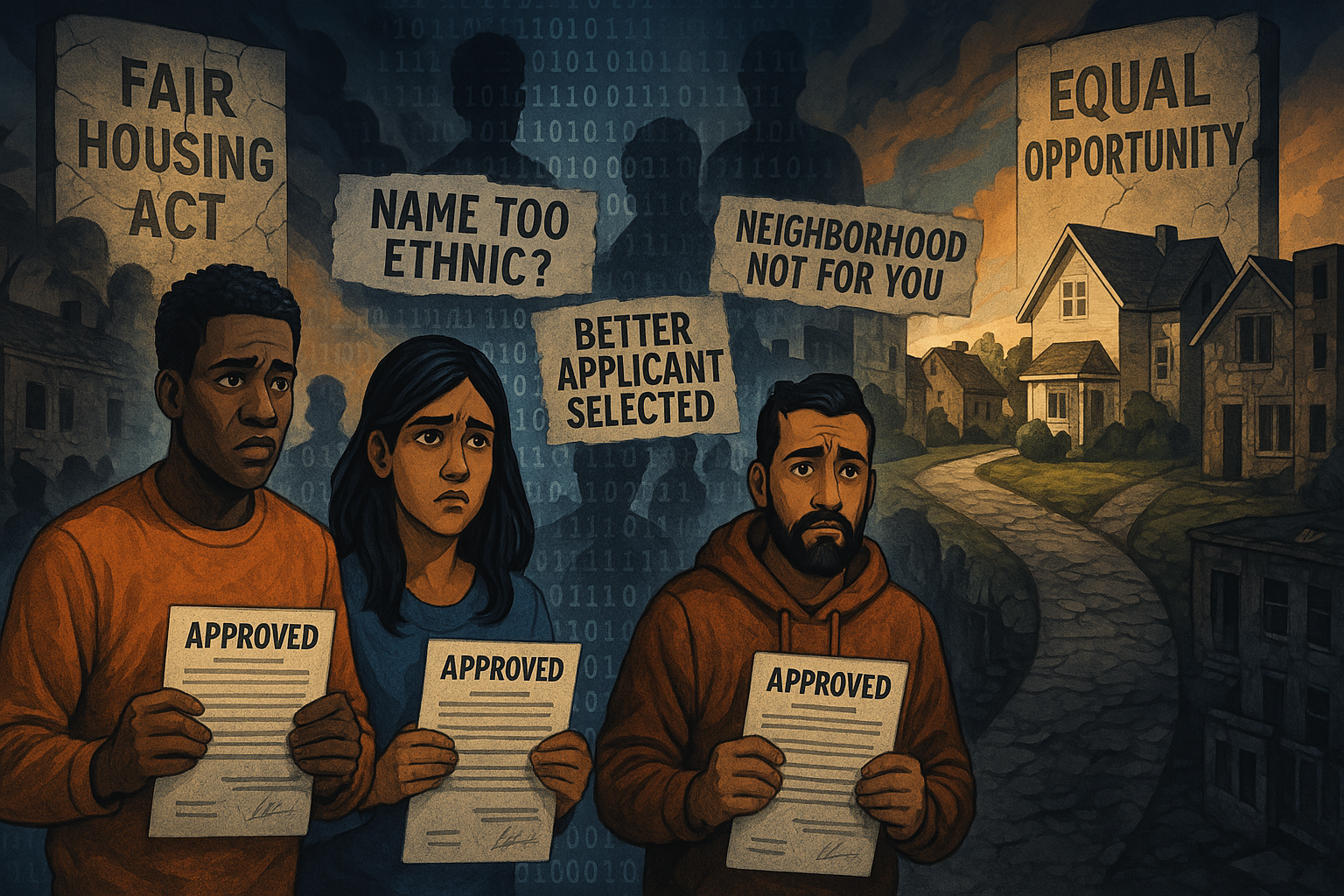
Renters from minority backgrounds often encounter significant bias and discrimination when seeking housing. This discrimination manifests in several forms — from being denied rental applications due to ethnic-sounding names or accents, to being steered away from certain neighborhoods, or offered less favorable rental terms compared to other applicants. These practices are difficult to track, inconsistently reported, and are often dismissed due to a lack of clear, provable evidence.
Despite laws intended to protect renters from such bias (like the Fair Housing Act in the U.S.), enforcement is weak, and discrimination continues to thrive in subtle and systemic ways. Minority renters often find themselves funneled into lower-quality housing, with fewer options and less mobility.
This issue isn’t just about housing — it affects access to good schools, job opportunities, community resources, and long-term economic mobility. Technology has yet to truly level the playing field in this space.
There’s an urgent need for a solution that can bring transparency, accountability, and empowerment to minority renters, while also educating landlords and enforcing fair practices. This solution could bridge the gap between ethical intent and real-world practice in the housing rental space.
Pain Points
- Name/Accent Bias in Applications
Renters with ethnic names or accents are disproportionately denied, with no clear feedback or appeal process. - Lack of Transparency in Rejection
Applicants rarely know why they were denied, leaving room for hidden bias without accountability. - Steering & Redlining
Some landlords steer minorities toward certain areas, recreating segregated communities and denying access to better neighborhoods. - Biased Tenant Scoring Algorithms
Automated tenant screening often uses biased data (e.g., ZIP code, job history), reinforcing systemic discrimination. - Fear of Retaliation
Many renters don’t report unfair treatment due to fear of losing housing opportunities or being blacklisted. - Limited Legal Awareness
Minority renters often don’t know their legal rights or how to challenge discriminatory practices. - Lack of Safe Reporting Tools
There’s no centralized, anonymous way to report discrimination and track repeat offenders. - Language & Cultural Barriers
Non-native speakers or immigrants face extra hurdles during the rental process due to language or cultural misunderstandings. - No Independent Vetting of Landlords
Renters have no way to know if a landlord has a history of biased behavior or violations. - Emotional Stress & Fatigue
Facing repeated discrimination causes psychological harm and discourages people from continuing their search or asserting their rights.
Competitors
- Zillow – Offers housing listings and rental tools but lacks anti-discrimination tech and transparent feedback mechanisms.
- Realtor.com – Widely used housing portal; includes affordability tools but no fairness-focused features.
- Apartment List – Matches renters with listings but doesn’t address bias or transparency in landlord practices.
- Avail (by Realtor.com) – Helps landlords screen tenants, which could perpetuate bias through algorithms.
- Trulia – Offers data about neighborhoods but lacks features to prevent discriminatory landlord behavior.
Startups
- JustFix – Legal support tools for tenants.
- Zumper – Rental listings and digital applications.
- Rentberry – Decentralized rental platform.
- Openigloo – Tenant-driven landlord reviews and transparency.
- Brixby – Ethical renting platform (in stealth mode).
- BlackOak Collective – Community-based housing justice.
- Equity Rentals – Niche platform for fair housing access.
- HomeRoom – Co-living with social responsibility focus.
- Tenant – CRM for renters to track communication with landlords.
- Nesterly – Intergenerational co-living, focused on inclusion.
Innovations in the Industry
- Blockchain-based rental histories (e.g., Rentberry).
- AI audit tools for bias detection in tenant scoring.
- Anonymous reporting of housing discrimination (pilot tools).
- Community-led landlord rating systems.
- Smart contracts to enforce rental agreements fairly.
- Data dashboards on racial disparities in rental patterns.
- Language accessibility tools in rental applications.
- Tenant identity anonymization to avoid name bias.
- Fairness-as-a-service APIs for real estate platforms.
- AI screening with fairness algorithms (early-stage models).
Gaps in Existing Solutions
- Most platforms lack real-time fairness indicators or transparent scoring tools.
- Few offer reporting tools or legal handholding during discrimination disputes.
- No major player offers landlord behavior tracking tied to renter reviews and legal violations.
- Language support and cultural sensitivity tooling are nearly nonexistent.
Major Offerings by Competitors
- Rental listings & filters (price, location)
- Digital applications
- Credit & background checks
- Chat-based communication with landlords
- Landlord reviews (limited or localized)
- Lease management tools
- Market affordability insights
- Co-living matching tools
- Legal templates (leases, notices)
- Mobile-first experience
Product Vision
FairNest is a trust-first rental platform built to disrupt discriminatory systems in housing. By centering the experiences of renters from minority backgrounds, we’re building an ecosystem that prioritizes transparency, fairness, and empowerment — not just convenience.
The platform will function as a comprehensive rental marketplace with smart tools to combat bias at every step. From anonymized applications that reduce name-based discrimination, to AI-powered fairness audits that hold landlords accountable, FairNest is designed to restore dignity and equity in the housing process.
Beyond listings, renters will be able to track their application journey, receive transparency reports on rejections, and anonymously report discriminatory behavior — which will be logged, verified, and surfaced to future applicants. Landlords will be rated not only on maintenance and responsiveness, but also on ethical behavior, helping good actors thrive.
We’ll also connect renters with legal resources, education on housing rights, and live support — creating a safety net and community around ethical renting. For landlords, the platform provides tools to attract verified tenants, receive ethical training, and earn certification for inclusive practices.
FairNest isn’t just a product — it’s a movement. One that uses technology to challenge housing injustice and foster communities built on trust and fairness.
Use Cases
- Anonymous Rental Applications – Auto-anonymize sensitive applicant info to reduce bias.
- Fairness Scoring Engine – AI audits tenant-screening decisions for patterns of discrimination.
- Landlord Transparency Dashboard – Track ratings, legal violations, and ethical badges.
- Rejection Explanation Logs – Let renters understand why they were denied.
- Discrimination Reporting Tool – Safe, verified reports of biased treatment.
- Legal Help Connect – One-click access to tenant rights lawyers or advocacy orgs.
- Ethical Landlord Directory – Search for verified, bias-free landlords.
- Community Stories Feed – Share experiences, highlight bad actors or great allies.
- Rental Journey Tracker – Let renters see progress, documents, and communication history.
- Localized Fair Housing Education – Learn your rights, protections, and how to advocate locally.
Summary
Discrimination in the housing rental market continues to disadvantage minority renters, limiting their access to quality housing and perpetuating social and economic inequality. Despite existing laws, biased treatment remains widespread — often manifesting in name-based rejection, AI-powered screening bias, and a lack of transparent decision-making from landlords.
FairNest aims to solve this deeply entrenched issue through a trust-first rental platform that empowers minority renters and holds landlords accountable. Through anonymized applications, fairness auditing, and a verified landlord rating system, FairNest will create a safer, more transparent rental journey. Additional features like real-time rejection logs, access to legal aid, and education on fair housing laws provide both immediate and long-term protections.
Our research shows that while real estate and proptech platforms offer convenience, they fail to address equity and fairness. No platform currently offers both ethical transparency and accountability tools that FairNest plans to deliver. With over $50M invested into this sector recently, and no clear market leader in fair housing tech, FairNest has the opportunity to be first-to-impact at scale.
This product isn’t just solving a tech problem — it’s creating systemic change. FairNest is positioned to reshape how minority renters interact with housing forever, one application at a time.