
Problem Statement
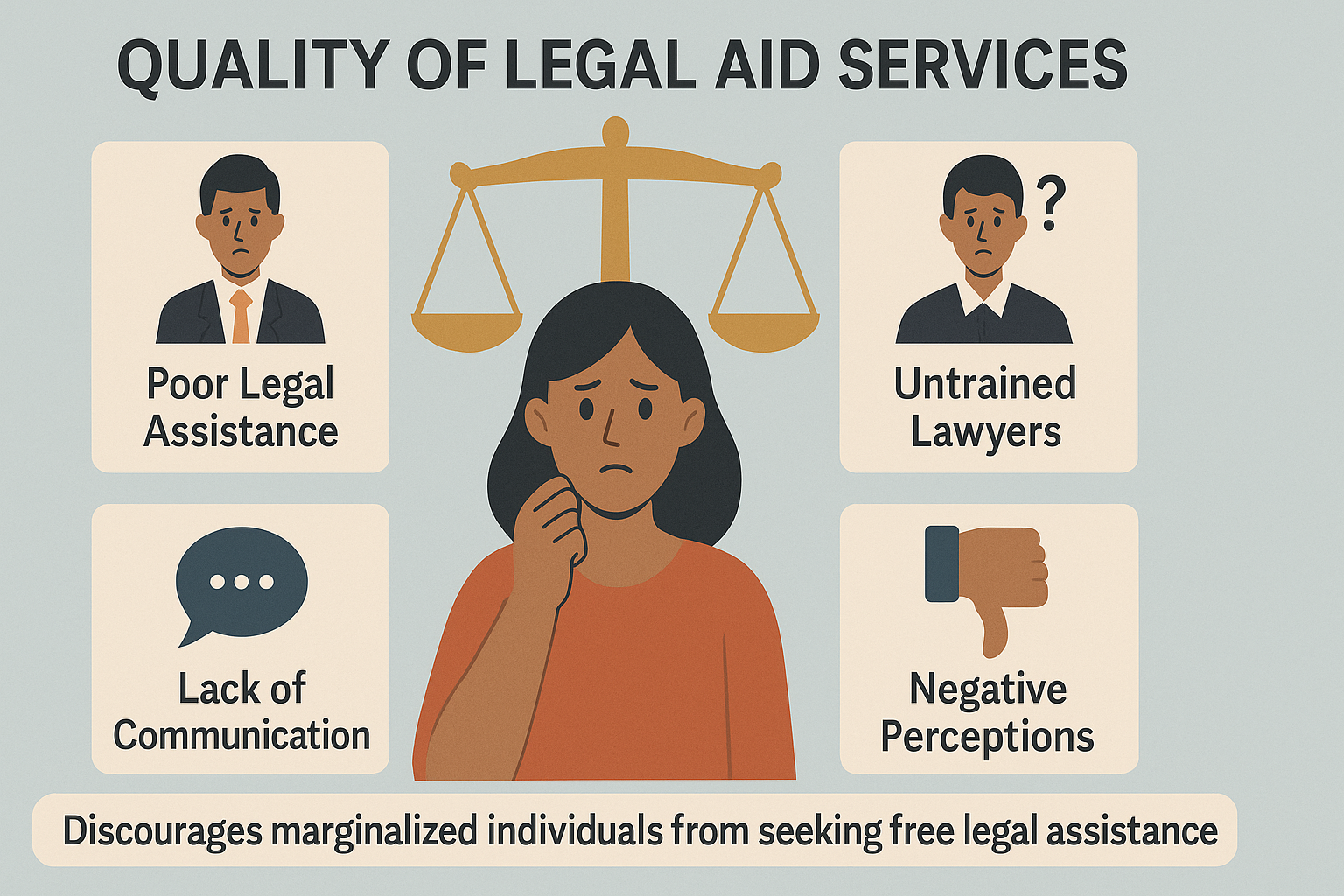
Access to justice is a constitutional right, yet in India, the perception and reality of poor quality in free legal aid services create significant barriers, particularly for marginalized and economically disadvantaged individuals. Many eligible beneficiaries either do not seek help or abandon legal processes midway due to a lack of trust in the system. Core issues include insufficiently trained legal aid lawyers, limited access to resources, poor client-lawyer communication, and systemic inefficiencies within the public legal aid infrastructure. Legal aid services often lack accountability and feedback mechanisms, leading to a cycle of mistrust and inefficacy. Without strategic intervention, the objective of equitable justice remains unfulfilled. There is a critical need to uplift the quality of legal aid through better lawyer training programs, resource optimization, real-time monitoring, transparent case handling, and active feedback collection. A technology-driven, user-friendly platform that connects clients to vetted and trained legal aid providers, monitors case progress, and gathers actionable feedback could revolutionize access and rebuild trust in the system.
Pain Points
- Poor Legal Representation: Many legal aid lawyers lack experience or motivation, leading to subpar case handling.
- Limited Access to Information: Clients don’t know how to access legal aid or the status of their cases.
- Lack of Trust: Perceptions of bias, inefficiency, or neglect create deep distrust in free services.
- No Monitoring Mechanism: Absence of systems to track the lawyer’s performance or client satisfaction.
- Low Motivation for Lawyers: Legal aid cases are often low-priority for lawyers due to poor incentives.
- Resource Scarcity: Legal aid providers often lack access to research tools, legal libraries, or digital case management systems.
- Communication Gaps: Clients frequently experience poor communication regarding their case progress.
- Delay in Services: Bureaucratic procedures and lawyer unavailability cause significant delays.
- Complex Legal Language: Marginalized individuals often cannot understand legal jargon without proper assistance.
- Lack of Feedback Loops: No formal mechanism to capture client feedback or complaints to improve services.
Key Competition
In India and globally, several organizations are working to improve legal aid services:
- Nyaaya (India): Provides simplified legal information, aiming to bridge gaps in understanding rights.
- Legal Aid Society (India): NGO focused on delivering legal aid quality improvements through volunteerism.
- ProBono.Org (South Africa): Specializes in connecting marginalized individuals with pro bono lawyers.
- LawHelp.org (USA): Online platform offering legal information and lawyer connection tools.
- Justice Connect (Australia): Uses technology to streamline legal aid matchmaking and education.
Maturity of the Market
The market for legal tech and legal aid improvement in India is still nascent to emerging. While awareness has increased, real-world usage of technology among marginalized groups remains low, suggesting huge potential for first movers offering accessible, high-trust platforms.
Gaps
Despite some advances, marginalized users still struggle with:
- Access to trustworthy, accountable legal aid providers.
- Communication gaps and no real-time updates on cases.
- No feedback systems to report dissatisfaction.
- Lack of simple onboarding for illiterate or semi-literate users.
- Lawyer training on empathy, rights advocacy, and marginalized needs is still weak.
- Language barriers and complex legal jargon.
- Zero case monitoring or quality control mechanisms in most states.
Product Vision
JusticeBridge Technologies envisions a world where access to justice is not limited by economic status, geography, or digital literacy. Our flagship product, “BridgeJustice”, will be a smart platform that guarantees the quality, transparency, and accountability of free legal aid services. The platform will use AI-powered matchmaking to connect clients with vetted legal aid providers based on case type, location, and language preference. Through a mobile-first design, even users with basic phones can track their case status via SMS, IVR (Interactive Voice Response), or app notifications. The system will incorporate mandatory feedback collection at each case milestone, gamified training modules for lawyers to upskill continuously, and performance-based ranking to incentivize better service. Blockchain-backed systems will ensure the immutability of client-lawyer communications and case data privacy. BridgeJustice will also partner with NGOs, courts, and government bodies to ensure seamless service integration. Our broader goal is to rebuild trust in the legal aid system while providing marginalized populations the dignity of fair and professional representation. With an initial focus in India, the platform can later scale to other emerging markets facing similar challenges.
Use Cases
1. AI-driven Lawyer-Client Matchmaking
- Short Info: Connects clients to lawyers based on expertise, location, and case urgency.
- Reference: Vision (AI matchmaking); Pain Points (trust, poor representation); Competition (no existing AI system for matching).
- Stakeholders: Clients, Legal Aid Lawyers, Technology Providers.
- Elaboration:
BridgeJustice will use an AI engine to suggest the most suitable legal aid lawyer for a client. The match will consider case type, lawyer experience, availability, location, and preferred communication language. Clients can accept or reject a match with reasoning. An auto-escalation flow ensures that rejected matches are reassigned. - Requirements:
- Lawyer profile creation.
- Client input form for needs.
- AI matching algorithm.
- Reassignment logic after rejections.
- Location filtering system.
- Case type tagging.
- Expertise database.
- Availability status update by lawyers.
- Acceptance/rejection communication.
- Analytics dashboard for match success rate.
2.Real-time Case Tracking Dashboard
- Short Info: A user-friendly dashboard for clients to track case milestones and lawyer communication.
- Reference: Vision (client dashboard); Pain Points (lack of updates).
- Stakeholders: Clients, Legal Aid Lawyers.
- Elaboration:
Clients will get a timeline view of their case progress: filed, accepted, hearing scheduled, hearing completed, judgment pending, judgment delivered, etc. Lawyers must update milestones as cases move forward. Notifications (push, SMS, IVR) will inform clients about changes. - Requirements:
- Dashboard UI/UX.
- Case milestone database.
- Lawyer update interface.
- Push/SMS/IVR integration.
- Client notification preferences.
- Legal deadline calendar.
- Reminders before hearings.
- Secure login system.
- Offline access mode.
- Data synchronization between web and app.
3.Feedback Mechanism at Legal Milestones
- Short Info: Feedback collection after every major legal step.
- Reference: Vision (feedback system); Pain Points (no feedback loops).
- Stakeholders: Clients, Legal Aid Lawyers, Admins.
- Elaboration:
At major steps (filing, first hearing, final judgment), clients will be prompted to rate their experience and provide comments anonymously. Aggregate lawyer ratings will affect future case assignments and provide transparency. - Requirements:
- Feedback form design.
- Milestone-triggered feedback triggers.
- Lawyer rating system.
- Admin access to feedback.
- Sentiment analysis AI.
- Anonymous response collection.
- Reporting dashboards.
- Lawyer reward/penalty mechanism.
- Multiple languages.
- SMS-based feedback option.
4.Lawyer Upskilling Module (Gamified)
- Short Info: Gamified legal training for lawyers focusing on empathy, communication, and technical legal knowledge.
- Reference: Vision (lawyer training); Innovation (gamified learning).
- Stakeholders: Legal Aid Lawyers, Training Institutes, Admins.
- Elaboration:
The system will have short modules and quizzes with levels, badges, and certificates. Modules will focus on practical training like handling marginalized clients, rights awareness, and new legal updates. - Requirements:
- LMS backend.
- Gamification framework (badges, points).
- Training content creation.
- Quiz engines.
- Progress tracking.
- Certification system.
- Admin control panel.
- Video/audio module support.
- Leaderboards.
- Offline download mode.
5.Voice-enabled Updates for Illiterate Clients
- Short Info: Voice calls or IVR to update clients about case status.
- Reference: Vision (voice-based access); Pain Points (language, literacy barriers).
- Stakeholders: Clients, Technology Providers.
- Elaboration:
Clients with low literacy can opt for automatic voice calls that narrate updates in local language after each case movement. Options to call back for more info via IVR menus. - Requirements:
- Voice call system integration.
- Language translation engine.
- IVR flow design.
- Opt-in/opt-out system.
- Case status voice scripts.
- Call retry policies.
- Secure authentication before updates.
- Language preference settings.
- Call analytics dashboard.
- Regional accent support.
6.Multilingual Platform Interface
- Short Info: Platform supports 10+ Indian languages, including Hindi, Tamil, Bengali, Marathi, etc.
- Reference: Vision (regional language support); Pain Points (language barriers).
- Stakeholders: Clients, Legal Aid Lawyers, Technology Providers.
- Elaboration:
The user interface (UI) and all system notifications, updates, and support interactions will be available in multiple Indian languages. Users can select their preferred language during registration. Regional localization will also include culturally sensitive content adaptation. - Requirements:
- Language preference selector.
- Full platform translation engine.
- Cultural adaptation (not just literal translation).
- Bilingual switching option.
- Legal content translation.
- Notification translation service.
- Support chatbot multilingual training.
- Admin content management for translations.
- OCR integration for multilingual documents.
- Dynamic language fallback.
7.Blockchain-secured Client-Lawyer Communication
- Short Info: Use blockchain to create tamper-proof records of conversations.
- Reference: Vision (secure communications); Innovation (blockchain for legal communication).
- Stakeholders: Clients, Legal Aid Lawyers, Admins.
- Elaboration:
All text messages, updates, and document exchanges between client and lawyer will be hashed and timestamped onto a private blockchain network, ensuring they cannot be altered later. This ensures trust and accountability from both sides. - Requirements:
- Blockchain network setup.
- Hashing of conversations.
- Encryption protocols.
- Tamper alert system.
- Case history timeline on blockchain.
- Permissioned access layers.
- Data synchronization engine.
- User consent for blockchain storage.
- Blockchain audit logs.
- Dispute resolution portal using blockchain evidence.
8.Anonymous Lawyer Complaint System
- Short Info: Clients can report poor lawyer behavior anonymously.
- Reference: Vision (anonymous feedback); Pain Points (no complaint system).
- Stakeholders: Clients, Admins, Legal Aid Lawyers.
- Elaboration:
The system will have a separate complaint portal where clients can submit grievances anonymously. Complaints are routed to a dedicated quality team that can initiate reviews, warnings, or suspensions based on seriousness. - Requirements:
- Anonymous complaint form.
- Admin complaint dashboard.
- Lawyer incident history.
- Automatic case freezing if necessary.
- Priority escalation flags.
- Whistleblower protection protocols.
- Automated acknowledgment to complainant.
- Multilingual complaint submission.
- Legal escalation support.
- Public trust metrics update.
9.Automated Deadline and Hearing Reminders
- Short Info: SMS, email, app reminders for court dates and filing deadlines.
- Reference: Vision (reminder system); Pain Points (missed deadlines).
- Stakeholders: Clients, Legal Aid Lawyers.
- Elaboration:
The platform will sync with the court calendars and automatically send reminders a week, three days, and one day before the event. It will also highlight upcoming deadlines on the client dashboard. - Requirements:
- Court hearing database integration.
- Reminder scheduling engine.
- SMS/email/app notification systems.
- Calendar sync option.
- Hearing outcome update workflow.
- Auto-reminders for document submission.
- Notification preferences panel.
- Hearing checklist before the court date.
- Alert snooze/reschedule features.
- Lawyer-client chat reminder thread.
10.Legal Document Vault for Clients
- Short Info: Cloud-based, encrypted storage for legal documents.
- Reference: Vision (secure records); Pain Points (document mismanagement).
- Stakeholders: Clients, Legal Aid Lawyers, Admins.
- Elaboration:
Clients can upload, store, and share documents safely with lawyers. Documents like affidavits, court filings, and ID proofs will have controlled access, with viewing/editing permissions. End-to-end encryption ensures privacy. - Requirements:
- Secure document upload portal.
- Encryption-at-rest and in-transit.
- Version control of documents.
- Permission management (read/write access).
- File type restrictions.
- Expiry-based access sharing.
- Cloud sync backend.
- Two-factor authentication.
- Audit log of file access.
- Offline document access option.
11.NGO Reporting Dashboard
- Short Info: Analytics dashboard for NGOs tracking the cases they referred.
- Reference: Vision (NGO partnerships); Pain Points (no visibility for NGOs).
- Stakeholders: NGOs, Admins.
- Elaboration:
Partner NGOs will have a dashboard where they can track status updates, success rates, lawyer feedback, and active cases. This ensures better accountability and helps NGOs demonstrate impact to their funders. - Requirements:
- NGO registration and login.
- NGO-client relationship tagging.
- Real-time report generation.
- Graphical analytics (resolved vs pending cases).
- Data export feature (CSV, PDF).
- GDPR-compliant data sharing.
- NGO-specific communication channel.
- Notification for client status changes.
- Success story documentation tool.
- Multi-NGO multi-project support.
12.Lawyer Ranking and Incentive System
- Short Info: Public ranking for legal aid lawyers based on feedback and success rate.
- Reference: Vision (quality assurance); Pain Points (poor lawyer motivation).
- Stakeholders: Legal Aid Lawyers, Clients, Admins.
- Elaboration:
Lawyers will be scored based on feedback ratings, number of cases closed successfully, and client satisfaction surveys. Top-performing lawyers will be recognized with badges, certificates, and optional micro-grants for further training. - Requirements:
- Lawyer scoring engine.
- Feedback weightage algorithm.
- Case closure tracking.
- Ranking leaderboard UI.
- Badge and award management.
- Incentive payout module.
- Lawyer profile enhancement feature.
- User trust label next to lawyers.
- Dispute resolution process for scoring appeals.
- Public lawyer directory integration.
13.Emergency Legal Help Button (24/7 Access)
- Short Info: One-click emergency help request on the app or phone call.
- Reference: Vision (24/7 emergency help); Pain Points (no immediate access).
- Stakeholders: Clients, Admins, Emergency Legal Teams.
- Elaboration:
For urgent situations like police action, eviction threats, or domestic violence, clients can press a panic button on the app or call a hotline. Immediate connection to an available emergency lawyer will be made. - Requirements:
- Panic button app integration.
- Emergency hotline number.
- Fast-track lawyer pool.
- Location sharing (optional, consent-based).
- Incident logging.
- Emergency call-backs.
- Priority escalation workflows.
- Automated SMS confirmation.
- NGO alert system.
- Follow-up case tracking.
14.Scheduled Community Legal Awareness Sessions
- Short Info: Free workshops in low-income communities using online/offline hybrid model.
- Reference: Vision (community outreach); Competition (Justice Connect style).
- Stakeholders: Clients, NGOs, Community Leaders.
- Elaboration:
Organize monthly sessions explaining basic rights, free legal aid processes, and digital access tips. Sessions can happen at community centers or via Zoom for remote areas. - Requirements:
- Session scheduling tool.
- Hybrid online/offline management system.
- Attendance recording.
- Certificate distribution.
- Training material repository.
- Multilingual session support.
- Follow-up session alerts.
- NGO collaboration module.
- Workshop feedback forms.
- Event calendar integration.
15.Impact Measurement Engine (Case Resolutions, Satisfaction Scores)
- Short Info: Analytics engine to measure BridgeJustice’s real-world impact.
- Reference: Vision (impact tracking); Competition (agami.org reporting).
- Stakeholders: Funders, Admins, NGOs.
- Elaboration:
Real-time dashboards will calculate total cases handled, successful outcomes, lawyer performance, average case duration, client satisfaction rates, and system efficiency. This ensures continuous improvement and better fundraising with proof of impact. - Requirements:
- Metrics definition engine.
- Data analytics pipeline.
- Real-time reporting dashboard.
- Visualization (graphs, pie charts, etc.).
- Monthly/quarterly/annual report generation.
- KPI goal setting feature.
- User survey integration.
- Funders’ special access panel.
- Predictive analytics (forecasted improvements).
- Mobile-first reporting view.
Summary
Access to justice remains a critical challenge for marginalized individuals in India due to widespread perceptions of poor-quality free legal aid services. JusticeBridge Technologies identified significant gaps, including lack of lawyer accountability, communication breakdowns, literacy barriers, and absence of feedback systems. Despite initiatives by NGOs and startups, a unified, tech-driven quality monitoring platform is missing from the landscape. Through extensive competitive research, user empathy, and pain point analysis, a comprehensive product vision emerged: “BridgeJustice,” an AI-enabled, multilingual, blockchain-secured platform offering real-time case tracking, anonymous feedback, lawyer upskilling, and emergency legal access. The platform uniquely addresses user distrust by providing transparency at each case milestone and ensuring all interactions are secure, verified, and client-centric. It also empowers NGOs and funders with real-time impact analytics. Launching BridgeJustice by mid-2026 is estimated to create sustainable revenue while fulfilling a vital social need. In doing so, JusticeBridge Technologies will set a new benchmark for accessible, equitable, and trusted legal aid in India, with the future potential to scale globally.