Problem Statement:
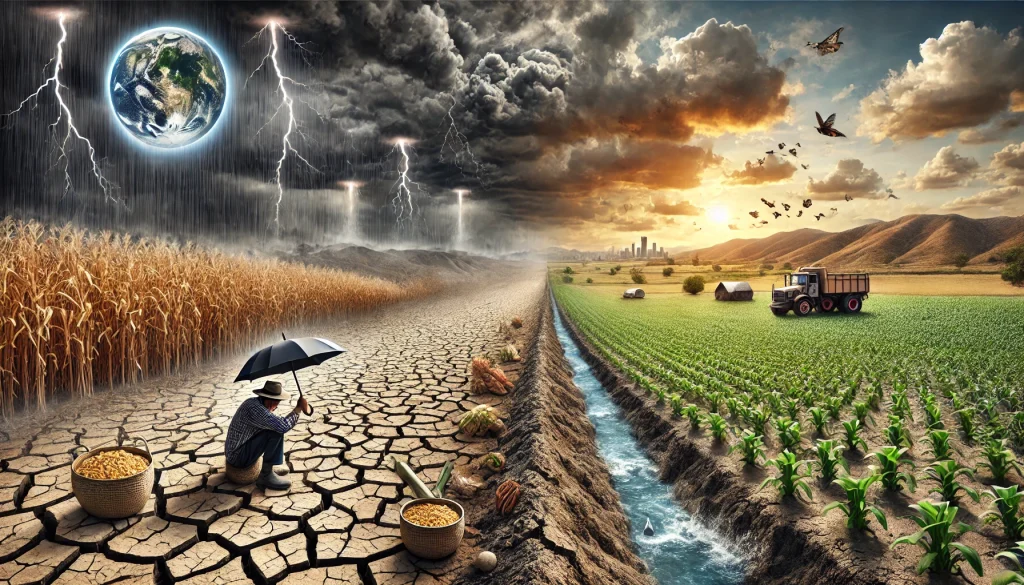
Climate change is increasingly disrupting the agricultural sector, posing a significant threat to food security and the livelihoods of farmers worldwide. Rising global temperatures, shifting precipitation patterns, and the increased frequency of extreme weather events—such as droughts, floods, and storms—are leading to significant reductions in crop yields. These environmental changes have far-reaching consequences, not only for farmers’ incomes but also for global food supply chains. The unpredictability of weather patterns makes it difficult for farmers to plan their planting and harvesting schedules, leading to higher risks of crop failure and economic loss. Moreover, climate change is exacerbating water scarcity, reducing the availability of vital resources needed for irrigation. As a result, some regions are experiencing desertification, further limiting the arable land available for food production. Additionally, pests and diseases are becoming more widespread as they thrive in warmer climates, causing further damage to crops. This instability is particularly detrimental to smallholder farmers in developing countries, who often lack the resources and technologies needed to adapt to these changing conditions. To safeguard food production and build resilience against climate change, there is an urgent need to develop and implement agricultural practices that are both sustainable and adaptable to a rapidly changing environment.
Pain Points:
- Reduced Crop Yields: Climate change disrupts growing seasons, leading to lower agricultural productivity.
- Unpredictable Weather Patterns: Farmers struggle to plan due to erratic rainfall, droughts, and extreme temperatures.
- Increased Frequency of Extreme Weather Events: Floods, storms, and heatwaves cause widespread crop damage and soil erosion.
- Water Scarcity: Changes in precipitation reduce water availability for irrigation, stressing crops and reducing yields.
- Soil Degradation: Increased erosion and nutrient depletion from extreme weather events degrade soil quality.
- Spread of Pests and Diseases: Warmer temperatures create favorable conditions for pests and diseases, affecting crop health.
- Economic Losses: Farmers face financial instability due to crop failures and reduced productivity.
- Food Security Risks: Lower yields and crop failures threaten the global food supply, particularly in vulnerable regions.
- Loss of Biodiversity: Changing climates disrupt ecosystems, reducing the variety of crops and natural pollinators.
- Limited Access to Adaptive Technologies: Many farmers lack the tools and resources needed to adapt to changing conditions.
Future Vision:
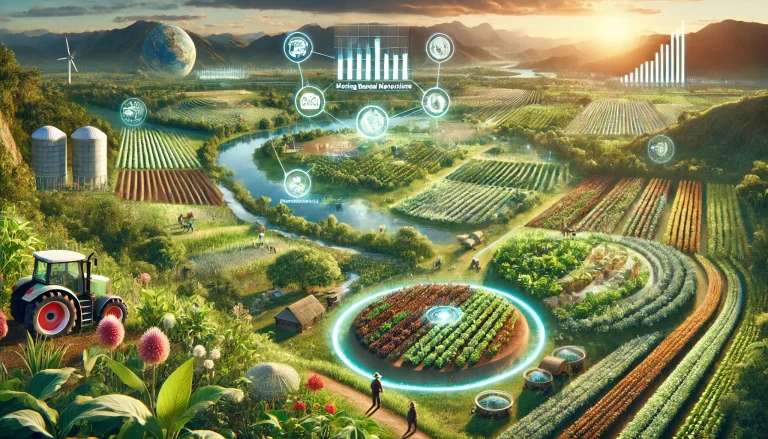
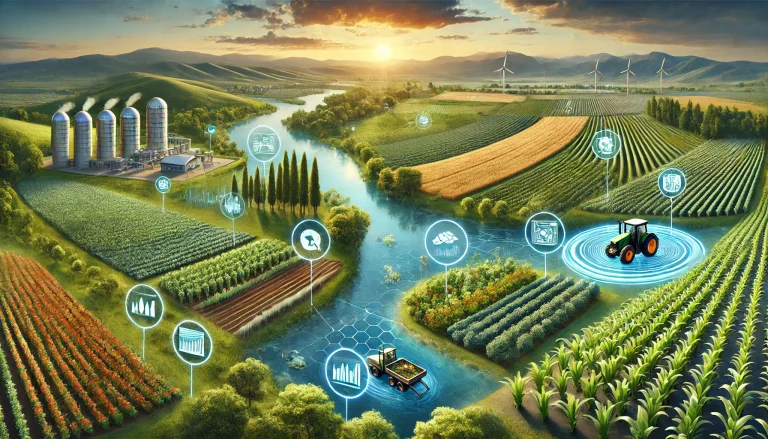
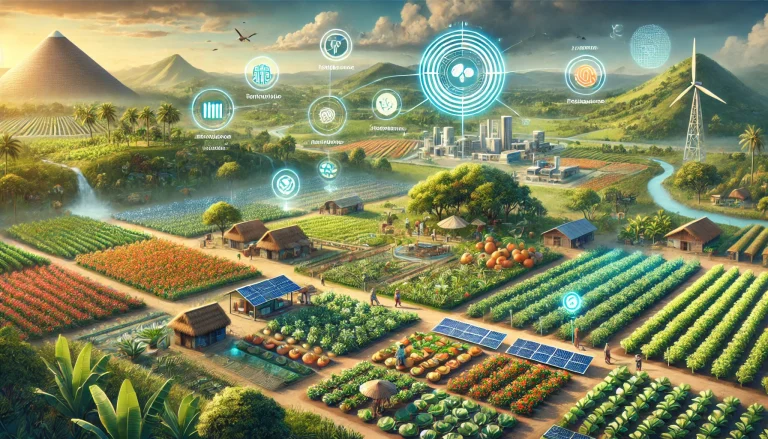
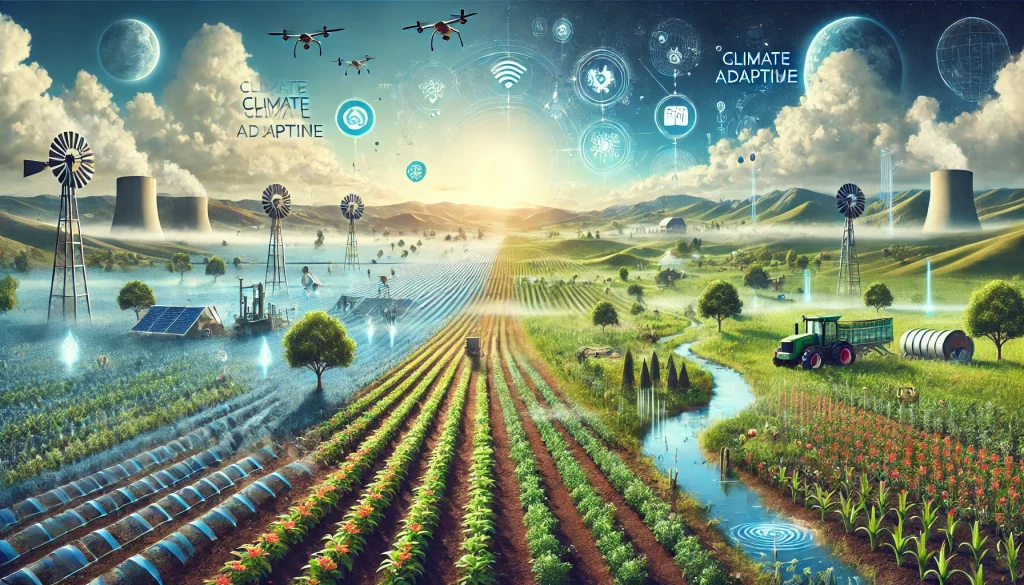
The future of agriculture in the face of climate change will depend on the widespread adoption of resilient and adaptive farming practices. This vision includes the development of a platform that integrates advanced technologies, data analytics, and sustainable practices to help farmers adapt to changing environmental conditions. The platform would offer tools such as climate forecasting models, which predict weather patterns and allow farmers to plan their activities accordingly. It would also include access to drought-resistant crop varieties and innovative irrigation systems that optimize water use in times of scarcity. Precision agriculture techniques, powered by AI and IoT devices, would enable farmers to monitor soil health, water levels, and crop conditions in real-time, allowing them to make informed decisions that enhance productivity and reduce risks. Additionally, the platform would support regenerative agriculture practices, such as cover cropping, agroforestry, and no-till farming, which improve soil health and sequester carbon, thereby mitigating the effects of climate change. To ensure accessibility, the platform would provide training and resources tailored to smallholder farmers in developing regions, empowering them to implement these strategies effectively. By fostering collaboration between farmers, researchers, and policymakers, this platform would contribute to building a more resilient global food system that can withstand the impacts of climate change while promoting environmental sustainability and economic stability.
Use Cases:
- Climate-Resilient Crop Selection: Farmers use the platform to identify and plant drought-resistant and heat-tolerant crop varieties.
- Precision Irrigation Management: The platform provides real-time data on soil moisture and weather, optimizing irrigation schedules to conserve water.
- Climate Forecasting and Planning: Farmers receive accurate climate predictions, allowing them to adjust planting and harvesting times.
- Pest and Disease Monitoring: AI-driven tools detect early signs of pest infestations and diseases, enabling timely interventions.
- Regenerative Agriculture Practices: The platform offers guidance on implementing sustainable farming practices like cover cropping and agroforestry.
- Carbon Sequestration Tracking: Farmers track and quantify carbon sequestration through regenerative practices, potentially earning carbon credits.
- Supply Chain Optimization: The platform connects farmers with markets, reducing the impact of climate-related disruptions on food supply chains.
- Water Conservation Techniques: The platform provides training on rainwater harvesting, drip irrigation, and other water-saving methods.
- Farmer Education and Training: Access to educational resources and best practices for adapting to climate change.
- Financial Risk Management: Tools to help farmers manage economic risks associated with climate variability, including insurance options.
Target Users and Stakeholders:
Target Users:
- Farmers (small to large scale) seeking to adapt to climate change.
- Agricultural cooperatives and associations promoting resilient farming practices.
- Agribusinesses aiming to secure supply chains and reduce climate-related risks.
Stakeholders:
- Government agencies focused on agriculture, climate change, and food security.
- NGOs working on climate adaptation, sustainable agriculture, and rural development.
- Environmental organizations advocating for climate resilience in farming.
- Technology companies developing tools for climate-smart agriculture.
- Consumers interested in supporting sustainable and resilient food systems.
Key Competition:
- Climate FieldView: Provides digital tools for climate data analysis and precision agriculture, helping farmers adapt to climate change.
- Farmers Business Network (FBN): Offers data-driven insights and resources to help farmers manage climate risks and improve resilience.
- Indigo Ag: Focuses on microbial seed treatments and data analytics to enhance crop resilience and carbon sequestration.
- AgroClimate: An online platform providing climate risk assessments, tools, and resources for farmers to manage climate variability.
- aWhere: Delivers weather and agronomic data to improve decision-making and help farmers adapt to changing climates.
Products/Services:
- Climate Forecasting Tools: Advanced models that predict weather patterns and guide agricultural planning.
- Precision Agriculture Technologies: IoT devices, drones, and sensors for monitoring crop health, soil conditions, and water use.
- Drought-Resistant Seeds: Crop varieties bred to withstand extreme weather conditions and water scarcity.
- Water Management Solutions: Smart irrigation systems, rainwater harvesting, and soil moisture monitoring tools.
- Regenerative Agriculture Resources: Training and support for implementing sustainable farming practices that improve soil health.
- Pest and Disease Monitoring Systems: AI-driven platforms for early detection and management of crop threats.
- Supply Chain Resilience Solutions: Tools to optimize logistics and reduce climate-related disruptions in food supply chains.
- Farmer Education Platforms: Online resources and training modules focused on climate adaptation and sustainable agriculture.
- Carbon Sequestration Tracking: Technologies for measuring and verifying carbon capture through regenerative practices.
- Agricultural Insurance Products: Financial tools to help farmers manage risks associated with climate variability.
Active Startups:
- Taranis: Uses AI and remote sensing to provide precision agriculture insights and help farmers manage climate risks.
- Climacell: Offers hyperlocal weather forecasting and climate analytics for agriculture, enabling better decision-making.
- CropX: Provides soil monitoring and climate-adaptive irrigation solutions through IoT and data analytics.
- Sustainable Water and Innovative Irrigation Solutions (SWIIS): Develops sustainable irrigation technologies to optimize water use in agriculture.
- Regrow: Focuses on regenerative agriculture and carbon tracking, helping farmers build climate resilience and earn carbon credits.
Ongoing Work in Related Areas:
- Research on drought-resistant crops and climate-resilient farming systems that can adapt to extreme weather conditions.
- Development of smart irrigation systems that adjust water delivery based on real-time climate data and soil conditions.
- Agroecology initiatives promoting biodiversity and soil health as a buffer against climate change impacts.
- Climate adaptation programs led by NGOs and governments, providing technical assistance and funding for climate-smart agriculture.
- Carbon sequestration projects aimed at integrating carbon capture practices into agricultural systems to mitigate climate change.
Recent Investment:
- $250 million investment in Indigo Ag in 2023 to expand their microbial seed treatments and climate resilience initiatives.
- $150 million raised by Taranis in 2022 to enhance their AI-driven precision agriculture platform and reach more farmers globally.
- $100 million in funding for CropX in 2023 to scale their climate-adaptive irrigation solutions and soil monitoring technologies.
- $75 million in venture capital for Regrow in 2024 to support their regenerative agriculture and carbon tracking platform.
- $50 million invested in Climacell in 2023 to advance their hyperlocal weather forecasting and climate analytics services for agriculture.
Market Maturity:
The market for climate-smart agriculture is rapidly maturing as the urgency to address climate change becomes increasingly clear. Farmers, agribusinesses, and governments are recognizing the need for resilient agricultural practices that can withstand the impacts of rising temperatures, unpredictable weather, and extreme events. Investments in precision agriculture, climate forecasting, and sustainable farming technologies are on the rise, with significant capital flowing into startups and established companies focused on these areas. The market is also seeing growing interest in carbon sequestration and regenerative agriculture, driven by the potential to mitigate climate change while improving soil health and productivity. However, challenges remain, particularly in making these technologies accessible to smallholder farmers in developing regions who are most vulnerable to climate impacts. As the market continues to mature, we can expect increased collaboration between the private and public sectors, greater investment in research and development, and the expansion of climate-smart practices across the global agricultural landscape.
Summary:
Climate change presents a formidable challenge to the agricultural sector, with rising temperatures, unpredictable weather patterns, and more frequent extreme weather events threatening global food security. To address these challenges, it is essential to develop resilient agricultural practices that can adapt to changing conditions. A platform dedicated to climate-smart agriculture would provide farmers with the tools and technologies needed to build resilience against climate impacts. By offering climate forecasting, precision agriculture, regenerative practices, and educational resources, the platform would empower farmers to make informed decisions that enhance productivity and reduce risks. The market for climate-smart agriculture is growing rapidly, supported by significant investment and ongoing research. As these solutions become more accessible, they will play a critical role in ensuring the long-term sustainability of food production and the livelihoods of farmers around the world. The future of agriculture depends on our ability to adapt to climate change, and the time to act is now.