Problem Statement
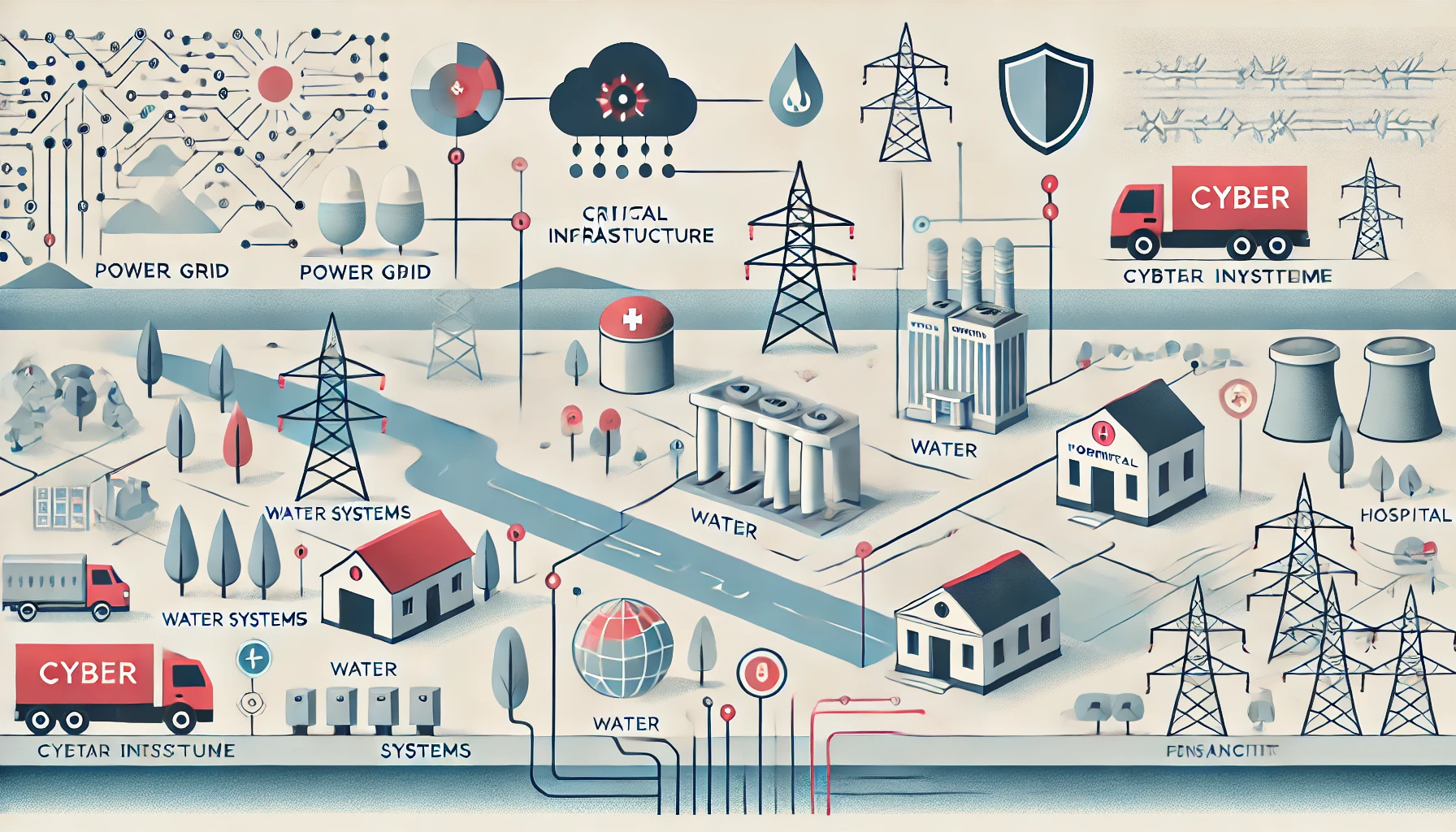
The increasing reliance on digital systems has made critical infrastructure a prime target for cyber warfare, a growing domain of modern conflict. Nation-states, rogue actors, and cybercriminal organizations have the capability to exploit vulnerabilities in systems to disrupt essential services such as power grids, water systems, hospitals, and financial institutions. These attacks can have devastating consequences, including economic destabilization, breakdown of societal trust, and potential loss of life due to failures in healthcare or emergency systems.
Unlike traditional warfare, cyber warfare operates in a stealthy and asymmetric manner, making attribution and retaliation complex. The scale of potential damage extends globally, as interconnected systems may propagate failures across borders. The lack of robust, proactive measures for detecting, mitigating, and responding to these threats creates a dangerous gap in national and global security.
A solution is required to enhance cyber resilience by safeguarding critical infrastructure, ensuring swift threat detection, and enabling coordinated responses across public and private sectors to minimize impact.+
Target Users
1. Government Agencies
- Age Group: 30–60 years
- Gender: All
- Usage Pattern: Daily monitoring and incident response to protect national critical infrastructure.
- Benefit: Real-time visibility into cyber threats and robust defensive measures for critical services.
2. Enterprises (Energy, Healthcare, Finance)
- Age Group: 25–55 years (IT teams, managers, executives)
- Gender: All
- Usage Pattern: Continuous usage to monitor and protect organizational assets.
- Benefit: Ensures business continuity and reduces risk of operational disruption.
3. Cybersecurity Professionals
- Age Group: 25–50 years
- Gender: All
- Usage Pattern: Heavy, daily usage for threat analysis and response.
- Benefit: A comprehensive platform to identify, analyze, and mitigate cyber threats efficiently.
4. End Users (Public Citizens)
- Age Group: 18–70 years
- Gender: All
- Usage Pattern: Occasional, during cyberattack-induced disruptions.
- Benefit: Improved trust in critical services and reduced societal chaos.
Stakeholders and Their Roles
- Governments
- Role: Policy enforcement, funding, and cross-national collaboration.
- Critical Infrastructure Operators
- Role: Implementation of cybersecurity protocols and incident response measures.
- Cybersecurity Vendors
- Role: Provide solutions and ongoing technological updates.
- Research Institutes
- Role: Innovating new detection and prevention mechanisms.
- General Public
- Role: Indirect stakeholders affected by disruptions or vulnerabilities.
Top 10 Pain Points
- Lack of Early Threat Detection: Infrastructure operators often fail to identify attacks in their early stages.
- Inadequate Collaboration: Poor communication between public and private sectors during cyber incidents.
- Difficulty in Attribution: Identifying perpetrators is complex, delaying appropriate responses.
- Underdeveloped Response Plans: Many organizations lack robust strategies to recover from attacks.
- Systemic Vulnerabilities: Outdated or poorly maintained systems are frequent targets.
- Global Nature of Cyber Threats: Interconnected systems spread vulnerabilities across borders.
- Shortage of Skilled Personnel: Insufficient cybersecurity experts to handle the growing number of attacks.
- Economic Losses: Cyberattacks on financial institutions can destabilize economies.
- Trust Erosion: Public confidence in essential services declines due to recurrent attacks.
- Escalation Risks: Cyber warfare could escalate into full-scale geopolitical conflicts.
Key Competitors:
- BAE Systems: Offers a range of critical infrastructure protection technologies and services designed to safeguard essential systems and assets from physical and cyber threats. extrapolate.com
- Thales: A key player in the critical infrastructure protection market, providing comprehensive cybersecurity solutions tailored to various sectors. extrapolate.com
- Fortinet: Provides integrated, high-performance cybersecurity solutions, including firewalls, VPNs, and network security, to protect critical infrastructure. Cybersecurity News
- CrowdStrike: Specializes in AI-powered endpoint protection with real-time threat detection and incident response, safeguarding critical infrastructure from sophisticated cyber threats. Cybersecurity News
- Palo Alto Networks: Delivers cloud-based security, advanced firewalls, and automated threat response solutions to secure critical infrastructure against cyberattacks. Cybersecurity News
Emerging Startups:
- Hushmesh: Develops secure-messaging applications for sensitive military and governmental communication, enhancing the security of critical infrastructure communications. The Wall Street Journal
- Goldilock: Offers a non-internet-dependent kill switch for critical infrastructure, providing an additional layer of security against cyber threats. The Wall Street Journal
- LevelQuantum: Focuses on quantum cryptography terminals to secure communications within critical infrastructure, addressing emerging cyber threats. The Wall Street Journal
Recent Innovations:
- Artificial Intelligence and Machine Learning: Utilized for advanced threat detection and response, enabling proactive defense mechanisms in critical infrastructure. arXiv
- Software-Defined Networking (SDN): Applied to create dynamic cybersecurity frameworks for smart grids, enhancing the resilience of energy infrastructure. arXiv
Recent Investments:
- NATO’s Defence Innovation Accelerator for the North Atlantic (DIANA): Funding startups like Hushmesh, Goldilock, and LevelQuantum to address cybersecurity challenges in critical infrastructure. The Wall Street Journal
Market Maturity:
The critical infrastructure protection market is expanding, with projections indicating significant growth in the coming years. However, the increasing sophistication of cyber threats necessitates continuous innovation and investment to meet the evolving security needs of critical infrastructure sectors.
Major Offerings by Competitors:
- Integrated Security Solutions: Combining network security, endpoint protection, and cloud security to provide comprehensive protection for critical infrastructure.
- Advanced Threat Detection: Utilizing AI and machine learning to identify and respond to cyber threats in real-time.
- Incident Response Services: Offering rapid response capabilities to mitigate the impact of cyberattacks on critical infrastructure.
- Secure Communication Tools: Developing applications to ensure the confidentiality and integrity of communications within critical infrastructure sectors.
Product Vision for Cyber Resilience Solution
1. Gaps Still Faced by Target Users
- Limited Predictive Capabilities: Current solutions react after attacks occur, lacking robust predictive analytics to anticipate threats.
- Fragmented Systems: Lack of integration across platforms leads to siloed data and inefficiencies.
- Insufficient Collaboration: Poor communication between public and private entities during crises hinders coordinated responses.
- Vulnerabilities in Legacy Systems: Outdated infrastructure remains a primary target for attackers.
- Lack of Real-Time Incident Resolution: Slow response times exacerbate the impact of attacks.
2. Strengths of the Company
- Cutting-Edge AI Expertise: Advanced knowledge in AI/ML for real-time threat detection and analysis.
- Holistic Cybersecurity Framework: Proven capability in developing integrated solutions for diverse industries.
- Collaborative Partnerships: Strong ties with government agencies and private sector stakeholders for deployment and feedback.
- Scalable Technology: The ability to handle increasing volumes of data and threats as systems evolve.
3. Leveraging Strengths to Solve Pain Points
- AI-Driven Predictive Analytics: Utilize AI to predict and prevent attacks before they occur.
- Cross-Sector Collaboration Tools: Introduce platforms for real-time communication and coordination among stakeholders.
- Adaptive Threat Intelligence: Create dynamic, scalable solutions to address evolving threats in real-time.
- Legacy System Modernization: Develop specialized tools for upgrading or securing outdated infrastructure.
4. Major Concerns
- Regulatory Challenges: Adapting to varying cybersecurity regulations across regions.
- Adoption Resistance: Convincing industries to integrate new technologies into their operations.
- High Initial Costs: Substantial investment required for development and deployment.
5. Revenue Potential
Estimated revenue over the first 5 years:
- Year 1: $5 million (initial deployment and government contracts)
- Year 2: $15 million (expansion to private sector)
- Year 3: $35 million (scaling solutions globally)
- Year 4: $60 million (integration into additional sectors like healthcare and finance)
- Year 5: $100 million (widespread adoption and recurring subscription revenues)
High-Level Vision
The Cyber Resilience Solution is a next-generation platform designed to safeguard critical infrastructure against the growing threat of cyber warfare. It combines predictive AI, real-time threat detection, and robust incident response tools to provide end-to-end protection. The solution bridges the gap between government agencies, private sector operators, and cybersecurity experts, enabling seamless collaboration and swift threat mitigation.
Its modular architecture allows users to address specific vulnerabilities while scaling to secure expansive networks. Advanced analytics proactively identify and neutralize threats, protecting essential services like power grids, water systems, hospitals, and financial institutions. The platform’s usability and integration features ensure smooth deployment and widespread adoption across industries.
By empowering stakeholders with actionable insights, our solution not only minimizes risks but also fosters trust and confidence in critical infrastructure systems. Positioned as a global leader in cybersecurity, we aim to deliver unparalleled security while contributing to economic stability and public safety.
Top 10 Use Cases of the Cyber Resilience Solution
Here are the primary use cases for the product, showcasing how it addresses critical pain points:
- Real-Time Threat Detection
- Details: Monitors critical systems continuously, leveraging AI to identify and neutralize threats in real-time before they cause harm.
- Benefit: Reduces downtime and protects essential services.
- Predictive Cyber Analytics
- Details: Uses machine learning models to predict potential vulnerabilities and proactively suggest remediation strategies.
- Benefit: Prevents attacks by identifying risks early.
- Incident Response Coordination
- Details: Provides a centralized platform for government and private entities to coordinate responses during a cyberattack.
- Benefit: Accelerates recovery and reduces damage.
- Legacy System Modernization
- Details: Secures older infrastructure by integrating it with modern cybersecurity protocols.
- Benefit: Extends the life of legacy systems while reducing vulnerabilities.
- Cross-Sector Collaboration Hub
- Details: Facilitates communication between stakeholders through secure, encrypted channels.
- Benefit: Enhances coordinated defense and shared intelligence.
- Cybersecurity Training Simulations
- Details: Offers simulated environments for operators to practice responding to cyber threats.
- Benefit: Builds preparedness and improves response efficiency.
- Automated Threat Remediation
- Details: Deploys predefined response actions to isolate threats and minimize their impact automatically.
- Benefit: Reduces human error and response times.
- Compliance Management
- Details: Helps organizations align with regulatory frameworks and track compliance status in real-time.
- Benefit: Avoids legal penalties and enhances governance.
- Global Threat Intelligence Sharing
- Details: Collects and disseminates threat intelligence across borders to prevent large-scale attacks.
- Benefit: Strengthens defenses globally through shared knowledge.
- Resilience Testing Framework
- Details: Tests critical infrastructure systems for vulnerabilities using simulated cyberattacks.
- Benefit: Identifies weaknesses and provides actionable insights for improvement.
Most Optimistic Launch Date
The product can be launched within 18 months, given the complexity of development, regulatory approvals, and stakeholder collaboration. The timeline includes:
- 6 months: Core development and prototyping.
- 6 months: Testing, stakeholder feedback, and refinements.
- 6 months: Deployment and training for initial users.
Product Roadmap for Cyber Resilience Solution
The following roadmap outlines the key milestones and activities required to bring the product to market successfully within 18 months:
Phase 1: Research and Development (Months 1–6)
- Core Architecture Design:
- Develop the platform’s modular architecture to allow for scalability and integration.
- AI Model Development:
- Build predictive analytics and threat detection algorithms using machine learning.
- Prototyping:
- Create a minimum viable product (MVP) to showcase real-time threat detection and incident response capabilities.
Phase 2: Testing and Validation (Months 7–12)
- Pilot Testing:
- Conduct tests with selected government agencies and critical infrastructure operators to ensure effectiveness.
- Feedback Loop:
- Collect feedback and refine algorithms and user interfaces.
- Compliance Checks:
- Ensure adherence to regional and international cybersecurity standards.
Phase 3: Stakeholder Engagement (Months 10–14)
- Training Programs:
- Develop user manuals and conduct training for early adopters, including cybersecurity professionals and infrastructure operators.
- Partnership Development:
- Collaborate with public and private entities for cross-sector integration.
Phase 4: Deployment and Scaling (Months 15–18)
- Initial Deployment:
- Launch the platform in targeted industries (e.g., energy and finance) and regions.
- Marketing and Outreach:
- Educate the market about the platform’s capabilities and value.
- Global Expansion Strategy:
- Plan for scaling the solution to healthcare, water systems, and international markets.
Summary of Research
The Cyber Resilience Solution addresses the escalating threat of cyber warfare, which poses risks to critical infrastructure like power grids, water systems, hospitals, and financial institutions. The platform bridges current gaps in cybersecurity by integrating predictive analytics, real-time threat detection, and incident response. By facilitating cross-sector collaboration and modernizing legacy systems, the solution ensures swift, coordinated responses to cyberattacks.
Key pain points, such as inadequate early threat detection, fragmented communication, and lack of preparedness, are tackled through innovations like AI-powered analytics, automated remediation, and secure communication hubs. The product also includes resilience testing frameworks and compliance management tools to strengthen the infrastructure’s security posture.
With a projected launch in 18 months, the solution follows a structured roadmap, including core development, rigorous testing, stakeholder engagement, and scaling strategies. By fostering global threat intelligence sharing and equipping stakeholders with actionable insights, it aims to minimize disruptions and build trust in essential systems.
The market potential is significant, with estimated revenues of $100 million in five years, driven by adoption across energy, healthcare, finance, and international markets. This pioneering solution positions itself as a critical enabler of economic stability and public safety amidst growing cyber threats.
Researched By : Nikhil Kshirsagar – MCA – 2025 – Modern College – Pune