Problem Statement:
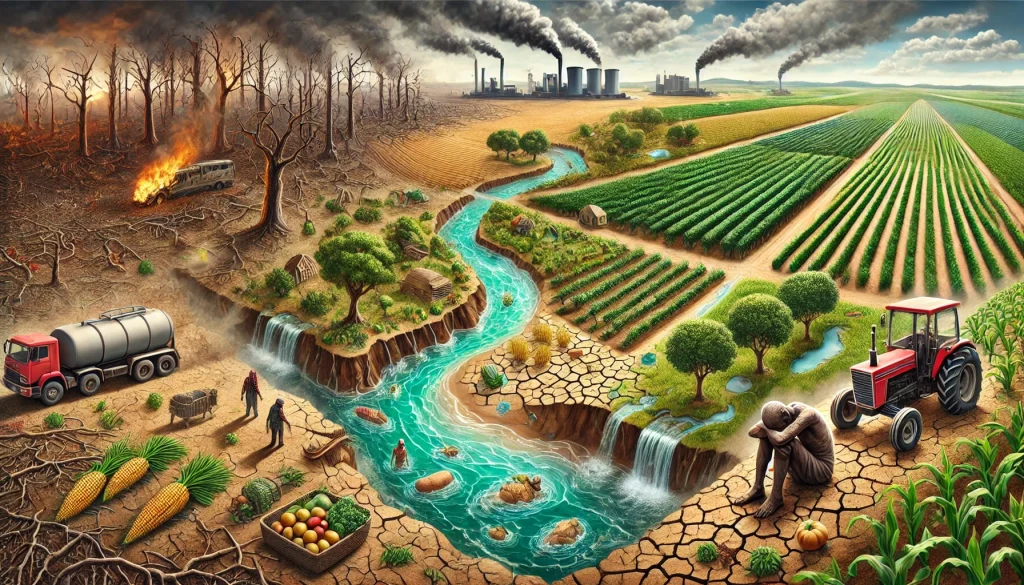
Agriculture, while essential for feeding the global population, has become a major contributor to environmental degradation. Conventional farming practices often prioritize short-term yields over long-term sustainability, leading to a range of ecological issues. Deforestation, driven by the need for more agricultural land, has resulted in the loss of vital forests that serve as carbon sinks and protect biodiversity. Water scarcity is exacerbated by inefficient irrigation methods and the overuse of water resources, particularly in arid regions. Furthermore, the widespread use of chemical fertilizers and pesticides has led to soil degradation, reducing the land’s productivity over time and polluting water bodies with harmful runoff. This pollution not only affects aquatic ecosystems but also contaminates drinking water supplies, posing a risk to human health. The loss of biodiversity due to monoculture practices and habitat destruction further threatens the stability of ecosystems and the resilience of agricultural systems. As these environmental impacts intensify, the very foundation of food security is at risk, with vulnerable communities and smallholder farmers bearing the brunt of the consequences. Without a shift towards more sustainable agricultural practices, the long-term viability of the planet’s food systems and the livelihoods of millions of farmers are in jeopardy.
Pain Points:
- Deforestation: The clearing of forests for agriculture contributes to climate change and biodiversity loss.
- Water Scarcity: Inefficient irrigation and water use in agriculture deplete vital water resources.
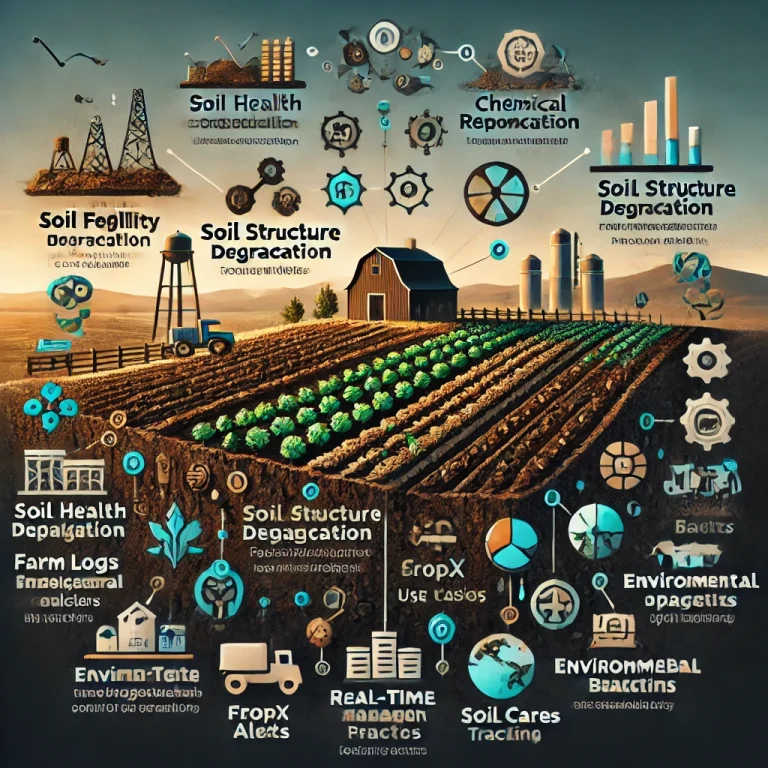
- Soil Degradation: Overuse of chemical fertilizers and monoculture practices lead to soil erosion and nutrient depletion.
- Water Pollution: Runoff from farms contaminates rivers, lakes, and groundwater with pesticides and fertilizers.
- Loss of Biodiversity: Monoculture farming and habitat destruction reduce species diversity and ecosystem resilience.
- Greenhouse Gas Emissions: Agriculture contributes significantly to global emissions through deforestation, livestock, and fertilizer use.
- Overreliance on Chemical Inputs: Dependency on synthetic fertilizers and pesticides harms soil health and the surrounding environment.
- Unsustainable Land Use: Expansion into marginal lands causes further environmental degradation.
- Economic Vulnerability: Farmers reliant on conventional methods face increasing costs and diminishing returns.
- Threats to Food Security: Environmental degradation undermines the ability to produce sufficient and nutritious food.
Future Vision:
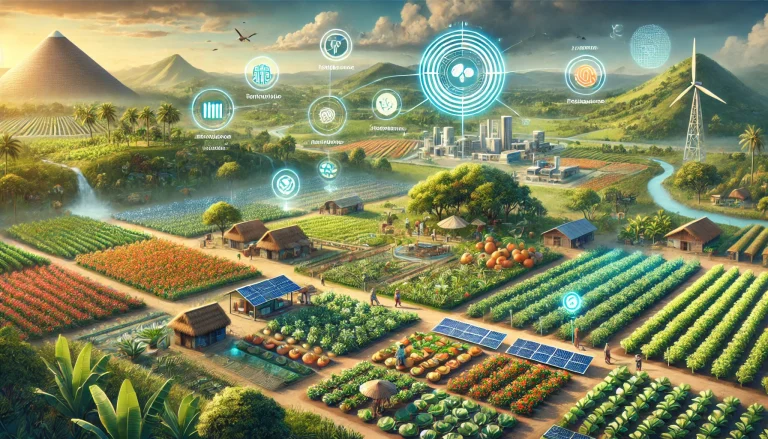
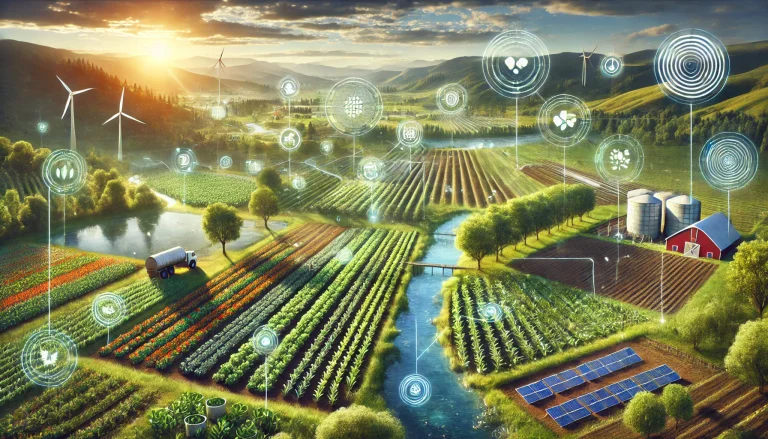
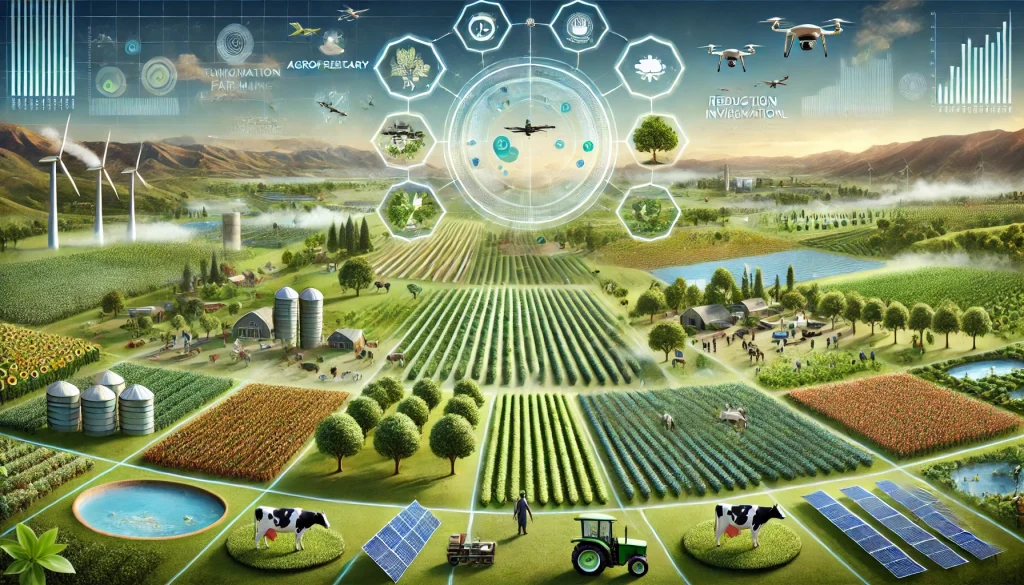
In the future, the agricultural industry will undergo a profound transformation towards sustainability, driven by innovative practices and technologies. Sustainable agriculture will prioritize the health of ecosystems, the well-being of farmers, and the long-term viability of food production. This vision includes widespread adoption of agroecological practices that work with nature rather than against it. Farmers will utilize crop diversification, agroforestry, and integrated pest management to maintain soil fertility and enhance biodiversity. Water management will be optimized through precision irrigation technologies that reduce waste and ensure efficient use of water resources. Organic farming methods will replace chemical-intensive approaches, reducing the reliance on synthetic fertilizers and pesticides while promoting soil health. Renewable energy sources will power farm operations, reducing greenhouse gas emissions and minimizing the carbon footprint of food production. In this future, smallholder farmers will have access to the knowledge and resources needed to implement sustainable practices, supported by policies and incentives that encourage environmental stewardship. The result will be a resilient agricultural system capable of producing abundant, nutritious food while safeguarding the environment for future generations.
Use Cases:
- Precision Irrigation Systems: Farmers use smart irrigation to optimize water use and reduce waste.
- Agroforestry: Integrating trees into agricultural landscapes to improve biodiversity and soil health.
- Organic Farming: Transitioning from chemical-intensive practices to organic methods for healthier crops and soils.
- Regenerative Agriculture: Practices that rebuild soil organic matter and restore degraded lands.
- Integrated Pest Management: Reducing pesticide use through biological control and crop rotation.
- Renewable Energy for Farms: Solar panels and wind turbines provide clean energy for farm operations.
- Sustainable Supply Chains: Tracing food from farm to table to ensure environmentally friendly practices.
- Carbon Sequestration: Farming methods that capture and store carbon in soils and vegetation.
- Water Recycling: Reusing and treating water in farming to reduce consumption and pollution.
- Ecosystem Services Payments: Farmers are compensated for maintaining and enhancing ecosystem services like water purification and carbon storage.
Target Users and Stakeholders:
Target Users:
- Farmers (small to large scale) seeking sustainable practices.
- Agricultural cooperatives and associations focused on eco-friendly farming.
- Agribusinesses aiming to improve their environmental impact.
Stakeholders:
- Government agencies regulating agriculture and environmental protection.
- NGOs advocating for sustainable farming and biodiversity conservation.
- Environmental organizations focused on reducing agriculture’s carbon footprint.
- Technology companies developing sustainable agriculture solutions.
- Consumers interested in eco-friendly and organic food products.
Key Competition:
- Indigo Ag: Provides technology-driven solutions for sustainable agriculture, focusing on soil health and carbon sequestration.
- AgriWebb: Offers farm management software that supports sustainable livestock and crop production.
- AeroFarms: Specializes in vertical farming, reducing land and water use for agriculture.
- Farmers Business Network: A network that promotes sustainable practices through data-driven insights.
- Regenerative Agriculture Alliance: Focuses on promoting and supporting regenerative farming practices globally.
Products/Services:
- Sustainable Farm Management Software: Tools to monitor and optimize sustainable farming practices.
- Organic Fertilizers and Biopesticides: Eco-friendly alternatives to synthetic chemicals.
- Precision Agriculture Tools: Technologies for efficient water, nutrient, and pest management.
- Renewable Energy Solutions for Farms: Solar, wind, and bioenergy systems tailored for agricultural use.
- Soil Health Monitoring: Tools and services to assess and improve soil fertility and structure.
Active Startups:
- Beyond Meat: Developing plant-based meat alternatives that reduce the environmental impact of livestock farming.
- Pivot Bio: Creates sustainable nitrogen solutions that reduce the need for synthetic fertilizers.
- Nori: A startup focused on carbon removal through regenerative agriculture practices.
- AgBiome: Uses microbiome research to develop biological solutions for crop protection.
- Smallhold: Specializes in indoor and vertical farming solutions to reduce land and water use.
Ongoing Work in Related Areas:
- Research on perennial crops that require less water and reduce soil erosion.
- Development of biodegradable packaging to reduce the environmental impact of agricultural produce.
- Soil carbon sequestration projects that aim to enhance soil health and capture carbon.
- Water-saving irrigation technologies, such as drip and precision irrigation systems.
- Agroecology research promoting biodiversity and sustainability in farming systems.
Recent Investment:
- $250 million investment in Indigo Ag in 2023 to expand their sustainable agriculture platform.
- $100 million raised by Pivot Bio in 2022 to develop and scale their sustainable nitrogen solutions.
- $75 million in funding for AeroFarms in 2024 to increase their vertical farming operations.
- $50 million in venture capital for AgBiome in 2023 to advance their biological crop protection products.
- $35 million invested in Nori in 2023 to support carbon removal initiatives through regenerative farming.
Market Maturity:
The market for sustainable agriculture is reaching a critical point of maturity as awareness of environmental issues grows among consumers, governments, and industry stakeholders. The adoption of sustainable practices is no longer a niche movement but a mainstream expectation, driven by the need to address climate change, protect biodiversity, and ensure food security. Investments in sustainable agriculture technologies are increasing, with significant capital flowing into startups and established companies alike. Governments are implementing policies that incentivize sustainable farming, such as subsidies for organic farming, carbon credits for carbon sequestration, and grants for water-saving technologies. However, challenges remain, particularly in scaling these solutions to reach smallholder farmers in developing regions. As the market continues to mature, we can expect further innovation, increased accessibility of sustainable technologies, and stronger policy support to drive widespread adoption.
Summary:
The transformation of agriculture towards sustainability is essential for addressing the environmental challenges posed by conventional farming methods. Deforestation, water scarcity, soil degradation, and loss of biodiversity are all consequences of unsustainable practices that threaten the future of food production and the health of the planet. By adopting sustainable practices such as agroecology, organic farming, and precision agriculture, we can reduce agriculture’s environmental footprint while improving food security and farmer livelihoods. The market for sustainable agriculture is growing rapidly, supported by active startups, ongoing research, and significant investment. As these technologies and practices become more accessible, the agricultural sector has the potential to lead the way in building a more sustainable and resilient global food system. The path forward requires collaboration among farmers, governments, industry, and consumers to ensure that sustainable agriculture becomes the norm rather than the exception.