
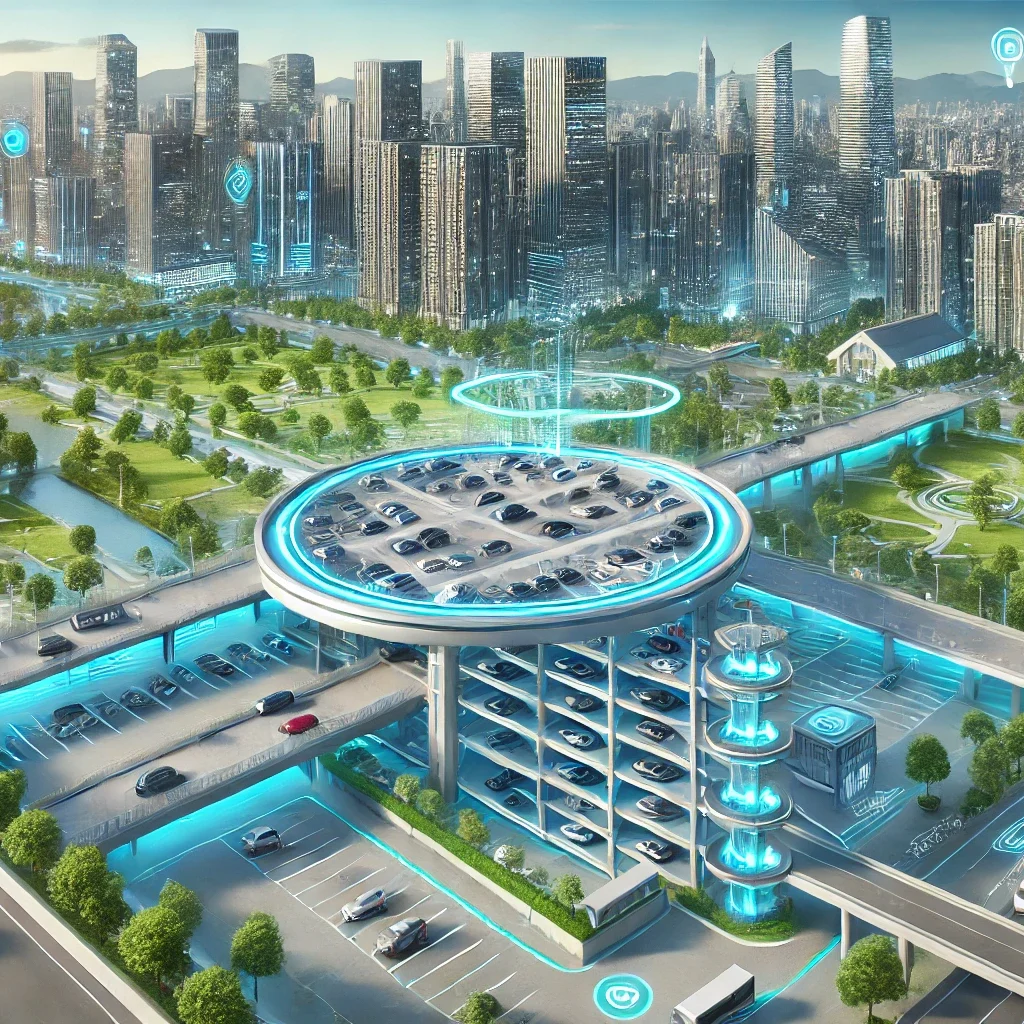
As urban populations grow and space becomes more limited, cities are faced with a critical challenge: large surface parking lots occupy valuable land that could be better utilized for housing, green spaces, or commercial development. Traditional parking infrastructure is inefficient, contributing to urban sprawl, heat island effects, and reduced walkability. At the same time, cities still need to accommodate vehicles for residents, workers, and visitors. The demand for parking remains high, but dedicating large portions of urban land to parking creates a conflict with sustainable city planning.
Many cities are considering alternatives such as underground parking, multi-level garages, shared mobility solutions, and smart parking technologies. However, these solutions come with their own financial, logistical, and environmental challenges. The ideal approach would optimize parking while freeing up land for better urban development, balancing economic, environmental, and social priorities.
Target Users & Stakeholders
- City Residents – Struggle with reduced housing availability and rising property costs due to inefficient land use.
- Urban Planners & Local Governments – Face pressure to balance parking needs with sustainable urban growth.
- Commercial Property Developers – Lose potential revenue by allocating large areas for parking instead of commercial spaces.
- Retail & Business Owners – Depend on parking availability to attract customers but may prefer more pedestrian-friendly environments.
- Commuters & Drivers – Need convenient parking but may face high costs and congestion.
- Environmental Groups – Concerned about the environmental impact of large paved areas contributing to heat islands and stormwater runoff.
- Smart Mobility & Transportation Companies – Interested in solutions that reduce reliance on personal vehicles and promote shared mobility.
Pain Points
- Wasted Land Use – Parking lots take up space that could be used for housing, businesses, or public parks.
- Urban Heat Island Effect – Large paved areas absorb heat, increasing temperatures in cities.
- High Infrastructure Costs – Multi-level parking structures and underground garages are expensive to build and maintain.
- Reduced Walkability – Large parking lots create urban sprawl and make cities less pedestrian-friendly.
- Traffic Congestion – Drivers searching for parking contribute to increased traffic and pollution.
- Environmental Damage – Impermeable surfaces lead to poor stormwater drainage and pollution runoff.
- Inefficiency of Traditional Parking – Many parking lots remain underutilized during off-peak hours.
- Limited Revenue Opportunities – Businesses and cities could generate more revenue by repurposing parking areas.
- Resistance to Change – Many residents and businesses rely on parking and may resist new solutions.
- Technological Adoption Barriers – Smart parking and shared mobility solutions require infrastructure investment and behavior changes.
Key Competitors & Their Solutions
- SP+ (Standard Parking) – Operates parking management services, optimizing space usage with smart technology.
- ParkWhiz & SpotHero – Digital platforms allowing users to reserve parking spots, reducing congestion and improving space efficiency.
- LAZ Parking – One of the largest parking operators, investing in mixed-use developments that incorporate parking into urban spaces.
- Tesla & Boring Company – Exploring underground transportation tunnels as an alternative to traditional parking infrastructure.
- Smart Parking Ltd. – Specializes in sensor-based parking management systems to optimize real-time parking usage.
Startups & Emerging Players
- Urb-i – Advocates for converting street parking into pedestrian-friendly areas through urban design.
- Reef Technology – Repurposing parking lots into multi-use hubs for retail, logistics, and mobility services.
- Parkade – A shared parking solution that allows buildings to optimize private parking spaces.
- FlashParking – Cloud-based parking and mobility solutions that enable automated parking and shared mobility options.
- Cleverciti – AI-driven smart parking management, reducing the need for excess parking spaces.
Innovations in the Industry
- Automated Parking Systems (APS) – Robotic parking garages that minimize space usage.
- Smart Parking Sensors – IoT-based sensors that optimize available spaces in real-time.
- Parking-as-a-Service (PaaS) – Subscription-based parking models where users pay only for what they need.
- Multi-Use Parking Structures – Parking facilities that double as event venues, commercial spaces, or green areas.
- EV Charging Integration – Parking lots converting into EV charging hubs to support sustainable transportation.
Investment & Market Maturity
- Recent investments:
- Reef Technology raised $700M in 2020 to transform parking lots into logistics hubs.
- FlashParking secured $60M in 2021 for smart parking solutions.
- Parkade raised $12M in 2022 for peer-to-peer parking solutions.
- Market Maturity:
- The urban parking industry is evolving, but many cities still rely on outdated models.
- Governments and private investors are gradually shifting towards shared, automated, and multi-use solutions.
- The adoption of smart parking technology is growing, but infrastructure investment remains a challenge.
5. Gaps in Current Solutions
Despite the progress, existing solutions still don’t fully solve the problem. Key gaps include:
- High costs of automated and underground parking solutions – These are expensive and require large-scale urban planning adjustments.
- Slow adoption of shared parking models – Many property owners are hesitant to share or repurpose parking spaces.
- Regulatory barriers – Zoning laws and outdated city regulations make it difficult to implement flexible parking solutions.
- Lack of incentives for reducing parking dependency – Cities still mandate high parking minimums for new developments, limiting change.
Product Vision
🚀 Future of Urban Parking: Smart, Shared, and Sustainable
As cities grow, the need for space-efficient, environmentally friendly parking solutions has never been greater. Our vision is to transform underutilized parking lots into smart, multi-use urban hubs that integrate with modern mobility solutions.
Our Smart Parking & Urban Optimization Platform will use AI-driven analytics and IoT technology to dynamically manage parking spaces, reducing congestion and improving land efficiency. With real-time demand-based pricing, we will incentivize off-peak usage, ensuring optimal space allocation.
Beyond traditional parking, we will repurpose lots into multi-functional spaces—integrating retail pop-ups, logistics hubs, green parks, and EV charging stations. This will create sustainable urban environments while maintaining essential parking infrastructure.
To make this vision a reality, we will collaborate with city planners, real estate developers, and mobility service providers, ensuring seamless integration into urban planning efforts.
By redefining parking as a flexible and revenue-generating urban asset, we will help cities reduce traffic congestion, lower carbon footprints, and enhance livability—all while ensuring businesses and commuters still have access to parking when needed.
Use Cases
- Smart Parking Allocation – AI-based dynamic pricing and space reservation.
- EV Charging Stations – Converting parking lots into electric vehicle charging hubs.
- Car-Sharing & Ride-Hailing Zones – Dedicated spots for Uber, Lyft, and shared mobility services.
- Logistics & Micro-Hubs – Using parking areas for last-mile delivery services.
- Retail Pop-Up Spaces – Temporary markets, food trucks, and community events.
- Green Infrastructure – Adding trees, solar panels, and water-permeable surfaces.
- Underground & Automated Parking – High-efficiency robotic parking systems.
- Dynamic Zoning for Mixed Use – Parking spaces that convert into pedestrian areas at different times.
- Real-Time Parking Availability – App-based reservations and live updates.
- Subscription-Based Parking (PaaS) – Monthly parking passes with flexible access.